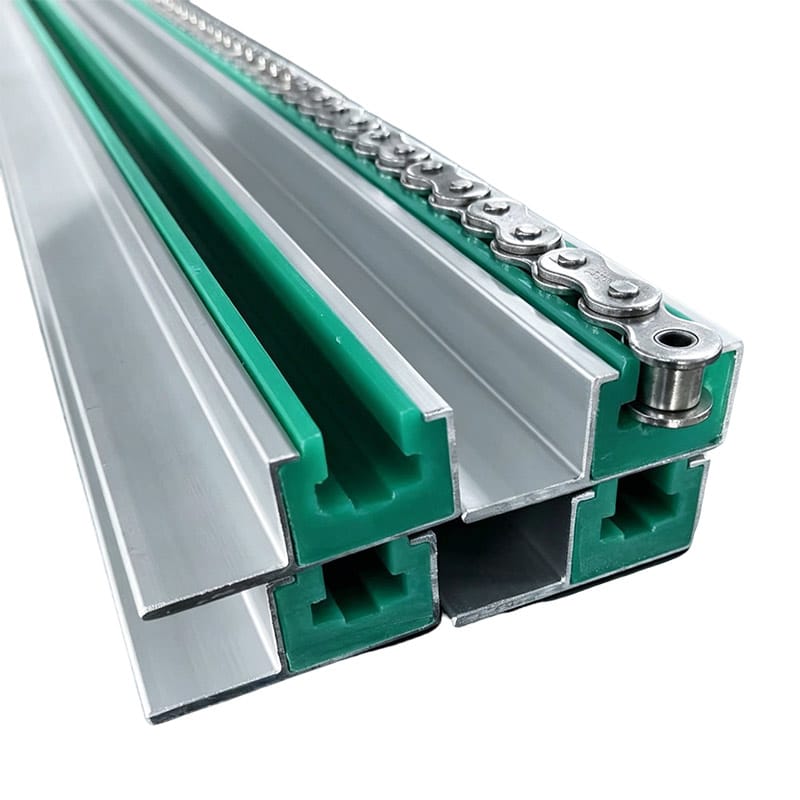
A request that says only “Please quote UHMWPE chain guides” rarely gives a manufacturer enough information to produce the right part.
A conveyor chain guide is not a generic strip of plastic. Its performance depends on the chain geometry, guide profile, running clearance, conveyor speed, operating temperature, support structure, curve radius, mounting method and actual wear pattern.
That is why a useful UHMWPE chain guide RFQ should describe the conveyor system before asking for a price.
For maintenance teams, OEM equipment manufacturers, packaging-line builders and industrial buyers, preparing a complete UHMWPE chain guide RFQ can reduce repeated technical questions, prevent incorrect profiles from entering production and make supplier quotations much easier to compare.
The most useful RFQ normally includes:
- Chain manufacturer and model
- Chain dimensions
- Guide cross-section
- Straight or curved configuration
- Overall length
- Curve radius
- Conveyor speed
- Operating temperature
- Mounting method
- Existing wear condition
- Quantity
- Required inspection or documentation
This guide explains each of these inputs and shows how buyers can turn a basic inquiry into a technically meaningful request for UHMWPE chain guides.
Why a UHMWPE Chain Guide RFQ Needs More Than a Photo
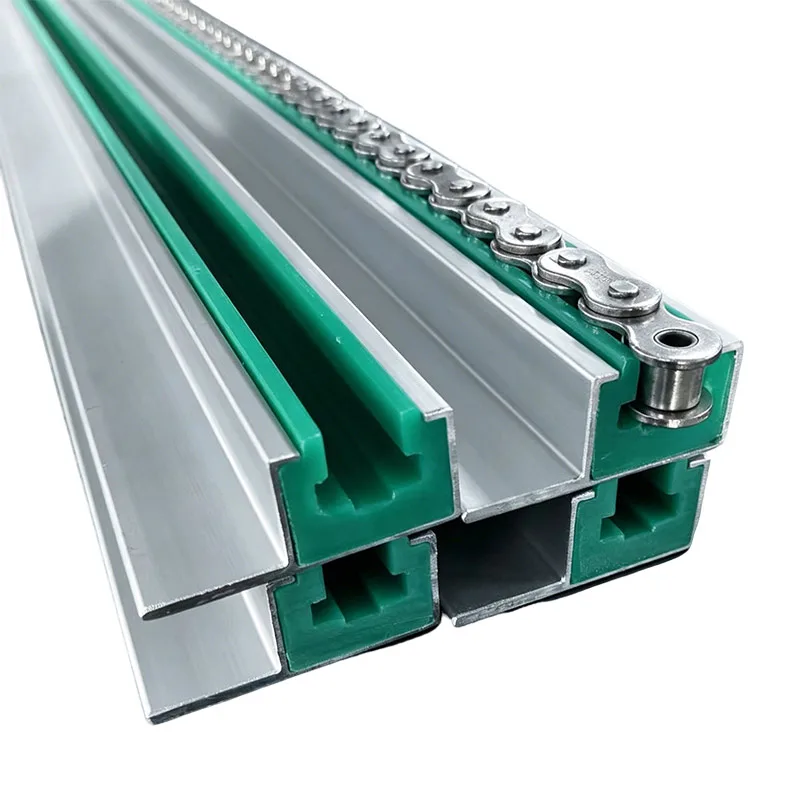
Photographs are useful.
They can show:
- General guide shape
- Wear direction
- Installation location
- Mounting arrangement
- Damage
- Contamination
But a photograph alone usually cannot define a production-ready chain guide.
A manufacturer still needs dimensions.
This is particularly important because a chain guide must interact with a moving chain.
Small differences in:
- Slot width
- Groove depth
- Side-wall position
- Chain centerline
can change the way the chain runs.
A good UHMWPE chain guide RFQ therefore combines photographs with actual dimensional data.
Start with the Exact Chain Type
The chain is the first thing the guide is designed around.
If the manufacturer does not know the chain type, it is difficult to determine whether the proposed guide profile provides appropriate contact and clearance.
Your UHMWPE chain guide RFQ should ideally include:
- Chain manufacturer
- Chain series
- Chain number
- Chain drawing
- Chain pitch
- Width
- Roller dimensions if relevant
Avoid descriptions such as:
- Standard chain
- Small conveyor chain
- Packaging chain
- Roller chain
These descriptions are too broad.
Two chains that look similar in a photograph may require different guide profiles.
Why Chain Dimensions Matter
The guide should control the chain without creating unnecessary friction or restricting movement.
If the guide profile is too tight, possible results include:
- Binding
- Heat buildup
- Rapid wear
- Increased drive load
- Noise
If the profile is too loose, the chain may:
- Move laterally
- Impact the guide
- Track poorly
- Create vibration
A detailed UHMWPE chain guide RFQ gives the manufacturer enough information to consider the intended chain-to-guide relationship rather than simply cutting a slot that “looks close.”
Provide the Guide Cross-Section
The most important drawing for many custom chain-guide projects is the cross-section.
A cross-section should show:
- Overall width
- Overall height
- Chain groove width
- Groove depth
- Side-wall thickness
- Base thickness
- Mounting feature
- Any undercut
- Any special radius
This geometry determines how the chain is supported and guided.
For a custom UHMWPE chain guide RFQ, a simple dimensioned cross-section can often be more useful than a long written description.
Do Not Copy a Worn Groove Without Checking It
A heavily worn guide can be useful as a sample, but the worn groove should not automatically become the new production geometry.
Wear can enlarge:
- Groove width
- Groove depth
- Side clearance
- Entry profile
If a supplier measures only the worn surface, the replacement may reproduce the damage.
Instead, combine the old guide with:
- Chain dimensions
- Unworn surfaces
- Mounting references
- Original drawings if available
A responsible UHMWPE chain guide RFQ should describe whether the submitted sample is new, lightly used or heavily worn.
Straight or Curved Guide?
State clearly whether the guide is:
- Straight
- Curved
- Spiral
- Compound geometry
Curved chain guides require more information because the curve changes how the chain contacts the side of the guide.
For a curved UHMWPE chain guide RFQ, provide:
- Inside radius
- Outside radius
- Centerline radius
- Arc angle
- Total developed length
If possible, attach a 2D or 3D drawing.
Why Curve Radius Is Important
A chain following a curve creates lateral contact force against the guide.
The tighter the radius, the more important it becomes to evaluate:
- Chain design
- Speed
- Load
- Guide profile
- Material
If an existing curved guide is wearing rapidly on one wall, include that information in the UHMWPE chain guide RFQ.
The problem may involve:
- Curve geometry
- Misalignment
- Excessive speed
- High load
- Chain condition
Replacing the material without reviewing the curve may not solve the issue.
Provide the Total Guide Length
Length sounds simple, but buyers should define it carefully.
A guide may be supplied as:
- One continuous length
- Several shorter sections
- Matched segments
- Straight and curved sections
Your UHMWPE chain guide RFQ should state:
- Total required conveyor length
- Individual guide-section length
- Number of sections
- Joint arrangement
For long guides, shipping and installation may influence the preferred section length.
Long UHMWPE Guides Need Thermal Movement
UHMWPE expands and contracts with temperature.
This matters more as guide length increases.
A long guide rigidly constrained at both ends may change shape as temperature changes.
When preparing a UHMWPE chain guide RFQ, provide:
- Minimum operating temperature
- Normal operating temperature
- Maximum operating temperature
- Installation environment
This information helps determine whether the mounting design should allow movement.
Conveyor Speed Should Always Be Included

Chain speed influences how much sliding occurs between the chain and guide.
Higher speed can increase:
- Sliding distance
- Frictional heat
- Wear rate
- Sensitivity to alignment
Your UHMWPE chain guide RFQ should include conveyor speed whenever it is known.
Useful units include:
- m/min
- m/s
- ft/min
If exact speed is not available, provide:
- Motor speed
- Sprocket size
- Conveyor documentation
A supplier may be able to help interpret the system.
Why Operating Load Matters
A chain guide under light product handling does not necessarily experience the same conditions as one guiding a heavily loaded conveyor.
Provide:
- Product weight
- Chain load if known
- Conveyor load
- Accumulation conditions
- Start-stop frequency
For accumulation conveyors, the chain may experience different loads in specific sections.
A good UHMWPE chain guide RFQ should describe whether the guide is in:
- Loaded carry section
- Return section
- Curve
- Transfer point
- Accumulation area
Temperature Is More Than a Material-Limit Question
Temperature affects both material properties and dimensions.
For UHMWPE chain guides, temperature can influence:
- Expansion
- Clearance
- Friction
- Mounting
- Guide joints
This is why “room temperature” is not always enough information.
Your UHMWPE chain guide RFQ should include the actual expected range.
For equipment near:
- Ovens
- Washdowns
- Outdoor environments
- Refrigerated areas
temperature changes may be significant.
Describe the Mounting Method
A chain guide must be held in the correct position relative to the chain.
Common mounting arrangements may involve:
- Bolted holes
- Countersunk screws
- Slotted holes
- Metal carrier profiles
- Snap-in configurations
- Custom brackets
Your UHMWPE chain guide RFQ should include the mounting concept.
Useful dimensions include:
- Hole diameter
- Hole spacing
- Slot size
- Fastener type
- Support width
- Bracket spacing
The guide profile and mounting system should be considered together.
Why Support Spacing Matters
Long guides rely on their support structure.
If supports are too far apart, the guide can deflect.
That may create:
- Localized chain contact
- Vibration
- Uneven wear
- Guide movement
If an existing guide shows repeating wear at regular intervals, compare those locations with support spacing.
Include support spacing in the UHMWPE chain guide RFQ if the manufacturer is being asked to review the design rather than simply copy a drawing.
Mounting Holes vs Slots
Round holes and slots serve different purposes.
Round holes provide defined positioning.
Slots may provide:
- Adjustment
- Installation tolerance
- Thermal movement
The correct choice depends on the guide design.
For long UHMWPE components, a common design principle is to combine fixed and floating locations so the guide can move as temperature changes.
However, the actual mounting method should be reviewed for the specific application.
A UHMWPE chain guide RFQ should show the intended slot orientation and dimensions rather than leaving them undefined.
Include the Existing Wear Pattern
If the RFQ is for a replacement guide, the old wear pattern is valuable technical evidence.
Photograph:
- Entire guide
- Drive end
- Return end
- Curves
- Heavy-wear areas
- Chain contact surface
- Mounting holes
Also record:
- Service life
- Operating hours
- Remaining thickness
- Whether wear is one-sided
This makes the UHMWPE chain guide RFQ much more informative.
If one side wears quickly while the other remains almost new, the supplier may recommend checking alignment before manufacturing a large batch.
Describe Any Heat Problem
If the guide becomes unusually hot during operation, say so.
Heat can point to:
- Excessive tension
- Tight clearance
- Poor alignment
- High speed
- Contamination
A replacement guide may not solve these mechanical causes.
Include measured temperature if available.
“Very hot” is subjective.
“Surface reaches approximately 65°C after two hours” is much more useful in a UHMWPE chain guide RFQ.
Include Contamination Conditions
Conveyor environments vary greatly.
Some guides run in clean packaging machinery.
Others operate around:
- Dust
- Sand
- Metal particles
- Food debris
- Wood fibers
- Outdoor dirt
Hard particles trapped between chain and UHMWPE can accelerate abrasive wear.
State whether contamination is:
- Minimal
- Occasional
- Continuous
Also explain cleaning procedures.
This can help a supplier interpret existing wear.
Lubrication Condition Should Be Clear
Some conveyors operate dry.
Others follow a lubrication schedule.
Your UHMWPE chain guide RFQ should state whether the chain is:
- Dry-running
- Periodically lubricated
- Continuously lubricated
- Water lubricated
- Subject to washdown
Do not add lubrication solely to compensate for poor guide design unless the conveyor manufacturer recommends it.
Lubrication can also attract contaminants in dusty environments.
Specify the UHMWPE Grade if Required

If your company has an established material specification, include it.
Possible requirements may involve:
- Virgin UHMWPE
- Specific color
- UV stabilized material
- Antistatic grade
- Food-contact documentation
- Other modified grades
If no grade has been defined, describe the application and ask the supplier to identify the proposed material.
A professional UHMWPE chain guide RFQ should make the material basis clear so different quotations can be compared properly.
Color Can Matter for More Than Appearance
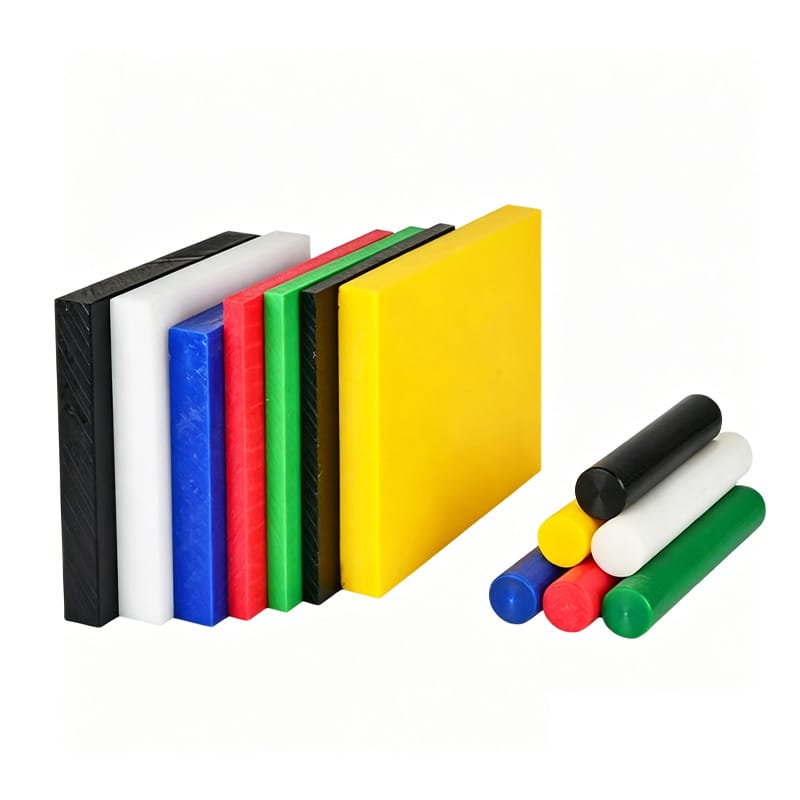
Common UHMWPE colors may include:
- Natural
- White
- Black
- Green
- Blue
- Custom colors
Color may be used for:
- Line identification
- Food-processing zones
- Maintenance coding
- Brand requirements
If color matters, specify it in the UHMWPE chain guide RFQ.
Do not assume all colors automatically have identical formulation or regulatory documentation.
What Tolerances Should Be Shown?
A drawing should distinguish functional tolerances from ordinary dimensions.
Critical dimensions may include:
- Chain groove width
- Chain centerline
- Mounting-hole position
- Profile height
- Curve radius
Less critical external dimensions may not need the same tolerance.
This distinction can reduce unnecessary machining cost.
For a custom UHMWPE chain guide RFQ, overly restrictive metal-style tolerances can make the quotation more expensive without improving conveyor performance.
Should You Send a STEP File?
Yes, especially for:
- Curved guides
- Complex profiles
- Custom carriers
- Multi-feature components
A useful file package includes:
- STEP
- 2D PDF
- DXF if appropriate
The STEP file defines geometry.
The 2D drawing defines:
- Critical dimensions
- Tolerances
- Material
- Revision
- Notes
For repeat projects, both should carry consistent revision information.
How Quantity Changes the Quotation
Quantity affects manufacturing strategy.
A supplier may machine:
- Prototypes individually
- Small batches using simple fixtures
- Large batches using dedicated fixtures
Your UHMWPE chain guide RFQ should therefore state:
- Prototype quantity
- Initial production quantity
- Annual requirement
A quotation for five pieces may not use the same manufacturing approach as one for five thousand pieces.
Ask for a First Article When Appropriate
For new or complex custom guides, first article approval can reduce risk.
The first article can confirm:
- Profile
- Mounting
- Length
- Curvature
- Critical dimensions
For an OEM project, it can be useful to approve the first part before full production.
The UHMWPE chain guide RFQ should state whether first article inspection or sample approval is required.
What Inspection Information Should You Request?
Inspection should match the importance of the part.
Possible requirements include:
- Basic dimensional inspection
- First article report
- Critical-dimension report
- Material documentation
- Batch identification
For simple standard guides, extensive documentation may be unnecessary.
For OEM equipment production, stronger traceability may be appropriate.
State the requirement before quotation rather than after manufacturing.
Packaging Matters for Long Guide Rails
Long UHMWPE guides can be difficult to package.
Poor packaging may allow:
- Bending
- Mixing of part numbers
- Surface damage
- Missing sections
Your UHMWPE chain guide RFQ should identify any special requirements for:
- Bundling
- Labels
- Part-number separation
- Pallets
- Protective packaging
For multiple conveyor lines, clear part identification can save significant installation time.
How to Compare UHMWPE Chain Guide Quotations
Do not compare only the unit price.
Make sure suppliers are quoting the same scope.
Compare:
Material
Is the same UHMWPE grade being quoted?
Finished Geometry
Does the price include the full profile?
Length
Are suppliers quoting the same individual section lengths?
Machining
Does the quote include:
- Holes
- Slots
- Curves
- Countersinks
Inspection
Is dimensional inspection included?
Packaging
- Part labels
- Revision number
- Quantity per bundle
- Protective wrapping
- Straight, supported packing for long profiles
Conclusion
A complete UHMWPE chain guide RFQ gives the supplier enough information to quote the right profile, machining and material for the actual conveyor.
The most important inputs are the chain identification, cross-section, straight or curved geometry, total length, operating speed, temperature, load, contamination, mounting details, tolerances and current wear pattern. Drawings, STEP files and representative samples make the review faster, but worn parts should be checked against the original intended geometry.
For custom guide rails, send Paowo your chain model, drawings, required lengths, hole or slot layout, quantities and operating conditions. A clear RFQ reduces revisions, improves quotation accuracy and helps the finished guide fit the conveyor from the first installation.