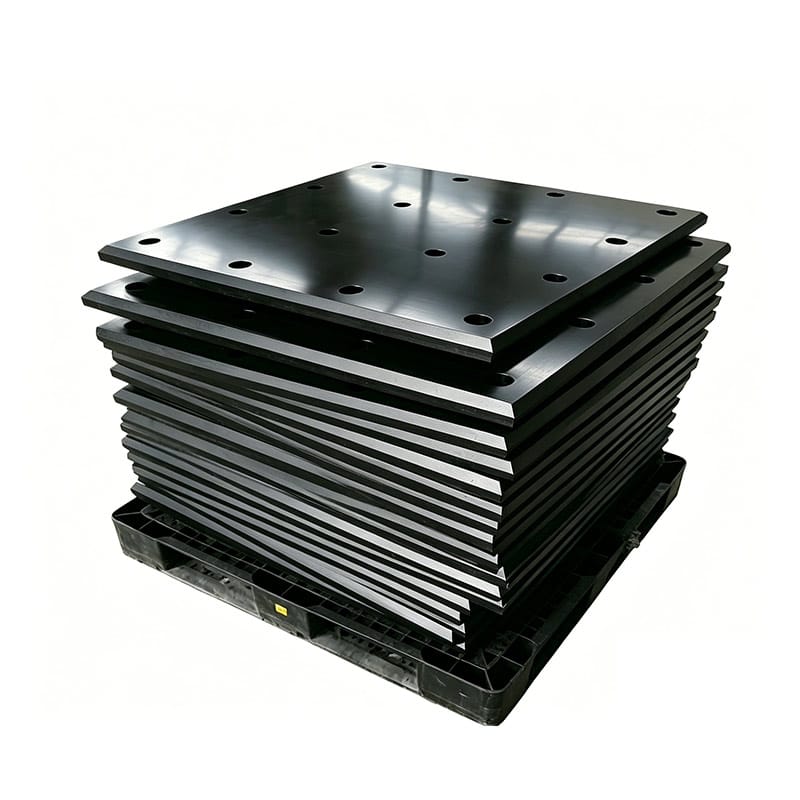
Aggregate handling is hard on equipment.
Stone, gravel, crushed rock, sand, and other quarry materials repeatedly slide, impact, and scrape against chute walls, hoppers, bins, and transfer points. Over time, exposed steel can lose thickness, develop localized wear, or create rough surfaces that interfere with material flow.
That is why aggregate chute liners are widely used in quarry and bulk-material handling systems.
The role of an aggregate chute liner is not simply to cover the steel. The liner should help manage a specific combination of abrasion, impact, flow, moisture, and maintenance requirements.
UHMWPE is often considered for aggregate chute liners because it combines good wear resistance, low surface friction, impact toughness, moisture resistance, and relatively low weight.
However, UHMWPE should not be treated as a universal answer for every quarry wear zone.
The correct liner depends on where it is installed, how the stone hits the surface, how large the particles are, how wet the material becomes, and how frequently the equipment operates.
This guide explains how to evaluate aggregate chute liners for quarry applications and what information procurement and maintenance teams should collect before requesting a quotation.
Why Aggregate Chute Liners Are Important in Quarry Equipment
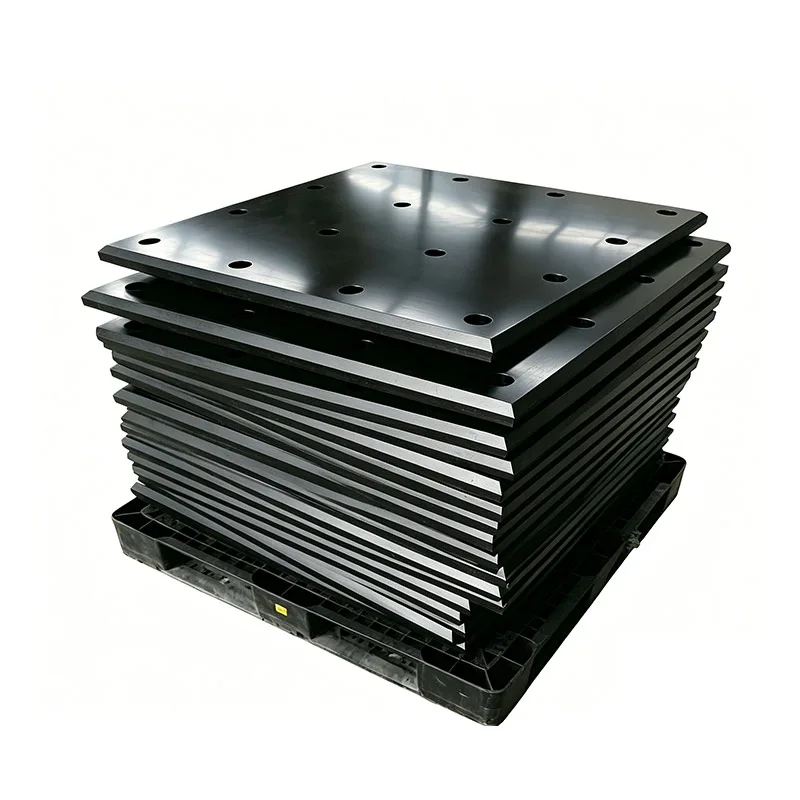
Quarry equipment handles material that is naturally abrasive.
Typical materials include:
- Crushed limestone
- Granite
- Basalt
- Gravel
- Sand
- Recycled aggregate
- Mixed stone
- Mineral products
These materials can create different wear mechanisms depending on particle size, hardness, shape, and velocity.
Without suitable aggregate chute liners, steel surfaces may experience:
- Sliding abrasion
- Gouging
- Direct impact
- Localized thinning
- Corrosion combined with wear
- Material buildup
Once the original steel wall begins losing thickness, maintenance becomes more complicated.
Instead of replacing a removable liner, operators may need to:
- Weld repair plates
- Replace chute sections
- Perform structural repairs
- Increase shutdown time
A replaceable liner system moves the wear surface away from the main equipment structure.
Why UHMWPE Is Used for Aggregate Chute Liners
UHMWPE is commonly considered in bulk-material handling because several of its characteristics suit sliding and wear applications.
Typical advantages include:
- Good abrasion resistance
- Low-friction surface
- Good impact toughness
- Moisture resistance
- Chemical resistance
- Relatively low weight
- Machinability
For aggregate chute liners, low surface friction can also help where material tends to drag or build up on rough steel surfaces.
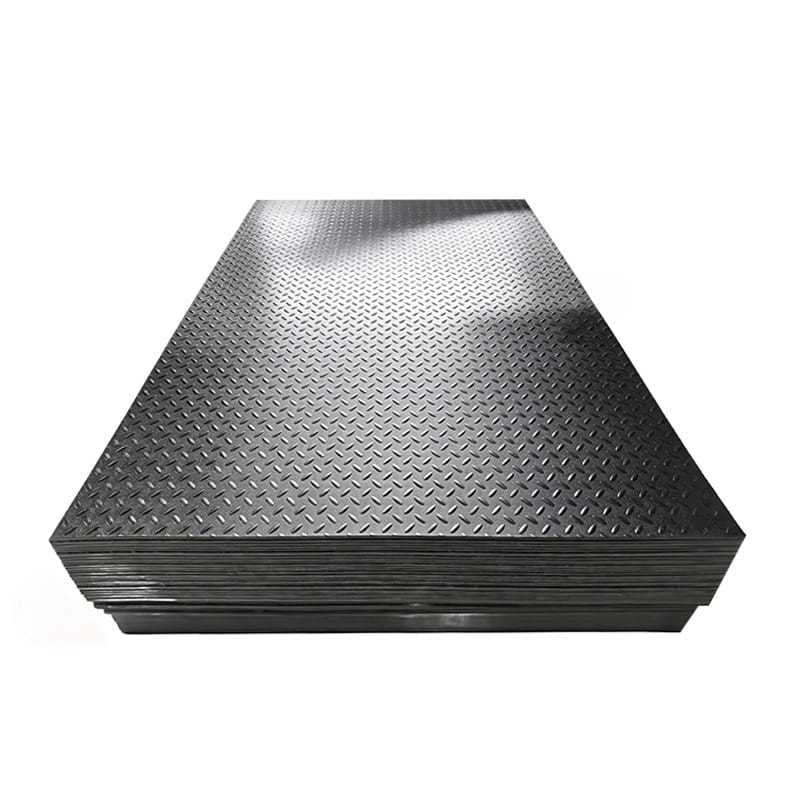
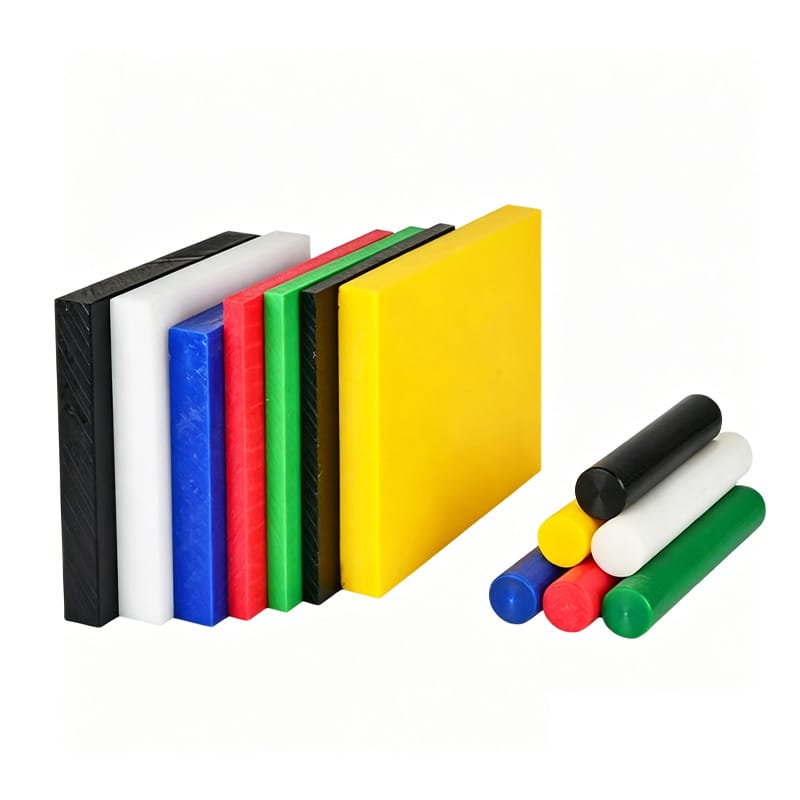
Paowo Group supplies UHMWPE wear liners for industrial bulk-material handling applications.
UHMWPE panels can also be cut and machined to match existing chute geometry.
Aggregate Chute Liners Should Be Selected by Wear Zone
One of the most important design principles is to stop treating every area inside a chute as if it experiences the same wear.
A typical aggregate transfer system contains several different zones.
Direct Impact Zone
This is where falling rock first strikes the chute.
It may experience:
- High impact
- Large particle contact
- Localized wear
- Fastener stress
Sliding Zone
After impact, the material moves down the chute surface.
This area experiences more continuous:
- Sliding abrasion
- Friction
- Surface wear
Transition Zone
Material may change direction at:
- Chute bends
- Narrow outlets
- Transfer points
Wear can become concentrated in these areas.
Low-Flow or Buildup Zone
Some areas receive lower velocity but may accumulate:
- Fine material
- Wet aggregate
- Mud
- Dust
A practical aggregate chute liners design may therefore use different thicknesses, layouts, or even different liner materials in different zones.
How Particle Size Affects Aggregate Chute Liners
Particle size is one of the first things a supplier should ask about.
Fine sand and large crushed rock do not create the same wear environment.
Fine Aggregate
Fine material tends to create continuous sliding abrasion.
Examples include:
- Sand
- Fines
- Crushed dust
Important considerations may include:
- Flowability
- Moisture
- Continuous surface wear
Coarse Aggregate
Large stone can create higher localized impact.
It may also produce:
- Gouging
- Edge damage
- Fastener exposure
- Deeper localized wear
Mixed Aggregate
Many quarries handle a combination of particle sizes.
In that case, provide:
- Typical particle size
- Maximum particle size
- Approximate percentage of fines
- Occasional oversized pieces
This information makes an aggregate chute liners recommendation more meaningful.
Why Drop Height Matters
Drop height affects how much impact energy the material can develop before contacting the liner.
A small transfer from one belt to another may create relatively moderate contact.
A hopper receiving large stone from several meters above creates a different condition.
When evaluating aggregate chute liners, provide:
- Vertical drop
- Material trajectory
- Angle of impact
- Whether material strikes the liner directly
- Location of the impact zone
The higher the direct impact, the more carefully the liner thickness, support, and fastening arrangement should be reviewed.
Sliding Wear and Impact Wear Are Different
This distinction is critical.
UHMWPE performs well in many sliding-wear applications.
However, a section designed mainly for abrasion should not automatically be assumed ideal for severe concentrated impact.
When inspecting existing aggregate chute liners, ask:
Is the panel wearing gradually, or is it being damaged by repeated impacts?
Gradual thinning may suggest sliding abrasion.
Cracking, deep gouges, or damage concentrated at one location may point toward impact or installation problems.
Material selection should follow the actual failure mode.
How Chute Angle Changes Material Flow
The angle of the chute wall affects how easily aggregate moves.
A steeper chute can encourage faster flow.
A shallow chute may increase:
- Contact time
- Sliding resistance
- Material buildup
When considering aggregate chute liners, provide the approximate chute angle.
Low-friction UHMWPE can be helpful where improving material flow is part of the project objective.
However, liner material cannot compensate for every poor chute geometry.
If the chute angle itself does not support reliable flow, additional engineering changes may be needed.
How Moisture Affects Aggregate Chute Liners
Quarry material is not always dry.
Outdoor stockpiles and washing processes can introduce moisture.
Wet aggregate may:
- Become more cohesive
- Stick to chute walls
- Carry fine mud
- Increase buildup
- Change flow behavior
For aggregate chute liners, moisture therefore affects more than corrosion.
It can change the way the material contacts the surface.
When sending an RFQ, describe whether the material is:
- Normally dry
- Occasionally wet
- Consistently damp
- Washed
- Exposed to rainfall
If seasonal conditions change significantly, include both dry and wet operating conditions.
Why Material Throughput Matters
Wear depends partly on how much material passes over the liner.
A chute operating a few hours per day does not experience the same total sliding distance as a continuous production line.
For better aggregate chute liners selection, provide:
- Tonnes per hour
- Operating hours per day
- Days per year
- Seasonal production changes
If you know the service life of the existing liner, combine that with throughput.
For example:
“Existing steel liner lasts six months at approximately X tonnes per hour.”
is more useful than:
“Existing liner wears quickly.”
How Belt Speed Affects Wear
Transfer chutes are often connected to conveyors.
Belt speed influences the velocity of material entering the chute.
Higher speed can increase:
- Sliding velocity
- Impact energy
- Wear intensity
When evaluating aggregate chute liners, conveyor speed is therefore useful technical information.
Provide it if known.
Also note whether the material:
- Drops vertically
- Travels horizontally
- Changes direction sharply
The material path can help explain why wear concentrates in one area.
Why Existing Wear Patterns Are Valuable
A worn liner is not just scrap.
It contains information about how the equipment is operating.
Before replacing aggregate chute liners, document:
- Deepest wear area
- Remaining thickness
- Impact zones
- Fastener condition
- Cracks
- Gouges
- Material buildup
Photographs can be especially useful.
Take both:
- Wide photos showing location
- Close-up photos showing the wear surface
If possible, mark the material flow direction.
This allows a supplier to understand whether the issue is primarily:
- Abrasion
- Impact
- Fastener design
- Panel layout
- Chute geometry
How Thick Should Aggregate Chute Liners Be?
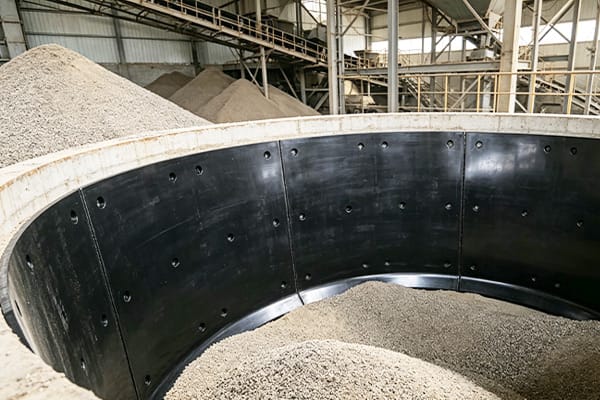
There is no universal thickness for aggregate chute liners.
The required thickness depends on:
- Particle size
- Impact
- Throughput
- Panel size
- Existing wear rate
- Fastener arrangement
- Target maintenance interval
A thicker liner provides more wear allowance, but thickness alone is not a complete solution.
Increasing thickness can also:
- Increase material cost
- Reduce internal chute dimensions
- Require longer fasteners
- Increase panel weight
The best specification balances service life and practical installation.
Why Larger Panels Are Not Always Better
A large panel reduces the number of joints.
But large aggregate chute liners can become difficult to:
- Handle
- Install
- Replace
- Ship
Long UHMWPE panels also require consideration of thermal expansion.
For maintenance-intensive quarry equipment, smaller modular panels can provide a major advantage.
If one high-wear zone fails first, only that section may need replacement.
This can reduce:
- Material consumption
- Replacement time
- Maintenance cost
Why Panel Layout Should Follow the Wear Pattern
A good liner layout places joints and panel boundaries strategically.
Avoid positioning important joints directly in the highest impact area whenever possible.
If existing aggregate chute liners show that one small zone wears much faster than the rest, consider making that area a separately replaceable panel.
This creates a “wear module” that can be changed without removing the whole liner system.
For maintenance teams, modularity can be as valuable as material performance.
How Aggregate Chute Liners Are Fastened
UHMWPE liners are commonly mechanically fastened to the chute structure.
Possible systems include:
- Countersunk bolts
- Studs
- Existing bolt patterns
- Custom mounting holes
The fastening method should keep the liner secure while minimizing interference with material flow.
Why Countersunk Fasteners Are Common
Countersunk fasteners help keep bolt heads below or close to the liner surface.
This reduces direct contact between aggregate and fastener heads.
However, the countersink removes material from around the hole.
If designed poorly, this can create:
- Thin local sections
- Cracking
- Bolt pull-through
- Early fastener exposure
For aggregate chute liners, hole geometry should therefore be reviewed together with sheet thickness and impact conditions.
Why Hole Edge Distance Matters
Fastener holes too close to the panel edge can weaken the surrounding section.
This becomes more important in high-impact quarry applications.
A good drawing should define:
- Hole diameter
- Countersink
- Hole spacing
- Edge distance
If existing panels repeatedly crack around the same bolt locations, simply copying the old hole pattern may reproduce the same failure.
Should Aggregate Chute Liners Be Installed on Damaged Steel?
Ideally, the substrate should be inspected before installing replacement liners.
Check for:
- Severe corrosion
- Holes
- Deep wear
- Distortion
- Broken welds
- Loose support
- Uneven surfaces
If the underlying steel structure is badly damaged, new aggregate chute liners may not sit correctly.
Uneven support can cause panels to flex or carry loads differently from the intended design.
Repairing the substrate may therefore be necessary before installing new panels.
Why Thermal Expansion Matters in UHMWPE Liners
UHMWPE expands and contracts more than steel as temperature changes.
For large aggregate chute liners, this dimensional movement should be considered during installation.
Important factors include:
- Panel length
- Operating temperature
- Outdoor temperature variation
- Fastening method
- Joint gaps
Rigidly locking a long UHMWPE panel at every point can create unnecessary restraint.
The correct mounting arrangement depends on the actual liner dimensions and operating conditions.
Aggregate Chute Liners vs Steel Liners
Steel remains common in quarry equipment.
It offers:
- High stiffness
- Familiar fabrication methods
- Good structural support
However, steel surfaces can experience abrasion and may become rougher as wear progresses.
UHMWPE aggregate chute liners may offer advantages where:
- Sliding abrasion is significant
- Low friction is valuable
- Corrosion or moisture is present
- Reduced liner weight helps maintenance
The correct choice depends on the wear zone.
In some systems, different materials can be used together.
For example, severe impact zones may use one solution while sliding zones use UHMWPE.
Aggregate Chute Liners vs Rubber Liners
Rubber is commonly used where impact absorption is important.
UHMWPE and rubber should not be compared only by wear resistance.
They behave differently.
Rubber may be attractive for:
- Impact
- Vibration
- Noise reduction
UHMWPE may be attractive for:
- Low friction
- Sliding wear
- Material release
- Moisture resistance
The best aggregate chute liners solution may depend on whether impact or sliding dominates.
When Ceramic May Be Considered
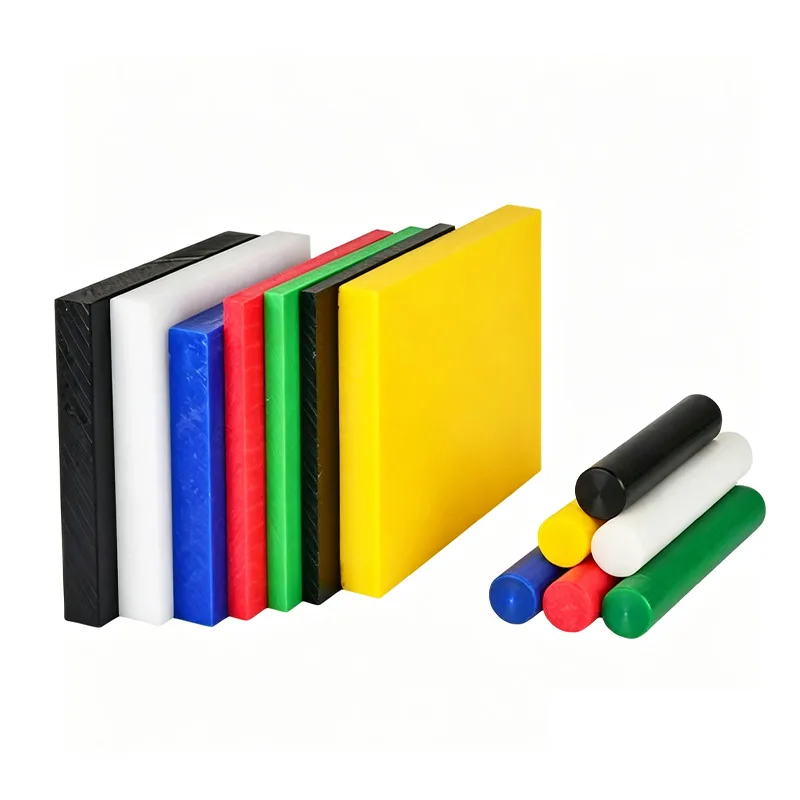
Ceramic liners are often considered in very abrasive applications.
However, they can differ from UHMWPE in:
- Weight
- Brittleness
- Installation
- Impact behavior
- Repair method
For high-wear quarry systems, the correct approach may involve comparing several materials by wear zone rather than trying to select one liner for the entire chute.
How to Inspect Aggregate Chute Liners During Maintenance
Routine inspection can prevent unexpected failure.
Check for:
- Remaining thickness
- Exposed bolts
- Cracks
- Loose fasteners
- Panel movement
- Missing sections
- Steel exposure
A simple thickness record at fixed inspection points can make wear more predictable.
Instead of waiting for failure, maintenance teams can estimate when the next replacement should occur.
Why Fastener Exposure Is an Important Warning Sign
Once the liner wears close to the fastener head, abrasive aggregate may begin attacking the metal hardware.
This can lead to:
- Bolt-head wear
- Loss of fastening
- Loose panels
Replacement planning should therefore not wait until the UHMWPE has completely disappeared.
For critical aggregate chute liners, define a minimum acceptable remaining thickness.
What Information Should You Send for an Aggregate Chute Liner Quote?
A detailed RFQ makes material selection and quotation much more useful.
Aggregate Information
Provide:
- Material name
- Typical particle size
- Maximum particle size
- Moisture level
- Material temperature
Process Information
Provide:
- Throughput
- Conveyor speed
- Drop height
- Operating hours
- Impact zones
Chute Information
Provide:
- Chute dimensions
- Wall angle
- Panel dimensions
- Drawings
- Photos
Existing Liner Information
Provide:
- Material
- Thickness
- Service life
- Wear pattern
- Failure mode
Installation Information
Provide:
- Fastener type
- Hole pattern
- Substrate condition
- Installation restrictions
Paowo Group can manufacture UHMWPE wear liners from drawings and application data for quarry and mining and bulk material handling systems.
Aggregate Chute Liners FAQ
Are UHMWPE Liners Suitable for Crushed Stone?
UHMWPE is commonly considered for crushed-stone handling, especially in sliding-wear and flow applications. Suitability depends on particle size, impact, temperature, speed, and liner support.
What Is the Best Thickness for Aggregate Chute Liners?
There is no universal thickness. Existing wear life, aggregate size, impact, panel dimensions, and desired maintenance interval should all be considered.
Can UHMWPE Chute Liners Reduce Material Buildup?
The relatively low-friction surface of UHMWPE can help in many material-flow applications, but buildup also depends on moisture, chute angle, particle properties, and operating conditions.
Can UHMWPE Handle Direct Rock Impact?
UHMWPE has good impact toughness, but severe concentrated impact should be evaluated carefully. Drop height, rock size, support, and panel thickness all matter.
Can Aggregate Chute Liners Be Pre-Drilled?
Yes. Panels can be CNC-machined with mounting holes, countersinks, and custom profiles when accurate drawings are provided.
Should Every Chute Wall Use the Same Liner Thickness?
Not necessarily. Different wear zones may justify different thicknesses or materials.
How Do I Know When to Replace the Liner?
Monitor remaining thickness, fastener exposure, cracking, panel movement, and steel exposure. Establishing fixed inspection points makes maintenance planning easier.
Can Worn Panels Be Used as Templates?
Yes, but worn dimensions should not automatically be copied. The original chute geometry, mounting points, and unworn surfaces should be considered.
Aggregate Chute Liner RFQ Checklist
Before requesting a quote for aggregate chute liners, prepare the following information.
Material Being Handled
- Aggregate type
- Particle size
- Maximum lump size
- Moisture
- Temperature
Operating Conditions
- Throughput
- Belt speed
- Drop height
- Operating hours
- Impact location
Equipment
- Chute or hopper type
- Internal dimensions
- Wall angle
- Outlet size
- Drawings
Current Liner
- Material
- Thickness
- Service life
- Remaining thickness
- Wear photos
New Liner Requirements
- UHMWPE grade
- Thickness
- Panel size
- Quantity
- Color
- Machined holes
- Countersinks
- Identification marks
Documentation
- Material documentation
- Dimensional inspection
- Packing requirements
- Panel numbering
A complete RFQ helps the supplier quote a real application rather than just a generic plastic sheet.
Conclusion
Effective aggregate chute liners should be selected according to how material actually moves through the quarry equipment.
The key inputs are particle size, drop height, sliding distance, moisture, chute angle, throughput, temperature, existing wear pattern and installation method. Direct impact zones may need a different material or a combined lining system, while sliding and buildup zones can often benefit from UHMWPE’s low friction and wear resistance.
A zone-based liner layout, practical panel sizes, protected fasteners and clear inspection access usually produce a more maintainable system than treating every surface the same.
For a quotation, send Paowo drawings or templates, material details, operating conditions, required thickness, hole pattern, quantities and photos of the current wear zones. This allows the proposed aggregate chute liner panels to match the real application rather than a generic sheet specification.