Table of Contents
A vehicle operator wants easier discharge from a lined body. For buyers reviewing truck bed liners, the practical question is whether the offered product and its supporting evidence address this specific requirement.
This guide examines tipping direction and edge protection as a defined engineering and purchasing decision. It connects the duty, interface, qualification and quotation so procurement can resolve the important questions before releasing an order.

Tipping Direction and Edge Protection
Sliding performance can be undermined by steps, exposed edges or trapped material at the discharge end.
Inspect the body section from the loading zone to the discharge lip, including tailgate movement and existing repairs. Review the proposed lining within the vehicle owner's modification rules. During an authorized trial, observe whether material catches at an edge or hardware. A favorable slide on a small flat coupon cannot qualify the complete body and discharge interface.
Start by separating the observed symptom from the proposed product change. Record what happens, where it happens and the operating condition in which it matters. That makes the review of truck bed liners specific enough to support a decision, rather than a comparison of broad product descriptions.
Witness locations
Set repeatable inspection points for truck bed liners, including difficult or high-risk zones. Record original thickness and an appropriate measurement method. A readily visible clean area may not control replacement. Use access and inspection planning to make critical measurements practical, then compare against limits approved by the responsible designer rather than an improvised universal thickness rule.
The inputs that define truck bed liners
Record body geometry, tipping direction, payload type, tailgate clearance. Keep the units, revision and source of each input with the inquiry. Distinguish a measured value from an estimate, and identify the person responsible for resolving any critical unknown. A supplier can review an explicit assumption; an undocumented assumption is much harder to detect.
Wear morphology
Photographs of truck bed liners should distinguish polishing, scoring, gouging, embedded particles and broad section loss. Their locations and directions can suggest different causes. Use those observations with exposure records to guide the next investigation. Surface appearance alone should not be used to announce a specific failure mechanism or guaranteed remaining service life.
Design the complete interface: truck bed liners
Coordinate the lining with the body structure and approved vehicle modifications.
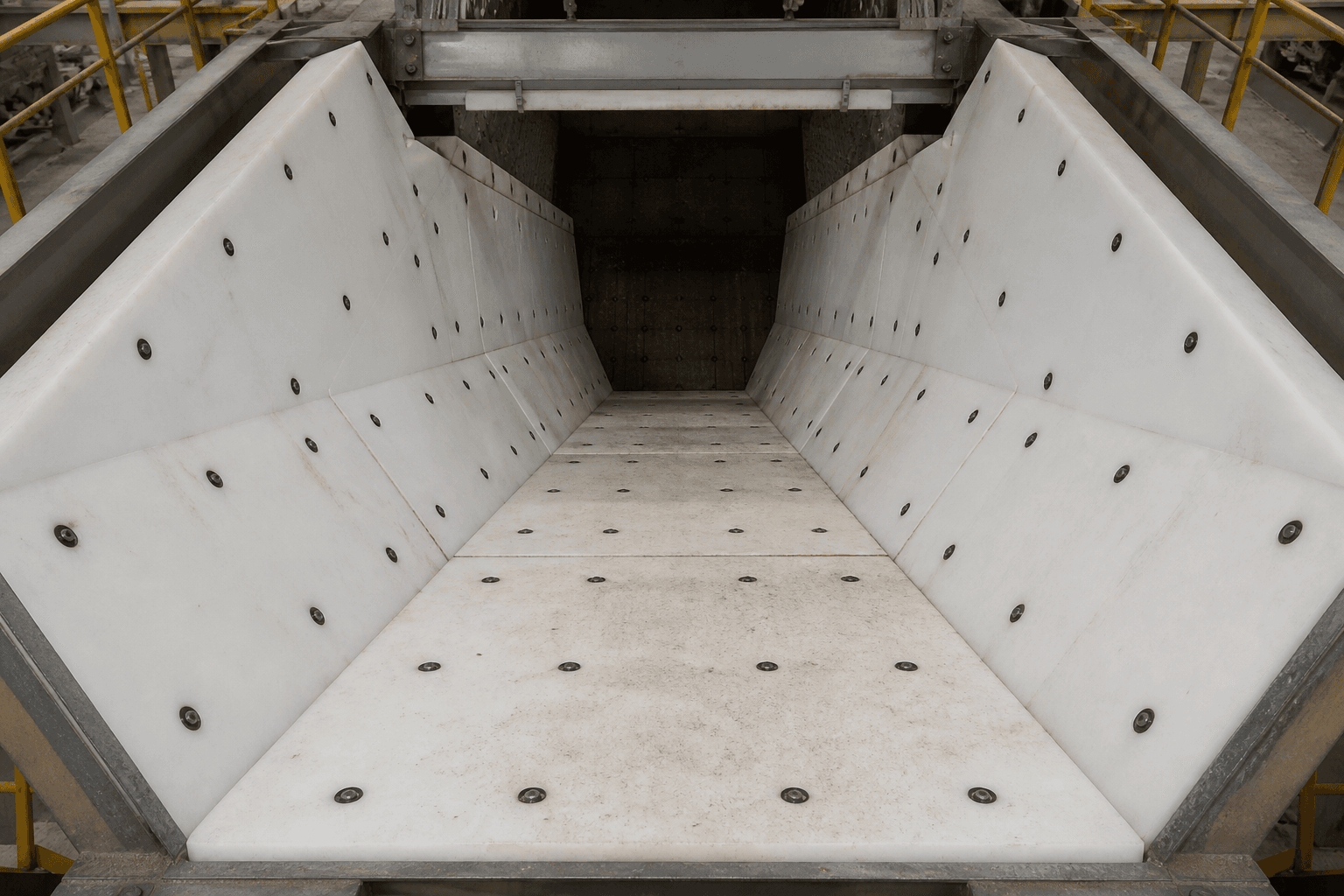
Review truck bed liners in the installed arrangement. Show adjoining components, the direction of movement or load, and the space needed for installation and later removal. If the interface changes, update the released drawing and acceptance basis together so the quote and the technical approval still refer to the same requirement.
Replacement criterion
The replacement point for truck bed liners should preserve function, retention and protection of the underlying equipment. Remaining thickness is only one possible control; exposed hardware or loose edges may require earlier action. Agree the relevant criteria with the equipment owner and responsible designer. Keep inspection records tied to the panel identity so changes can be detected reliably.
Compare the available procurement routes
Use the comparison below to decide what must happen before purchasing truck bed liners. The routes describe different scopes of work; they are not interchangeable offers. In this application, the controlling issue is tipping direction and edge protection. An apparently cheaper route may leave that issue unresolved.
| Route | When it merits review | Evidence needed before release |
|---|---|---|
| Uniform lining set | Potentially suitable when duty and support are reasonably consistent. | Verify the actual material path, panel support and installation details. |
| Zoned lining system | Worth reviewing where sliding and concentrated impact differ. | Match each zone to a documented duty and inspection criterion. |
| Flow or equipment redesign | Needed when geometry or process conditions dominate the problem. | Resolve the wider system issue before promising a liner-only improvement. |
Change control
Control changes to truck bed liners after sample approval. Material formulation, holes, recesses and panel boundaries may affect service even when overall dimensions remain unchanged. Require notification and technical disposition for relevant deviations. A first-article approval should identify what was approved so later production can be compared against a clear baseline.
Qualify a representative sample or trial: truck bed liners
Observe representative discharge and inspect the exit edge after limited use.
For truck bed liners, write the trial objective before collecting results. Record the item or sample identity, drawing revision, conditions, observations and acceptance decision. Keep a photograph or measurement record where it helps explain the outcome. If the trial covers only one part of the duty, retain the remaining questions instead of treating a limited result as full approval.
Survey accuracy
Before fabricating truck bed liners for existing equipment, reconcile old drawings with the actual structure. Repairs and previous modifications can alter holes, corners and access. Record the survey basis and resolve mismatches before releasing a full set. A first panel or critical intersection template can reveal uncertainty early, when a correction is cheaper than a failed outage installation.
Recognize the limits and stop conditions
Snagging, edge lift or interference with the tailgate requires correction.
Define who can suspend approval and who can authorize a correction. Preserve the failed item, relevant measurements and operating details where practical. Changing the product and the surrounding process simultaneously can make the cause difficult to establish. The next action should resolve the controlling uncertainty rather than merely repeat the purchase with a larger nominal size.
Identification
Every panel in a custom set of truck bed liners should be traceable to an installation position and orientation. Use a consistent numbered map and preserve markings through packing and receipt. Similar rectangles are easy to mix up when their hole patterns differ only slightly. Reconcile the complete set before shutdown rather than discovering missing or reversed parts after the equipment is opened.
Build a complete quotation package
Include body drawings and vehicle-manufacturer restrictions in the request.
The quotation package for truck bed liners should identify the requested quantity, delivery destination and purchased condition, together with the relevant drawing or layout. Ask suppliers to list exclusions and deviations clearly. Compare like scope: material identity, functional dimensions, inspection, packing and any first-article work should be visible beside the unit price.
Commissioning
Commission truck bed liners through the equipment owner's approved process, checking assembly before material flow and inspecting after an initial representative exposure. Record operating conditions and panel positions. New movement, interference or blockage needs a controlled review. A successful dry fit confirms geometry but cannot establish long-term wear, flow improvement or suitability across all feed conditions.
Representative trials
A trial of truck bed liners should use representative bulk material and operating conditions. Dry free-flowing pellets do not necessarily model damp cohesive fines. Define what success means, how exposure is recorded and where measurements occur. A limited trial can reduce uncertainty, but its conclusions should remain within the duty it actually covered.
Discuss the reviewed requirement with Paowo
Paowo lists UHMWPE Wear Liners among its current products and describes drawing- and sample-based work through its OEM and ODM custom service. For the application discussed here, send the specific interface and duty information before asking for a final recommendation.
You can also review the site’s related application area and the existing article Ground Protection Mat Cleaning: Recovery and Storage for adjoining considerations. Keep the scope of this inquiry centered on tipping direction and edge protection.
For authoritative context, see OSHA guidance on hazardous-energy control. OSHA 1910.147 addresses hazardous-energy control during covered servicing and maintenance. Use the plant’s applicable isolation procedures for liner work; this reference does not establish wear or flow performance.
Request a review of truck bed liners with your drawings, operating conditions, required outcome and delivery needs. Ask Paowo to identify the offered grade and specification, state unresolved assumptions and separate sample work from production scope. Use the inquiry form after the FAQ to share the requirement and request a quotation.
Frequently Asked Questions
What is the first issue to review for truck bed liners?
Sliding performance can be undermined by steps, exposed edges or trapped material at the discharge end. Start with the actual duty and the relevant interfaces rather than the product name alone.
What information is needed to specify truck bed liners?
Provide body geometry, tipping direction, payload type, tailgate clearance. Include a drawing or layout showing the complete interface and identify critical unknowns before release.
How should a trial of truck bed liners be assessed?
Observe representative discharge and inspect the exit edge after limited use. Keep sample identity, representative conditions and the agreed acceptance decision in the trial record.
When should approval of truck bed liners be held?
Snagging, edge lift or interference with the tailgate requires correction. Resolve the cause and obtain the responsible technical approval before release or continued use.
What should I send Paowo when requesting truck bed liners?
Include body drawings and vehicle-manufacturer restrictions in the request. Add the quantity, destination, current drawing revision and required documentation so offers can be compared on equivalent scope.