Table of Contents
Introduction
Soft ground is one of the quiet problems that can slow down an entire construction project. A truck enters after rain, the tires sink, the route becomes muddy, and every following vehicle makes the damage worse. Cranes, excavators, utility trucks, forklifts, and delivery vehicles all need stable access, but many job sites begin with grass, loose soil, sand, clay, or unfinished ground.
This is where HDPE ground protection mats become valuable. Instead of relying on temporary plywood, heavy steel plates, or repeated gravel filling, HDPE mats create a reusable working surface that helps distribute loads, protect the original ground, and keep site movement more controlled.
For construction contractors, rental companies, utility projects, landscaping teams, and infrastructure work, HDPE temporary road mats provide a practical way to build temporary access roads, machinery paths, and ground protection platforms without making the site harder to restore later.
Why Ground Conditions Matter on Job Sites
Ground protection is not only about keeping a site clean. It directly affects access, safety, equipment movement, soil preservation, and project efficiency. Poor ground conditions can cause vehicles to become stuck, create deep ruts, damage lawns or paved areas, and increase the amount of cleanup needed after the project.
For lifting equipment and heavy machinery, ground stability is even more important. OSHA defines ground conditions in crane work as the ground’s ability to support equipment, including slope, compaction, and firmness. This makes proper surface preparation and load distribution an important part of heavy equipment planning. You can learn more from OSHA’s guidance on construction ground conditions.
HDPE ground protection mats help create a more stable surface between machinery and the ground below. They do not replace professional site assessment, but they can reduce many everyday access problems caused by mud, wet grass, loose soil, and repeated traffic.
What Are HDPE Ground Protection Mats?
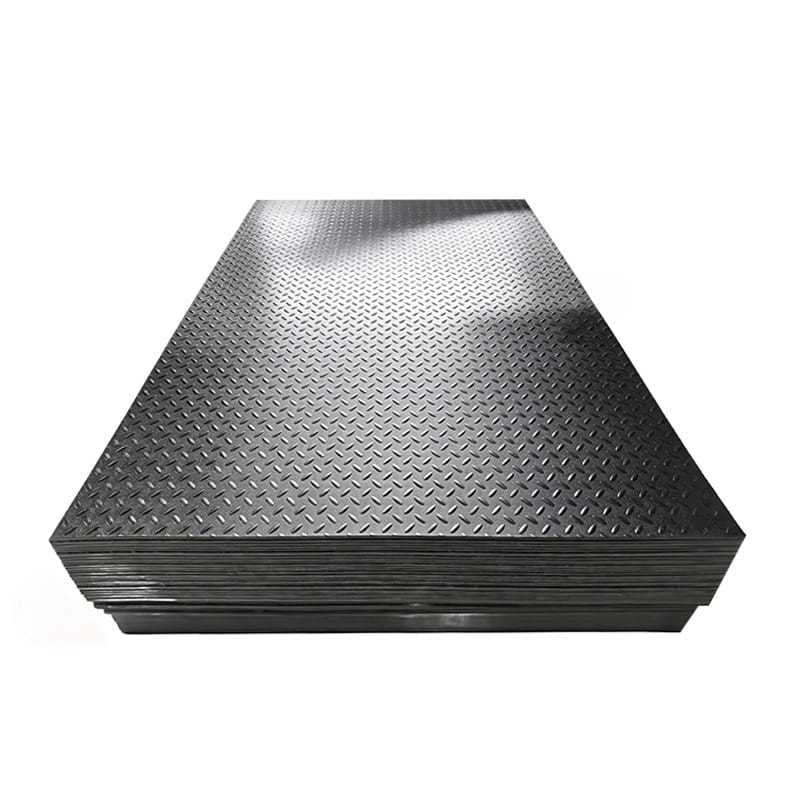
HDPE ground protection mats are heavy-duty plastic panels made from high-density polyethylene. HDPE is widely used in industrial applications because it has a strong strength-to-density ratio, good impact resistance, moisture resistance, and outdoor durability. The material background is well explained in this overview of high-density polyethylene.
In job site use, HDPE mats are designed to spread vehicle and equipment loads across a larger surface area. This helps reduce tire rutting, soil compaction, and surface damage. Many mats also use anti-slip texture patterns to improve traction for machinery and workers in wet or muddy conditions.
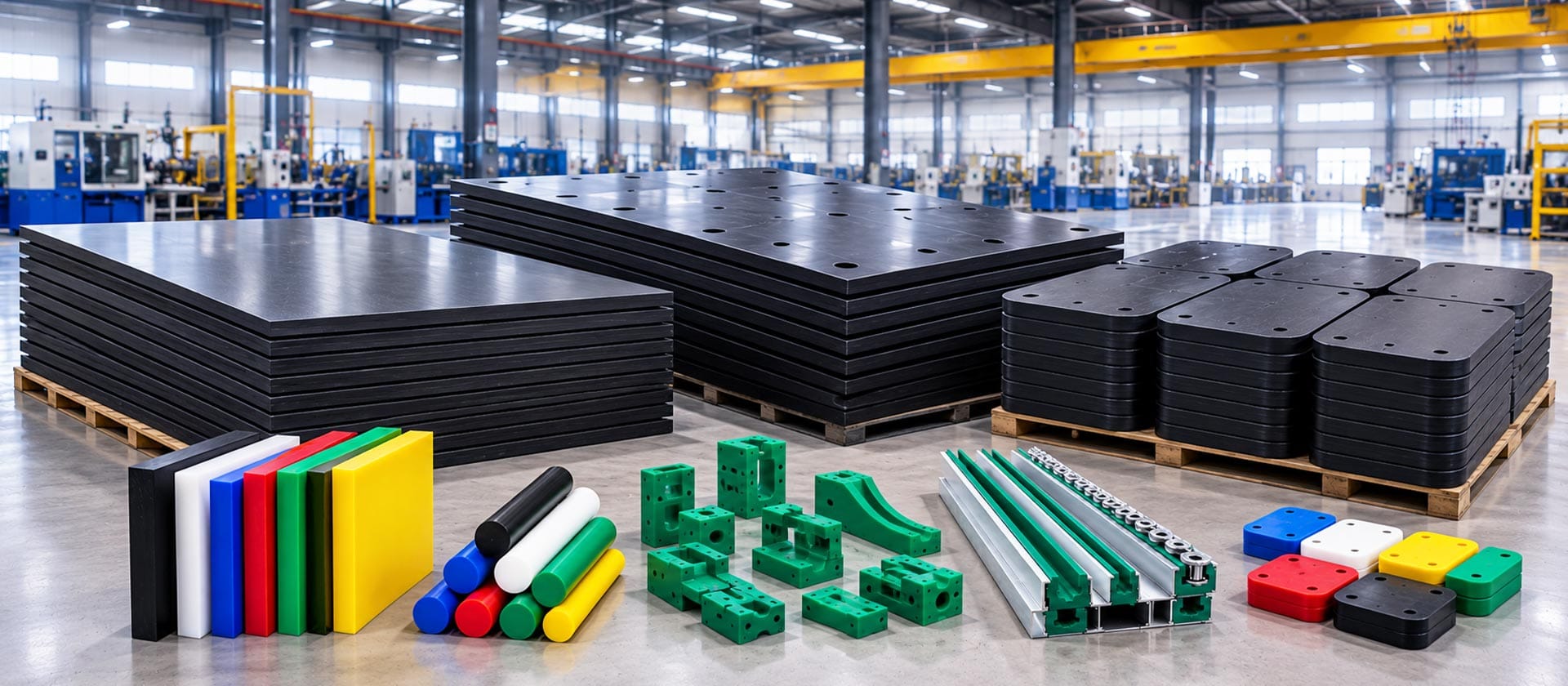
Paowo’s HDPE road mats are designed for temporary construction access roads, soft ground protection, landscaping work, utility projects, and heavy equipment movement. They can also be customized by size, thickness, connection holes, texture, color, and logo marking according to project needs.
How HDPE Mats Protect Soil, Turf, and Paved Surfaces
When heavy vehicles move across unprotected ground, the pressure from tires or tracks is concentrated into a small contact area. On wet or soft ground, that pressure can quickly create rutting, sinking, and uneven surfaces. Once ruts form, water collects, traction gets worse, and the job site becomes harder to manage.
HDPE ground protection mats help by creating a temporary layer that spreads the load. This does not make weak soil magically strong, but it helps reduce direct surface damage and keeps vehicle movement more controlled.
They are especially useful when the project must protect:
- Existing lawns or landscaped areas
- Temporary access paths across mud or grass
- Paved surfaces that may crack under heavy point loads
- Utility access routes where repeated trips are expected
- Construction entrances where track-out and cleanup are concerns
Ground protection also supports environmental site management. The EPA discusses erosion and sediment control as part of construction stormwater best practices, and stable temporary access can help reduce unnecessary soil disturbance. For wider context, see the EPA’s page on construction stormwater best management practices.
HDPE Ground Protection Mats vs Plywood, Steel, and Gravel
Different temporary access materials can work in different situations, but HDPE mats offer a strong balance of durability, reusability, and handling efficiency.
| Material | Advantages | Limitations | Best Use Case |
|---|---|---|---|
| HDPE ground protection mats | Reusable, moisture-resistant, lighter than steel, customizable, anti-slip options | Must be selected by load, ground type, and application | Construction access, ground protection, temporary roadways |
| Plywood boards | Easy to source, low initial setup effort | Absorbs water, breaks down faster, limited reuse | Light-duty, short-term pedestrian or small equipment use |
| Steel plates | Strong load support, rigid surface | Very heavy, harder to move, rust risk, may damage surfaces | Heavy point-load use where lifting equipment is available |
| Gravel roads | Stable when properly built | Requires removal, may disturb soil, slower installation | Longer-term access routes where site alteration is acceptable |
For many projects, HDPE ground protection mats are selected because they can be deployed quickly, recovered after use, and reused on future sites.
Key Features That Affect Mat Performance
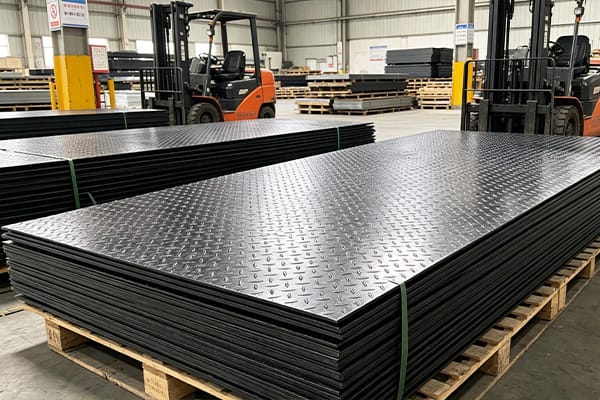
Not all ground protection mats perform the same way. The right specification depends on equipment weight, soil condition, traffic frequency, mat size, and installation method.
Important features include:
Mat thickness: Thicker mats generally provide better support for heavier traffic, but the correct choice depends on load and ground conditions.
Surface texture: Anti-slip diamond, traction, or patterned surfaces help improve grip in muddy or wet environments.
Connection design: Connection holes or linking systems help keep mats aligned when vehicles pass over them repeatedly.
Material quality: Virgin HDPE can provide more stable performance for demanding job sites where consistency matters.
Mat size: Larger mats cover more area and reduce installation joints, while smaller mats may be easier to handle in tight spaces.
Customization: Color, logo marking, hole layout, edge design, and thickness can be adjusted for rental fleets, contractors, or project-specific requirements.
Common Applications for HDPE Ground Protection Mats
HDPE ground protection mats are used anywhere temporary access and surface protection are needed. Their value is highest when the ground must be protected while still allowing vehicles, workers, and machinery to move efficiently.
Common applications include:
Construction site access: Creating temporary routes for trucks, excavators, cranes, and material delivery vehicles.
Utility and infrastructure work: Supporting temporary access for pipeline, power, telecom, and water projects.
Crane and lifting support areas: Protecting approach routes and working zones around lifting equipment. For concentrated outrigger loads, UHMWPE outrigger pads may also be used together with matting systems.
Landscaping and turf protection: Protecting grass, parks, sports fields, and residential lawns from tire marks and rutting.
Industrial maintenance: Creating temporary working paths for repair vehicles, mobile equipment, and maintenance teams.
Event and temporary facilities: Supporting foot traffic, service vehicles, and temporary logistics routes over sensitive surfaces.
How to Select the Right Mat for Your Working Conditions
The best HDPE ground protection mat is not simply the thickest or largest option. It should match the real working condition.
Before selecting mats, confirm these details:
- Vehicle or equipment type
- Approximate load and traffic frequency
- Ground type, such as mud, grass, sand, clay, gravel, or paved surface
- Site slope and drainage condition
- Temporary road length and width
- Whether vehicles will turn, brake, or reverse on the mats
- Need for connectors, anti-slip texture, lifting holes, or logo marking
- Reuse expectations across future projects
If the site involves cranes, pump trucks, aerial work platforms, or other equipment with concentrated support points, ground mats may need to be combined with specialized support pads. Paowo’s construction site ground protection solution page gives a clearer view of how road mats and support pads can work together.
Installation and Maintenance Tips for Repeated Use
Good installation helps mats perform better and last longer. Before placing mats, remove sharp debris, large stones, metal scraps, or objects that may damage the underside. If possible, level the route enough to avoid severe rocking or unsupported gaps.
For temporary roadways, mats should be aligned to match the direction of traffic and connected where repeated movement may cause shifting. On muddy sites, create a clear entry and exit path so vehicles do not drag excessive debris across the mat surface. In wet conditions, anti-slip texture becomes especially important.
After use, clean off mud, sand, stones, and chemical residues when practical. Inspect mats for cracks, deformation, damaged connection holes, or excessive wear. Proper cleaning and storage can make reusable ground protection mats more dependable across multiple projects.
When Custom HDPE Road Mats Make More Sense
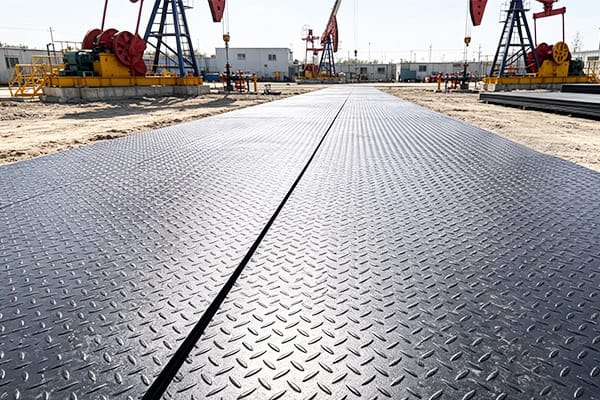
Standard mat sizes work for many projects, but custom HDPE road mats are useful when the job site has special requirements. For example, rental companies may need branded mats with consistent color and logo marking. Contractors may need specific hole positions for connectors. Utility projects may need mats that fit narrow access routes or irregular working zones.
Customization is also helpful when the mat must match certain equipment types, load conditions, or handling methods. Paowo supports customized HDPE temporary road mats with options for size, thickness, texture, connection holes, edge design, color, and branding.
For broader UHMWPE and HDPE customization, Paowo’s OEM & ODM custom service can support drawings, samples, working condition details, and project-specific requirements.
Conclusion
HDPE ground protection mats solve a very practical job site problem: how to move people, vehicles, and heavy equipment across soft or sensitive ground without creating unnecessary damage, delay, or cleanup. Compared with plywood, steel plates, or temporary gravel, HDPE mats offer a reusable and customizable solution for temporary access roads, construction entrances, utility routes, crane support areas, and turf protection.
For projects that need stable access, reduced rutting, easier handling, and repeated use, HDPE road mats can become a high-value part of site planning. The key is to match mat thickness, size, surface texture, and connection design to the real working conditions.
FAQ
What are HDPE ground protection mats used for?
HDPE ground protection mats are used to create temporary access roads, protect soft ground, reduce rutting, and support vehicle or equipment movement on construction sites, utility projects, landscaping work, and temporary outdoor work areas.
Are HDPE ground protection mats better than plywood?
For wet, muddy, or repeated-use conditions, HDPE mats usually offer better durability, moisture resistance, and reusability than plywood. Plywood can absorb water and break down faster under heavy equipment traffic.
Can HDPE mats be used for heavy equipment?
Yes, HDPE mats are commonly used for trucks, excavators, forklifts, and other equipment access. The correct mat thickness and installation method should be selected based on equipment load, ground firmness, and traffic frequency.
Can HDPE road mats be customized?
Yes. Paowo can customize mat size, thickness, surface texture, connection holes, color, logo marking, and edge design based on project requirements, drawings, or site conditions.
What information is needed for an HDPE ground protection mat inquiry?
Useful details include mat size, thickness, quantity, vehicle type, ground condition, temporary road length, surface texture preference, connector needs, project photos, and delivery destination.