Table of Contents
A transfer chute receives a concentrated stream near a panel joint. For buyers reviewing transfer chute liners, the practical question is whether the offered product and its supporting evidence address this specific requirement.
This guide examines keeping seams out of direct particle impact as a defined engineering and purchasing decision. It connects the duty, interface, qualification and quotation so procurement can resolve the important questions before releasing an order.
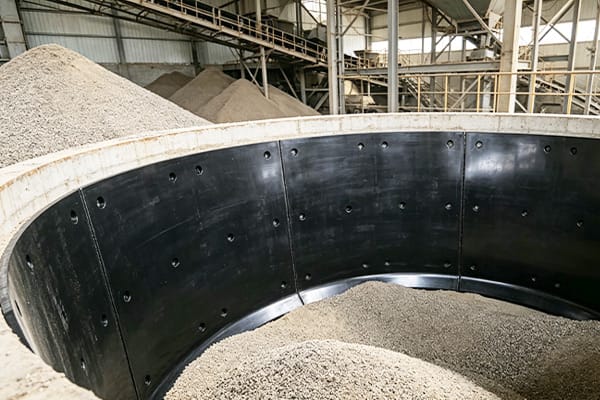
Keeping Seams Out of Direct Particle Impact
An exposed upstream edge can catch particles and accelerate local damage.
Draw the incoming stream trajectory against the panel layout and mark where it first contacts the chute. Check whether a seam or fixing sits at that point. Move or redesign the detail through the approved process if necessary. After commissioning, inspect the inlet locally rather than averaging its condition with the much larger sliding area farther downstream.
Start by separating the observed symptom from the proposed product change. Record what happens, where it happens and the operating condition in which it matters. That makes the review of transfer chute liners specific enough to support a decision, rather than a comparison of broad product descriptions.
Survey accuracy
Before fabricating transfer chute liners for existing equipment, reconcile old drawings with the actual structure. Repairs and previous modifications can alter holes, corners and access. Record the survey basis and resolve mismatches before releasing a full set. A first panel or critical intersection template can reveal uncertainty early, when a correction is cheaper than a failed outage installation.
The inputs that define transfer chute liners
Record stream trajectory, impact location, flow direction, joint position. Keep the units, revision and source of each input with the inquiry. Distinguish a measured value from an estimate, and identify the person responsible for resolving any critical unknown. A supplier can review an explicit assumption; an undocumented assumption is much harder to detect.
Commissioning
Commission transfer chute liners through the equipment owner's approved process, checking assembly before material flow and inspecting after an initial representative exposure. Record operating conditions and panel positions. New movement, interference or blockage needs a controlled review. A successful dry fit confirms geometry but cannot establish long-term wear, flow improvement or suitability across all feed conditions.
Design the complete interface: transfer chute liners
Place and detail seams in relation to the actual material path.
Review transfer chute liners in the installed arrangement. Show adjoining components, the direction of movement or load, and the space needed for installation and later removal. If the interface changes, update the released drawing and acceptance basis together so the quote and the technical approval still refer to the same requirement.
Whole-system cost
A cost comparison for transfer chute liners should include machining, installation, access, outage duration and realistic replacement frequency. A low-cost panel can be expensive in a hard-to-reach transfer point. Use recorded maintenance events and exposure rather than an invented service-life multiplier. Present estimated savings as assumptions until a representative operating history supports them.
Compare the available procurement routes
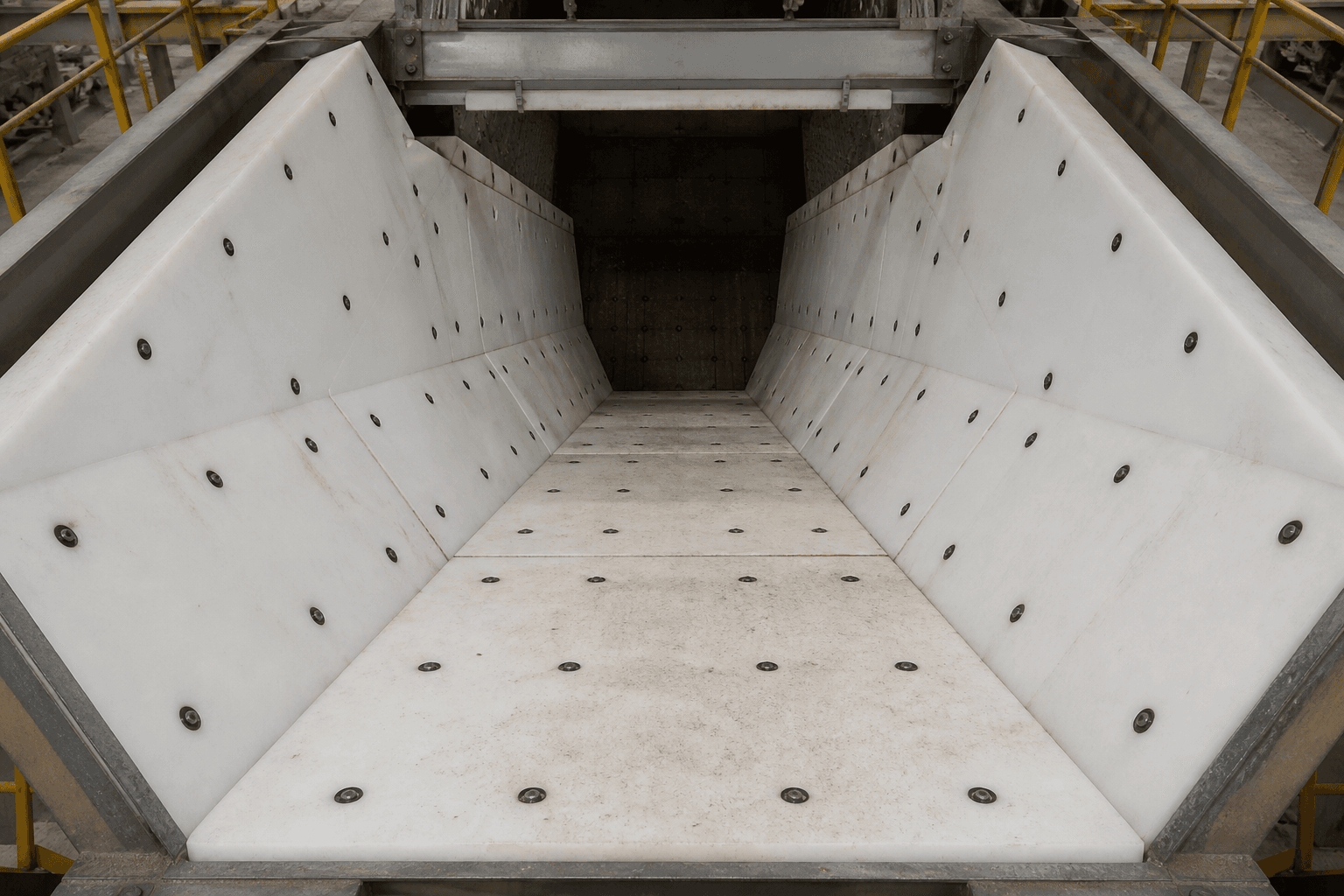
Use the comparison below to decide what must happen before purchasing transfer chute liners. The routes describe different scopes of work; they are not interchangeable offers. In this application, the controlling issue is keeping seams out of direct particle impact. An apparently cheaper route may leave that issue unresolved.
| Route | When it merits review | Evidence needed before release |
|---|---|---|
| Uniform lining set | Potentially suitable when duty and support are reasonably consistent. | Verify the actual material path, panel support and installation details. |
| Zoned lining system | Worth reviewing where sliding and concentrated impact differ. | Match each zone to a documented duty and inspection criterion. |
| Flow or equipment redesign | Needed when geometry or process conditions dominate the problem. | Resolve the wider system issue before promising a liner-only improvement. |
Packing sequence
Package transfer chute liners by equipment zone and installation sequence where this reduces confusion. Keep hardware separated and identified, and protect functional edges during transport. Request a complete manifest that can be checked before the outage. Correct panel counts are insufficient if one special corner piece or a required fixing kit is missing.
Qualify a representative sample or trial: transfer chute liners
Inspect the joint after a controlled representative throughput interval.
For transfer chute liners, write the trial objective before collecting results. Record the item or sample identity, drawing revision, conditions, observations and acceptance decision. Keep a photograph or measurement record where it helps explain the outcome. If the trial covers only one part of the duty, retain the remaining questions instead of treating a limited result as full approval.
Panel boundaries
Lay out transfer chute liners around flow direction, service access and practical handling. Module boundaries should help installation and replacement while avoiding exposed edges in severe flow. Consider the removal sequence and tool access before finalizing panel sizes. A large panel that reduces seam count can still be costly if maintenance cannot remove it through the available opening.
Recognize the limits and stop conditions
Edge lifting or concentrated chipping requires redesign of the impact zone.
Define who can suspend approval and who can authorize a correction. Preserve the failed item, relevant measurements and operating details where practical. Changing the product and the surrounding process simultaneously can make the cause difficult to establish. The next action should resolve the controlling uncertainty rather than merely repeat the purchase with a larger nominal size.
Joints and movement
Joint details for transfer chute liners should account for flow and the movement permitted by the design. An upstream-facing step can collect material or expose an edge to damage. A fully constrained polymer panel may behave differently as temperature changes. Use reviewed sections and installation directions rather than leaving the fitters to decide overlaps and clearances during the shutdown.
Build a complete quotation package
Provide a chute section with feed direction and expected impact region.
The quotation package for transfer chute liners should identify the requested quantity, delivery destination and purchased condition, together with the relevant drawing or layout. Ask suppliers to list exclusions and deviations clearly. Compare like scope: material identity, functional dimensions, inspection, packing and any first-article work should be visible beside the unit price.
Fixing recesses
Fasteners for transfer chute liners need a coordinated head, recess, backing and wear allowance. Metal should not become exposed in the moving material path before the defined replacement point. The recess also reduces the remaining polymer section. Review these competing requirements on a section drawing and confirm that the planned inspection can detect the controlling condition.
Thermal duty
The specification for transfer chute liners must include normal and credible abnormal material temperatures. Grade-specific limitations and the complete assembly need review. An average operating temperature can hide an occasional hot batch or process upset. Do not assume that a tougher or thicker polymer panel solves an unsuitable thermal duty; use an appropriate alternative where the approved limits are exceeded.
Discuss the reviewed requirement with Paowo
Paowo lists UHMWPE Wear Liners among its current products and describes drawing- and sample-based work through its OEM and ODM custom service. For the application discussed here, send the specific interface and duty information before asking for a final recommendation.
You can also review the site’s related application area and the existing article UHMWPE Chute Liners for Aggregate and Quarry Operations for adjoining considerations. Keep the scope of this inquiry centered on keeping seams out of direct particle impact.
For authoritative context, see OSHA guidance on hazardous-energy control. OSHA 1910.147 addresses hazardous-energy control during covered servicing and maintenance. Use the plant’s applicable isolation procedures for liner work; this reference does not establish wear or flow performance.
Request a review of transfer chute liners with your drawings, operating conditions, required outcome and delivery needs. Ask Paowo to identify the offered grade and specification, state unresolved assumptions and separate sample work from production scope. Use the inquiry form after the FAQ to share the requirement and request a quotation.
Frequently Asked Questions
What is the first issue to review for transfer chute liners?
An exposed upstream edge can catch particles and accelerate local damage. Start with the actual duty and the relevant interfaces rather than the product name alone.
What information is needed to specify transfer chute liners?
Provide stream trajectory, impact location, flow direction, joint position. Include a drawing or layout showing the complete interface and identify critical unknowns before release.
How should a trial of transfer chute liners be assessed?
Inspect the joint after a controlled representative throughput interval. Keep sample identity, representative conditions and the agreed acceptance decision in the trial record.
When should approval of transfer chute liners be held?
Edge lifting or concentrated chipping requires redesign of the impact zone. Resolve the cause and obtain the responsible technical approval before release or continued use.
What should I send Paowo when requesting transfer chute liners?
Provide a chute section with feed direction and expected impact region. Add the quantity, destination, current drawing revision and required documentation so offers can be compared on equivalent scope.