Table of Contents
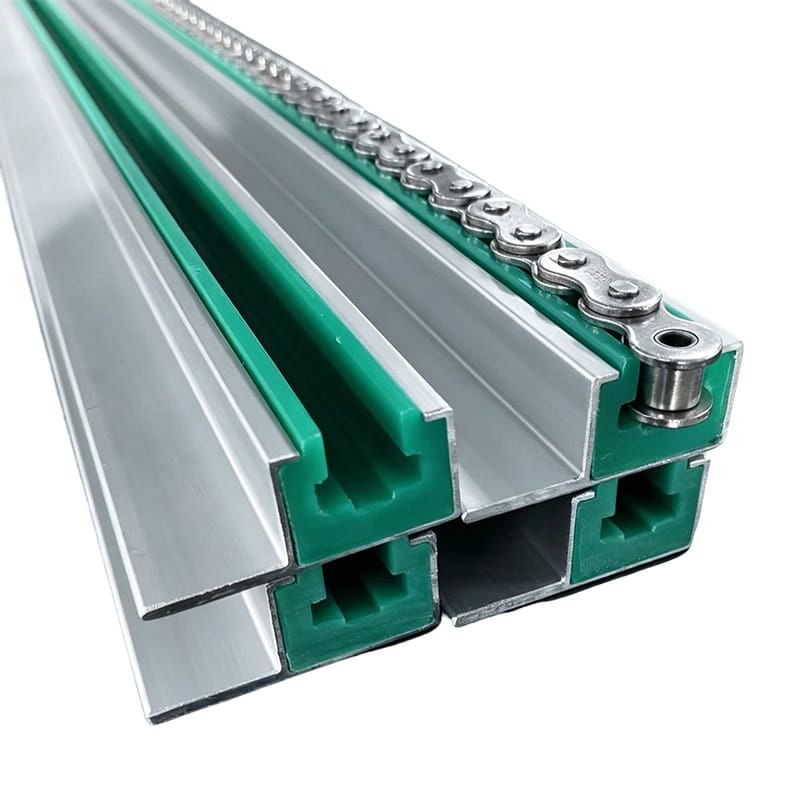
A T-profile guide is retained within a metal channel. For buyers reviewing UHMWPE T guide, the practical question is whether the offered product and its supporting evidence address this specific requirement.
This guide examines supporting the profile without pinching it as a defined engineering and purchasing decision. It connects the duty, interface, qualification and quotation so procurement can resolve the important questions before releasing an order.

Supporting the Profile Without Pinching It
Excessive restraint or an undersized channel can distort the sliding surface.
Compare the T-profile section with its metal retention channel using the same datums. Check how the section is inserted and where it may move under the approved detail. A channel that holds the stem too tightly can distort the working face. Inspect the installed profile rather than accepting a free sample solely because its outer dimensions match the drawing.
Start by separating the observed symptom from the proposed product change. Record what happens, where it happens and the operating condition in which it matters. That makes the review of UHMWPE T guide specific enough to support a decision, rather than a comparison of broad product descriptions.
Washdown
A cleaning regime for UHMWPE T guide should identify chemical, concentration, temperature and frequency. Low moisture absorption does not establish resistance to every cleaning product. Review the supplied grade and installed cleanability, including fasteners and recesses. Where food-contact documentation is needed, ask for the applicable declaration for the actual formulation and intended duty.
The inputs that define UHMWPE T guide
Record channel opening, profile stem, retention detail, temperature range. Keep the units, revision and source of each input with the inquiry. Distinguish a measured value from an estimate, and identify the person responsible for resolving any critical unknown. A supplier can review an explicit assumption; an undocumented assumption is much harder to detect.
Automation interfaces
Guide replacement can affect the product path near UHMWPE T guide, including sensors, stops and transfer mechanisms. Record critical nearby envelopes and mounting datums. Verify detection and positioning in a controlled representative trial as well as checking chain movement. A dimensionally correct profile may still need assembly adjustment if the wider automation interfaces were not specified.
Design the complete interface: UHMWPE T guide
Define the supporting channel and permitted movement as part of the assembly.
Review UHMWPE T guide in the installed arrangement. Show adjoining components, the direction of movement or load, and the space needed for installation and later removal. If the interface changes, update the released drawing and acceptance basis together so the quote and the technical approval still refer to the same requirement.
Changeover
For equipment using UHMWPE T guide with several products, define repeatable settings and clear identification. An adjustment that works for one product may pinch another or leave too much lateral freedom. Check the approved product range and document the setting method. Keep the guide profile reference separate from the operator's changeover position.
Compare the available procurement routes
Use the comparison below to decide what must happen before purchasing UHMWPE T guide. The routes describe different scopes of work; they are not interchangeable offers. In this application, the controlling issue is supporting the profile without pinching it. An apparently cheaper route may leave that issue unresolved.
| Route | When it merits review | Evidence needed before release |
|---|---|---|
| Standard profile | Potentially suitable where chain and mounting interfaces match. | Verify functional section dimensions and the full supported path. |
| Custom profile | Useful where a reviewed groove, curve or interface is required. | Approve the section drawing, mating support and representative fit. |
| System adjustment | Needed where alignment, contamination or adjoining equipment dominates. | Correct the operating system instead of only changing the plastic profile. |
Trial records
A trial of UHMWPE T guide should record chain condition, load, speed, cycle, temperature and contamination sufficiently to interpret the result. Compare matched periods and avoid changing several uncontrolled variables at once. Treat reduced noise or wear as an observed outcome within the trial scope, rather than promising the same improvement across every production line.
Qualify a representative sample or trial
Inspect the installed profile for distortion before a representative running trial.
For UHMWPE T guide, write the trial objective before collecting results. Record the item or sample identity, drawing revision, conditions, observations and acceptance decision. Keep a photograph or measurement record where it helps explain the outcome. If the trial covers only one part of the duty, retain the remaining questions instead of treating a limited result as full approval.
Actual chain
For UHMWPE T guide, identify the exact chain type and its functional envelope. Overall chain width is only one input; side plates, links, attachments and articulation can affect contact. Use chain-manufacturer data and inspect the actual assembly where appropriate. A visually similar guide should not be substituted without checking the profile and support arrangement.

Recognize the limits and stop conditions
Pinching or lifting requires a support-detail correction.
Define who can suspend approval and who can authorize a correction. Preserve the failed item, relevant measurements and operating details where practical. Changing the product and the surrounding process simultaneously can make the cause difficult to establish. The next action should resolve the controlling uncertainty rather than merely repeat the purchase with a larger nominal size.
Profile datums
Specify UHMWPE T guide from the faces that position and support the chain. Make critical groove, stem and contact dimensions explicit on a section drawing. A report showing only overall width and height can miss the geometry that controls fit. Agree the inspection method for these functional features before approving the profile for recurring supply.
Build a complete quotation package
Send both plastic and metal-channel drawings with the inquiry.
The quotation package for UHMWPE T guide should identify the requested quantity, delivery destination and purchased condition, together with the relevant drawing or layout. Ask suppliers to list exclusions and deviations clearly. Compare like scope: material identity, functional dimensions, inspection, packing and any first-article work should be visible beside the unit price.
Metal support
The backing channel or brackets used with UHMWPE T guide are part of the assembly. Their dimensions and alignment influence the installed plastic profile. Check that retention does not pinch or distort the working face and that the approved movement is possible. Request both sides of the interface rather than treating the plastic section as an isolated product.
Longitudinal joints
Place joints in UHMWPE T guide with attention to chain travel, supported length and temperature movement. A raised or constrained splice can create a repeated contact event at every link. Use the approved joint detail and verify it in the installed condition. Inspect after representative operation, because a good-looking cold assembly may change as the system warms.
Discuss the reviewed requirement with Paowo
Paowo lists UHMWPE Chain Guides among its current products and describes drawing- and sample-based work through its OEM and ODM custom service. For the application discussed here, send the specific interface and duty information before asking for a final recommendation.
You can also review the site’s related application area and the existing article UHMWPE Chain Guide RFQ Checklist: Profile, Chain, Length and Mounting for adjoining considerations. Keep the scope of this inquiry centered on supporting the profile without pinching it.
For authoritative context, see HSE conveyor and machinery guarding guidance. HSE guarding guidance reinforces the need to prevent access to hazardous moving parts and control maintenance work. It supports the maintenance context here; it does not endorse a guide profile or predict friction and wear.
Request a review of UHMWPE T guide with your drawings, operating conditions, required outcome and delivery needs. Ask Paowo to identify the offered grade and specification, state unresolved assumptions and separate sample work from production scope. Use the inquiry form after the FAQ to share the requirement and request a quotation.
Frequently Asked Questions
What is the first issue to review for UHMWPE T guide?
Excessive restraint or an undersized channel can distort the sliding surface. Start with the actual duty and the relevant interfaces rather than the product name alone.
What information is needed to specify UHMWPE T guide?
Provide channel opening, profile stem, retention detail, temperature range. Include a drawing or layout showing the complete interface and identify critical unknowns before release.
How should a trial of UHMWPE T guide be assessed?
Inspect the installed profile for distortion before a representative running trial. Keep sample identity, representative conditions and the agreed acceptance decision in the trial record.
When should approval of UHMWPE T guide be held?
Pinching or lifting requires a support-detail correction. Resolve the cause and obtain the responsible technical approval before release or continued use.
What should I send Paowo when requesting UHMWPE T guide?
Send both plastic and metal-channel drawings with the inquiry. Add the quantity, destination, current drawing revision and required documentation so offers can be compared on equivalent scope.