When a chute, hopper or transfer point wears too quickly, buyers often narrow the choice to two very different materials: UHMWPE and abrasion-resistant steel.
That leads to a common question:
Which is better: UHMWPE vs AR steel liners?
There is no universal winner.
The correct choice depends on what is actually damaging the equipment.
UHMWPE can be attractive where low friction, sliding abrasion, moisture resistance and lighter replaceable panels are important. AR steel can be better suited to applications requiring high stiffness, structural support or resistance to severe gouging and impact under conditions where a hard metal surface is appropriate.
In many real bulk-handling systems, the best solution is not to choose one material for the entire chute.
A transfer point may contain:
- A severe impact zone
- A long sliding zone
- A wet buildup area
- A transition section
- A low-wear discharge area
Different zones may benefit from different liner materials.
That is why the UHMWPE vs AR steel liners decision should start with the wear mechanism, particle characteristics, operating temperature and installation conditions rather than with material reputation alone.
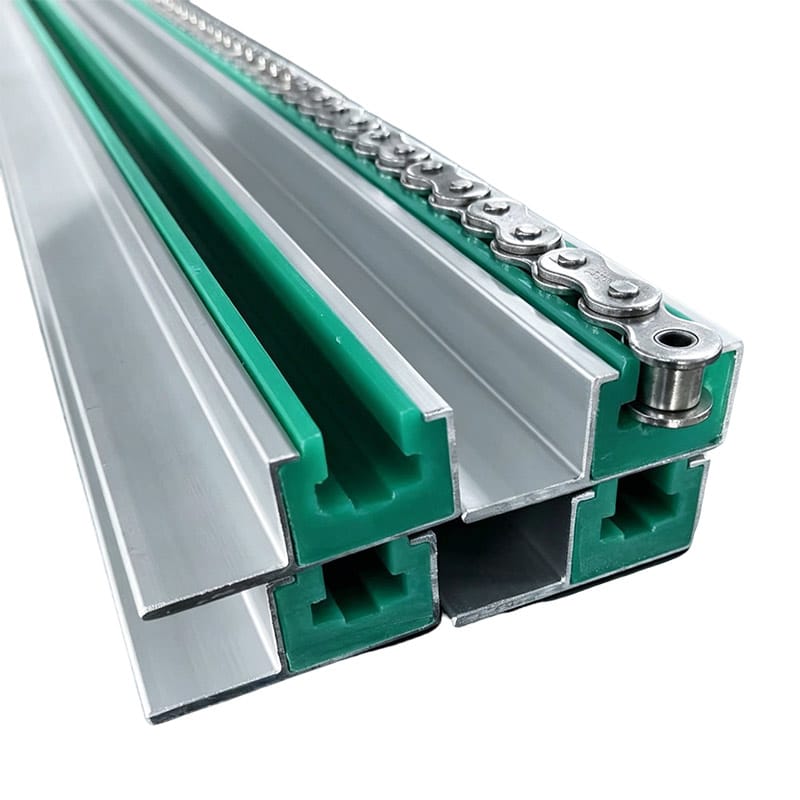
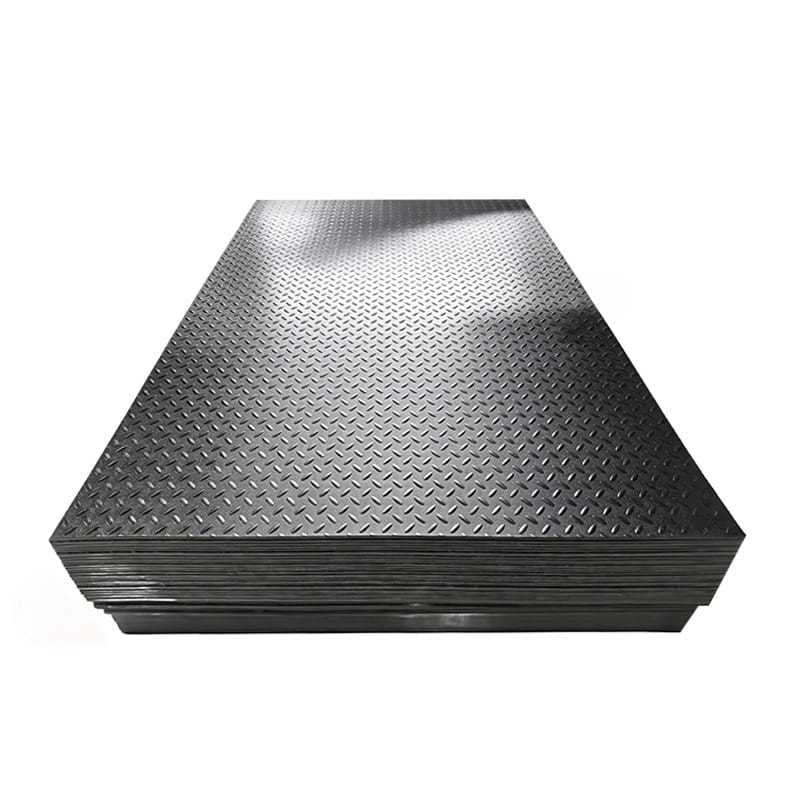
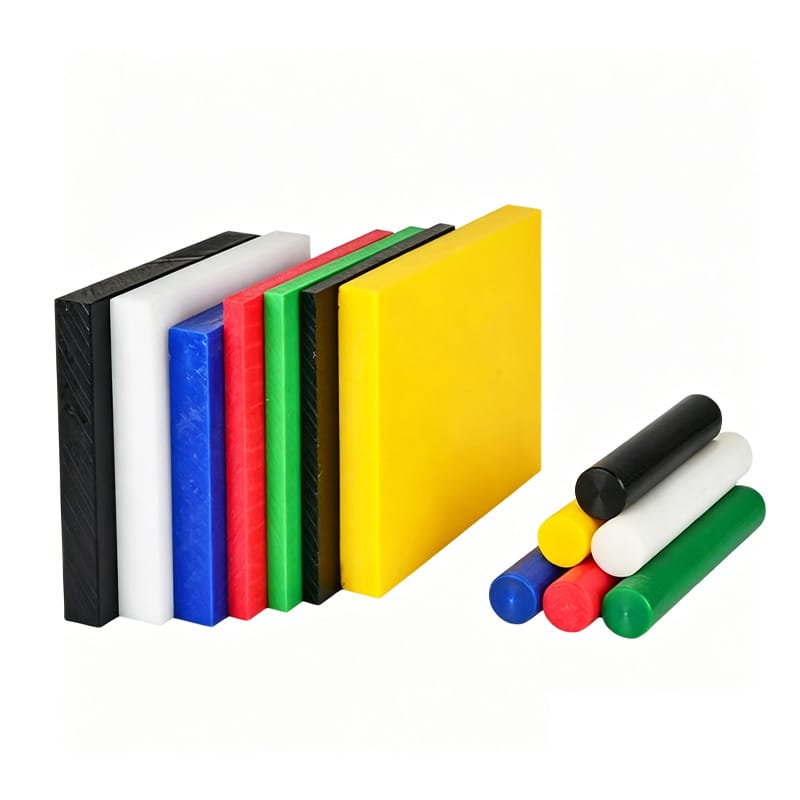
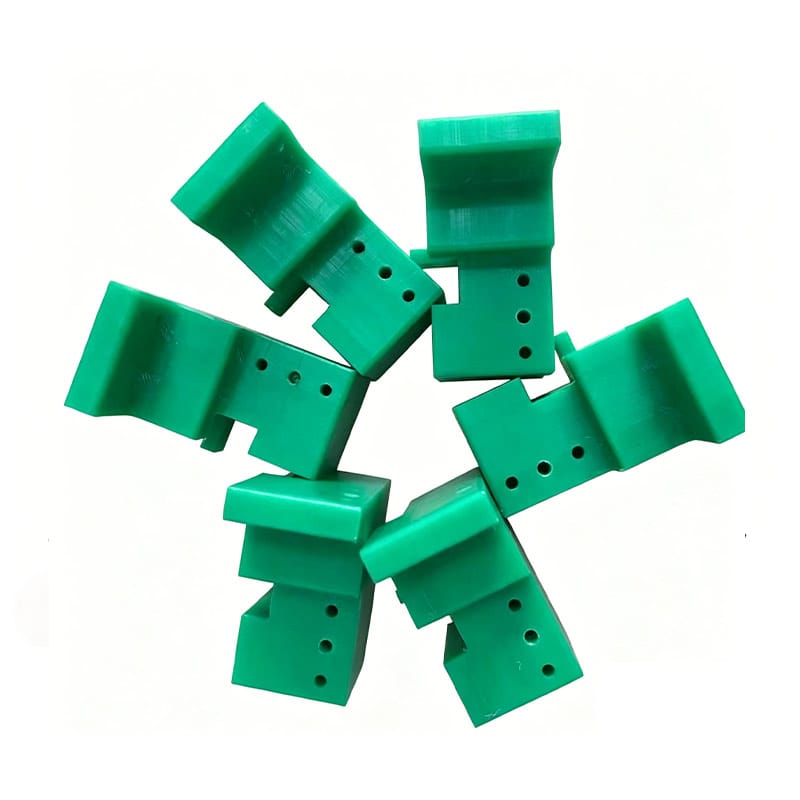
Paowo Group supplies UHMWPE wear liners for industrial bulk-material handling applications where sliding wear, low friction and replaceable polymer liners are useful.
What Are UHMWPE Wear Liners?
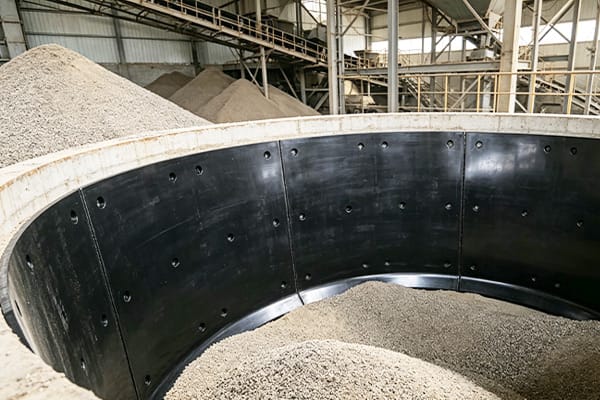
UHMWPE, or ultra-high-molecular-weight polyethylene, is an engineering thermoplastic widely used for industrial sliding and wear applications.
Typical UHMWPE liner applications include:
- Chutes
- Hoppers
- Bunkers
- Silos
- Conveyor transfer points
- Truck bodies
- Material-flow surfaces
Important characteristics include:
- Low surface friction
- Good abrasion resistance in many sliding applications
- Impact toughness
- Very low water absorption
- Chemical resistance
- Relatively low weight
- Easy machining
In a UHMWPE vs AR steel liners comparison, UHMWPE is often selected when material flow and surface release matter as much as wear resistance.
What Are AR Steel Liners?
AR steel refers to abrasion-resistant steel plate designed for applications where wear resistance is more important than the characteristics of standard structural steel.
These plates are commonly used in:
- Mining equipment
- Crushers
- Transfer chutes
- Hoppers
- Truck bodies
- Heavy-duty wear zones
AR steel provides a hard, stiff metallic wear surface.
Its exact properties depend on:
- Grade
- Hardness
- Plate thickness
- Manufacturer
- Heat treatment
When comparing UHMWPE vs AR steel liners, buyers should avoid treating “AR steel” as one single universal material.
Different AR grades can have different hardness, toughness and fabrication requirements.
UHMWPE vs AR Steel Liners: Key Differences at a Glance
| Selection Factor | UHMWPE | AR Steel |
|---|---|---|
| Material type | Engineering thermoplastic | Abrasion-resistant steel |
| Surface friction | Low | Higher than UHMWPE in many applications |
| Sliding abrasion | Strong candidate | Strong candidate depending on wear mode |
| Severe gouging | Application dependent | Often better suited |
| Impact toughness | Good | Grade dependent |
| Structural stiffness | Low compared with steel | High |
| Weight | Relatively low | High |
| Water absorption | Very low | Not applicable |
| Corrosion | Polymer does not rust | May require corrosion consideration |
| Material buildup | Low-friction surface can help | Rough or worn steel may encourage buildup |
| Machining | Easy to CNC machine | Requires metal fabrication or machining |
| Welding | Not applicable | Often weldable depending on grade |
| Noise | Can reduce metal-on-material noise | Can transmit more impact noise |
| Temperature capability | Limited by polymer properties | Generally higher |
| Installation | Bolted panels common | Bolted or welded systems common |
This table is a selection framework, not a performance guarantee.
The real UHMWPE vs AR steel liners comparison depends on the actual wear mechanism and operating conditions.
Sliding Abrasion: Where UHMWPE Can Be Strong
Sliding abrasion occurs when material moves continuously across a surface.
Typical examples include:
- Sand flowing through a chute
- Aggregate sliding down a hopper wall
- Grain moving through a transfer section
- Fine mineral product flowing through a bunker
In these conditions, UHMWPE can be attractive because its low-friction surface reduces resistance to material movement.
This can help with:
- Flow
- Buildup
- Surface drag
When the wear mechanism is primarily sliding rather than severe cutting or impact, UHMWPE may offer a practical combination of wear resistance and material release.
This is one of the most important areas where the UHMWPE vs AR steel liners comparison can favor UHMWPE.
Gouging Wear: Where AR Steel May Have an Advantage
Gouging is different from fine sliding abrasion.
It involves larger or sharper particles creating deep localized damage.
Examples include:
- Large angular rock
- Sharp ore
- Heavy scrap
- Coarse crushed stone
These particles may:
- Cut
- Dig
- Plow
- Strike
the liner surface.
In severe gouging conditions, a hard abrasion-resistant steel may be more appropriate than a softer polymer.
That does not mean UHMWPE cannot handle coarse material.
It means the exact UHMWPE vs AR steel liners decision should account for how aggressively the particles attack the surface.
Direct Impact Changes the Material Decision
Impact is one of the most important variables in liner selection.
A material falling from a large height creates a very different condition from the same material sliding along a chute.
Impact depends on:
- Particle mass
- Drop height
- Velocity
- Impact angle
- Contact area
UHMWPE has strong impact toughness relative to many plastics.
AR steel also offers high load-carrying capability and stiffness.
But the support system matters.
A UHMWPE panel backed by a rigid steel structure behaves differently from an unsupported plastic sheet.
Similarly, AR steel may resist severe impact but can transmit more shock into the surrounding structure.
The UHMWPE vs AR steel liners comparison should therefore include the complete liner and support system.
Why Material Buildup Can Favor UHMWPE
One of the most practical reasons to use UHMWPE is not wear alone.
It is material flow.
Wet or cohesive material may stick to rough steel surfaces.
Examples include:
- Wet clay
- Damp aggregate
- Fertilizer
- Fine mineral product
- Sticky bulk solids
UHMWPE’s low-friction surface can help reduce resistance to flow.
This may be especially useful in:
- Hopper walls
- Chute sections
- Bunker outlets
In a UHMWPE vs AR steel liners decision, if the main problem is material buildup rather than severe impact, UHMWPE may offer a significant operational advantage.
Worn Steel Can Become Rougher Over Time
A new steel surface may initially be relatively smooth.
As abrasive material wears the steel, the surface can develop:
- Scratches
- Gouges
- Roughness
- Corrosion
That can increase material drag.
UHMWPE can maintain a comparatively low-friction surface throughout much of its wear life.
This does not mean it eliminates buildup in every application.
Moisture, wall angle and particle properties still matter.
Temperature Can Strongly Favor AR Steel
Temperature is one of the clearest boundaries in the UHMWPE vs AR steel liners comparison.
UHMWPE is a thermoplastic.
Its mechanical and dimensional behavior changes as temperature increases.
AR steel can generally operate at much higher temperatures, depending on grade and structural design.
Therefore, hot-process applications may require steel or another high-temperature material.
Before selecting UHMWPE, provide:
- Normal operating temperature
- Maximum temperature
- Short-term excursions
Do not use “ambient” or “normal” if actual process data is available.
Structural Stiffness Is Another Major Difference
UHMWPE is not a structural equivalent to steel.
Steel is much stiffer.
This matters when the liner itself contributes to:
- Structural support
- Span stiffness
- Load carrying
- Chute wall integrity
UHMWPE should generally be treated as a replaceable wear surface supported by an adequate structure.
If an existing AR steel plate is also serving a structural role, replacing it directly with UHMWPE of the same thickness may be inappropriate.
The UHMWPE vs AR steel liners comparison must separate:
wear function from structural function.
Weight Can Favor UHMWPE
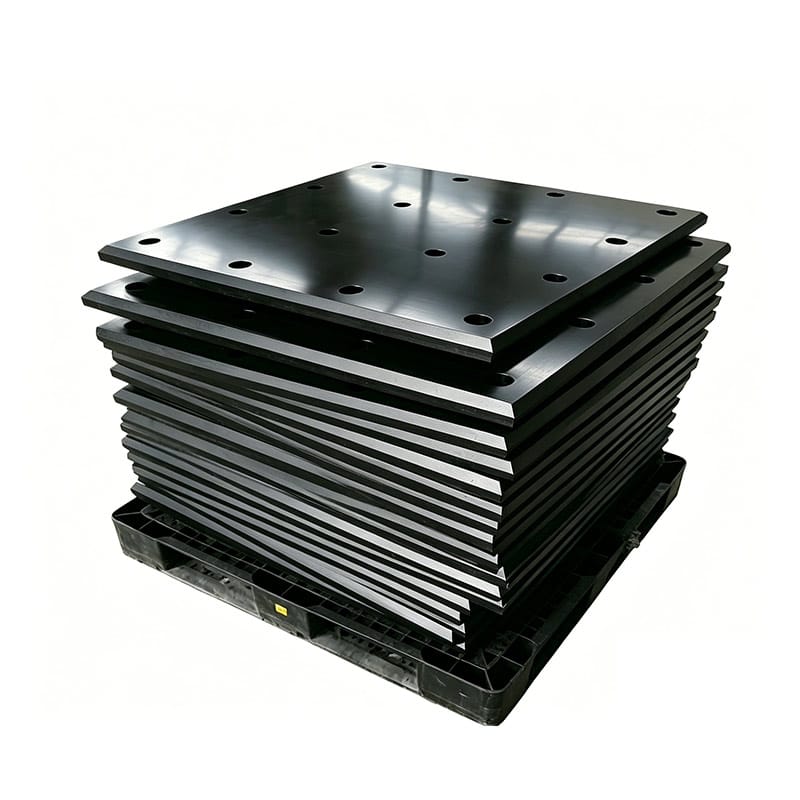
UHMWPE has much lower density than steel.
For large liner panels, this can reduce component weight significantly.
Lower weight can help with:
- Installation
- Manual handling
- Maintenance
- Shipping
This may be especially valuable in equipment where liners are replaced frequently.
However, the final panel weight still depends on:
- Thickness
- Length
- Width
A very large UHMWPE panel can still be heavy.
Compare finished panel weight, not just material density.
Noise and Impact Sound
Steel liners can transmit impact noise strongly.
UHMWPE can provide a different acoustic response because it is a polymer.
In facilities where impact noise matters, this may be a secondary benefit.
However, noise should not become the primary reason to select a liner if the wear mechanism demands a different material.
The UHMWPE vs AR steel liners decision should prioritize:
- Wear
- Impact
- Temperature
- Structure
before acoustics.
Corrosion and Wet Environments
UHMWPE does not rust.
This can be useful in:
- Outdoor systems
- Wet processing
- Washdown
- Chemical environments
AR steel may require corrosion consideration depending on:
- Moisture
- Chemicals
- Surface treatment
In systems where both abrasion and corrosion occur, UHMWPE may offer a practical advantage in selected zones.
However, chemical compatibility should still be checked for the exact operating environment.
Machining and Customization
UHMWPE is relatively easy to machine.
Panels can be customized with:
- Holes
- Countersinks
- Slots
- Profiles
- Recesses
This makes it practical for retrofit projects.
AR steel can also be fabricated and machined, but processing may involve:
- Cutting
- Drilling
- Welding
- Grinding
The fabrication requirements depend on grade and thickness.
For smaller custom liner sets, UHMWPE can sometimes simplify manufacturing and installation.
Welding vs Bolting
AR steel liners are often installed using:
- Welding
- Bolts
- Studs
depending on the design.
UHMWPE liners are typically mechanically fastened.
Bolted polymer panels can be advantageous when frequent replacement is expected because they can be removed without cutting welds.
This can reduce maintenance complexity.
However, fastener design must account for the polymer material.
Important details include:
- Hole diameter
- Countersink
- Edge distance
- Thermal movement
Thermal Expansion Matters More for UHMWPE
UHMWPE expands and contracts more than steel with temperature changes.
This means long panels require careful mounting.
If a long UHMWPE liner is fixed rigidly at every bolt, thermal movement can create:
- Buckling
- Stress
- Distortion
Depending on the design, slotted holes or other movement allowances may be appropriate.
The UHMWPE vs AR steel liners comparison should therefore include installation design, not just raw material.
AR Steel Handles Temperature Better, but Fabrication Can Be Harder
Hard abrasion-resistant steels may require more attention during fabrication than ordinary mild steel.
Depending on grade, manufacturers may need to control:
- Cutting
- Drilling
- Welding
- Heat input
The supplier’s fabrication capability should match the selected AR grade.
Buyers should not assume every workshop can process every abrasion-resistant steel equally well.
Which Material Is Better for Hopper Liners?
The answer depends on the hopper.
UHMWPE may be better where:
- Material tends to stick
- Sliding abrasion dominates
- Moisture is present
- Lightweight panels help maintenance
AR steel may be better where:
- Severe gouging occurs
- Large particles strike the surface
- Structural stiffness is required
- Temperature is high
For many hoppers, a hybrid design may be more effective.
Which Material Is Better for Quarry Chutes?
Quarry chutes often contain several wear zones.
A typical design might use:
- AR steel in severe impact areas
- UHMWPE in sliding or buildup-prone areas
This avoids forcing one material to perform every function.
The UHMWPE vs AR steel liners decision should therefore be made by zone.
Which Material Is Better for Fine Powders?
Fine powders may create:
- Sliding abrasion
- Buildup
- Dust
UHMWPE can be attractive where low friction helps material release.
However, temperature and chemical exposure still need review.
For fine abrasive minerals moving at high velocity, alternative wear materials may also need consideration.
Which Material Is Better for Large Rock?
Large angular rock can create:
- Gouging
- Impact
- Deep scratches
AR steel may be better suited to severe conditions where high hardness and stiffness are needed.
UHMWPE may still work in downstream sliding areas.
Again, using both materials in one system can be more effective than choosing one universally.
Maintenance Frequency Can Change the Decision
A liner that lasts longer but takes much more labor to replace may not always offer the lowest total maintenance cost.
Compare:
- Service life
- Replacement time
- Shutdown duration
- Labor
- Fasteners
- Panel weight
UHMWPE can simplify some replacement operations because panels are lighter and mechanically fastened.
AR steel may justify more complex replacement if it provides better performance in a severe wear zone.
Avoid Unsupported “Times Longer” Claims
A common marketing claim is that one material lasts:
- 3× longer
- 5× longer
- 10× longer
than another.
Such numbers are meaningless unless the comparison uses:
- The same wear mechanism
- The same material
- The same test
- The same operating conditions
In a responsible UHMWPE vs AR steel liners comparison, performance claims should be supported by comparable data.
Otherwise, the correct wording is qualitative.
How to Decide Between UHMWPE and AR Steel
Use a structured process.
Identify the Wear Mechanism
Determine whether the dominant problem is:
- Sliding abrasion
- Gouging
- Impact
- Material buildup
Record Particle Characteristics
Include:
- Particle size
- Shape
- Hardness
Record Process Conditions
Include:
- Throughput
- Velocity
- Drop height
- Temperature
- Moisture
Review Structural Requirements
Ask whether the liner is:
- Purely a wear surface
- Part of the structure
Review Maintenance Requirements
Consider:
- Replacement frequency
- Installation access
- Panel weight
- Shutdown time
Consider a Hybrid System
If different zones experience different wear mechanisms, use different materials where appropriate.
Hybrid Liner Systems Can Be the Best Answer
A mature UHMWPE vs AR steel liners strategy does not assume one material must win.
For example:
Impact Zone
AR steel or another high-impact material may be used.
Sliding Zone
UHMWPE may reduce friction and provide wear resistance.
Buildup Zone
UHMWPE may help material release.
This approach allows each material to work where its properties fit best.
What Information Should You Send for a Liner Comparison?
A useful RFQ should include application data.
Bulk Material
- Material name
- Typical particle size
- Maximum particle size
- Shape
- Hardness
- Moisture
Process
- Throughput
- Conveyor speed
- Drop height
- Temperature
Equipment
- Chute dimensions
- Hopper dimensions
- Wall angles
- Drawings
Existing Liner
- Material
- Thickness
- Service life
- Wear photos
- Failure mode
Maintenance
- Replacement interval
- Downtime
- Access restrictions
These inputs help determine whether the UHMWPE vs AR steel liners comparison favors one material or a hybrid arrangement.
UHMWPE vs AR Steel Liners FAQ
Is UHMWPE More Wear Resistant Than AR Steel?
Not in every wear mechanism.
UHMWPE can perform very well in sliding abrasion, while AR steel may be more appropriate in severe gouging or high-load conditions.
The operating environment determines which material is more suitable.
Which Liner Is Better for Wet Aggregate?
UHMWPE can be attractive because of low friction and moisture resistance, especially where buildup is a problem.
Severe impact or gouging may still justify AR steel in certain zones.
Which Liner Is Better for High Temperature?
AR steel generally has a much higher temperature capability than UHMWPE.
The exact temperature limit should be checked against the selected material grade.
Can UHMWPE Replace AR Steel Directly?
Not always.
If the steel liner provides structural stiffness, a direct thickness-for-thickness replacement may be inappropriate.
The supporting structure should be reviewed.
Can UHMWPE and AR Steel Be Used Together?
Yes.
Hybrid systems are often practical where different sections experience different wear mechanisms.
Is UHMWPE Easier to Replace?
UHMWPE panels can be relatively lightweight and mechanically fastened, which can simplify replacement in some applications.
Actual handling depends on panel size and thickness.
Does UHMWPE Reduce Material Buildup?
Its low-friction surface can help in many flow applications, but buildup also depends on moisture, wall angle and material characteristics.
Does AR Steel Rust?
Steel can corrode depending on the environment and surface protection.
Corrosion should be considered in wet or chemically aggressive applications.
Which Material Is Cheaper?
Price depends on:
- Grade
- Thickness
- Dimensions
- Machining
- Installation
- Service life
Compare total lifecycle cost rather than raw material price alone.
UHMWPE vs AR Steel Liner Selection Checklist
Material Characteristics
- Particle size
- Particle shape
- Hardness
- Moisture
Wear Mechanism
- Sliding abrasion
- Impact
- Gouging
- Buildup
Process Conditions
- Throughput
- Velocity
- Drop height
- Temperature
Equipment
- Chute geometry
- Hopper geometry
- Structural support
- Wall angle
Existing Performance
- Current liner
- Thickness
- Service life
- Wear photos
Maintenance
- Access
- Replacement time
- Panel weight
- Shutdown cost
A complete checklist makes the UHMWPE vs AR steel liners decision much more reliable.
Conclusion
The UHMWPE vs AR steel liners comparison should not be reduced to a simple question of which material is harder or which lasts longer.
UHMWPE and AR steel solve different problems.
UHMWPE is often a strong choice where:
- Sliding abrasion dominates
- Low friction is important
- Material buildup is a concern
- Moisture is present
- Lightweight replaceable panels are valuable
AR steel may be more suitable where:
- Severe gouging occurs
- Large particles create strong impact
- High structural stiffness is required
- Operating temperature is high
- The liner also contributes to structural support
In many bulk-handling systems, the most effective answer is not to force one material into every wear zone.
A hybrid liner design can use AR steel in severe impact or gouging areas and UHMWPE in sliding or buildup-prone sections. This allows each material to work where its characteristics are most useful.
The best UHMWPE vs AR steel liners decision should therefore begin with the actual wear mechanism, particle size, shape, moisture, drop height, temperature, throughput and maintenance requirements.
Paowo Group supplies UHMWPE wear liners and customized components for mining and bulk material handling applications.
Request a Quote
Send Paowo Group your:
- Bulk material type
- Typical and maximum particle size
- Particle shape
- Moisture condition
- Operating temperature
- Throughput
- Conveyor speed
- Drop height
- Impact location
- Chute or hopper drawings
- Existing liner material
- Current liner thickness
- Wear photographs
- Required quantity
These inputs can be used to review whether UHMWPE, AR steel or a hybrid liner system is more appropriate for the actual wear zones before quotation.