Two chutes can handle the same number of tonnes per hour and still require very different wear-liner solutions.
One may carry relatively fine, rounded material that slides steadily along the chute wall. Another may handle large, angular particles that strike the liner before changing direction. Even if both systems are described as “aggregate handling,” the actual wear mechanisms are different.
This is why wear liner material properties should never be selected from the name of the bulk material alone.
Particle size, particle shape and hardness influence how a material contacts a liner. Moisture, velocity, drop height, impact angle and equipment geometry add further variables. Together, these operating conditions determine whether the dominant problem is fine abrasion, cutting, gouging, impact, buildup or a combination of several mechanisms.
For buyers comparing UHMWPE, steel, rubber, ceramic and other liner options, understanding wear liner material properties is more useful than asking which material is universally “most wear resistant.”
There is no single liner that is best for every chute.
Instead, the goal is to match the liner to the actual wear zone.
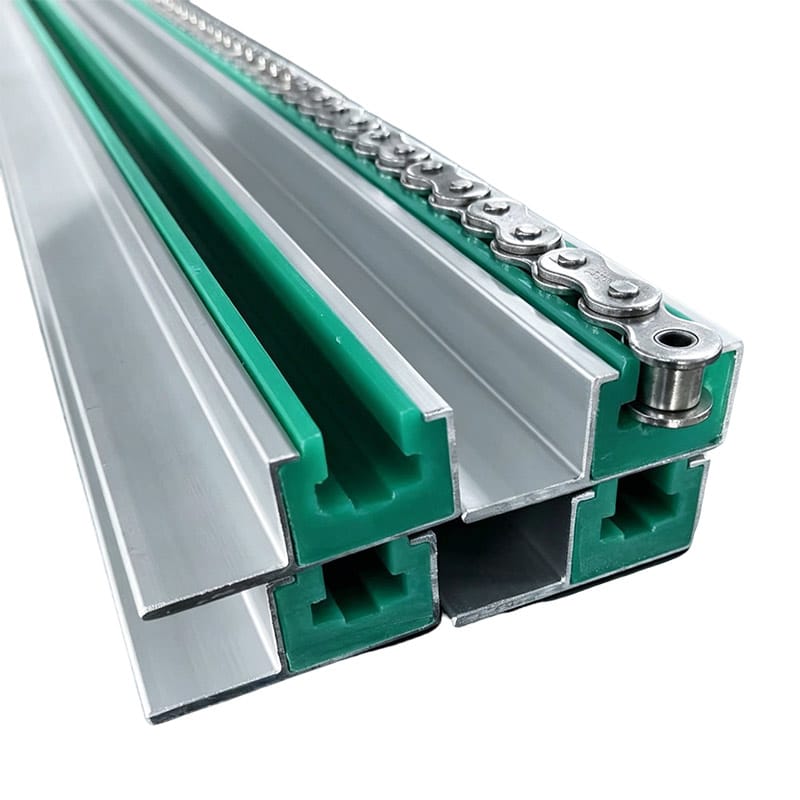
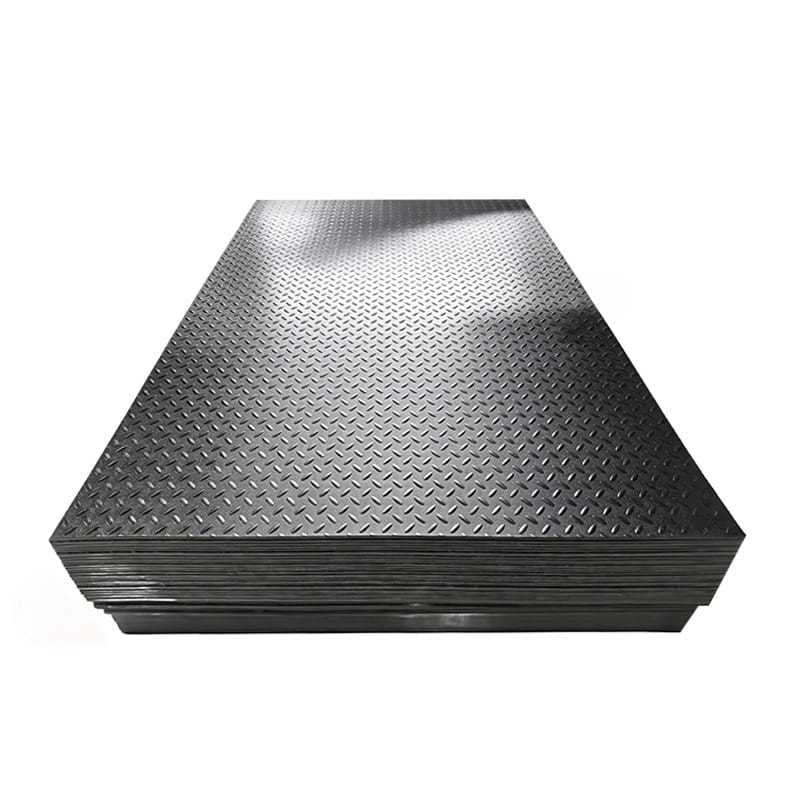
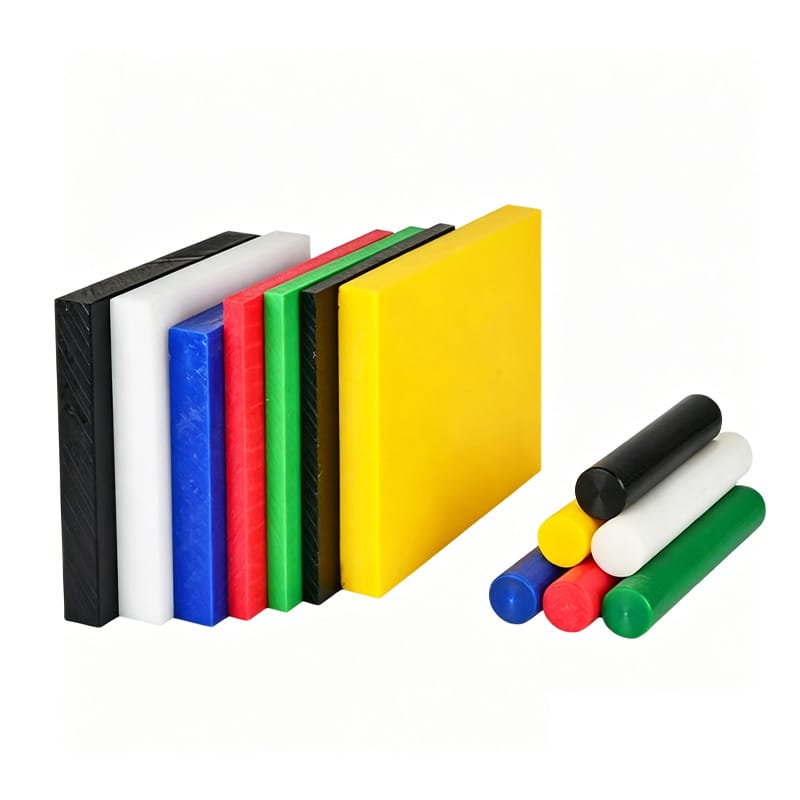
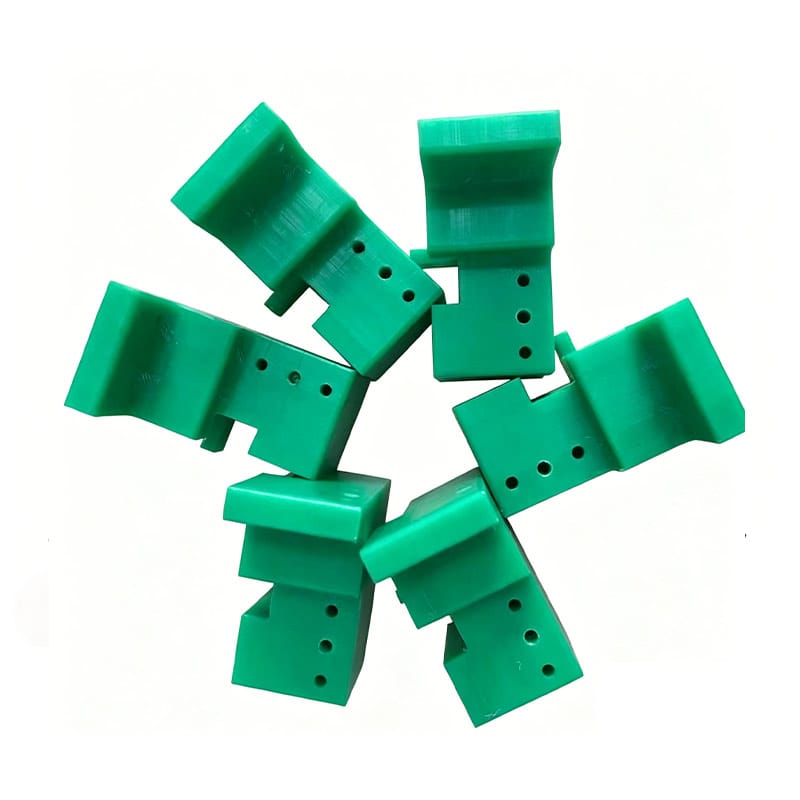
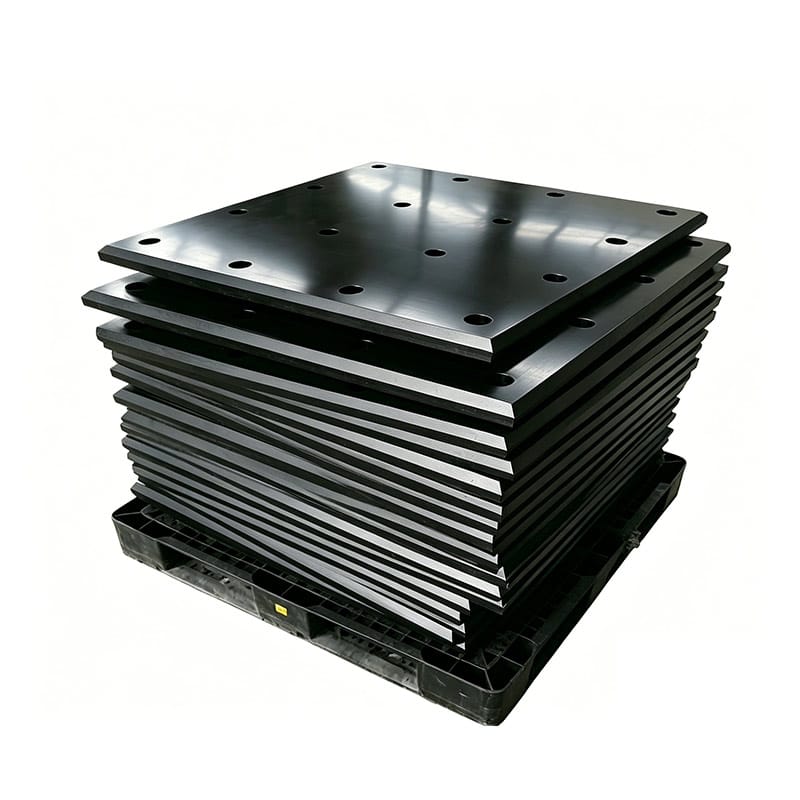
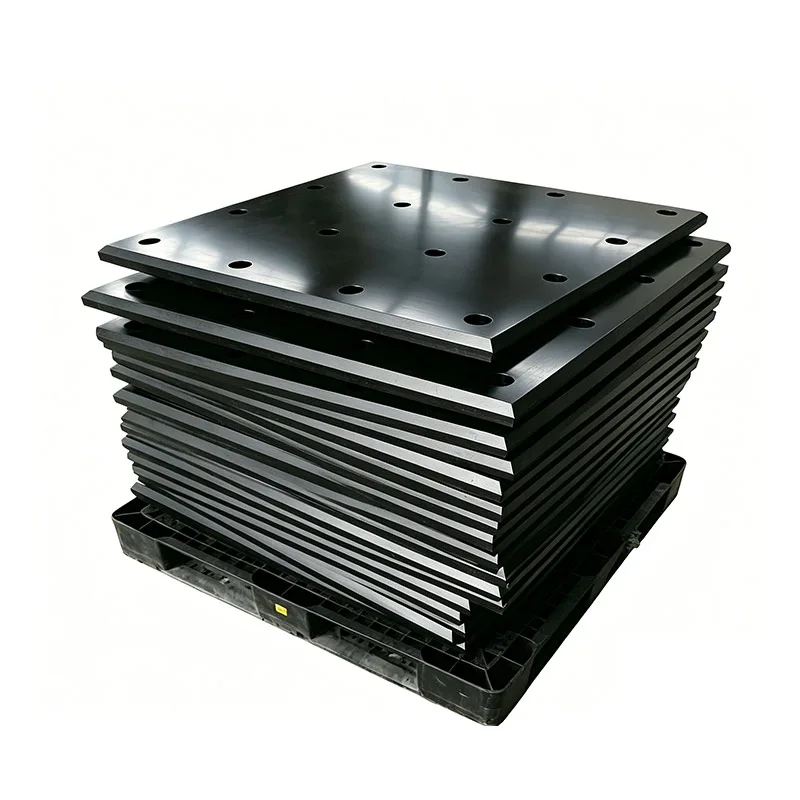
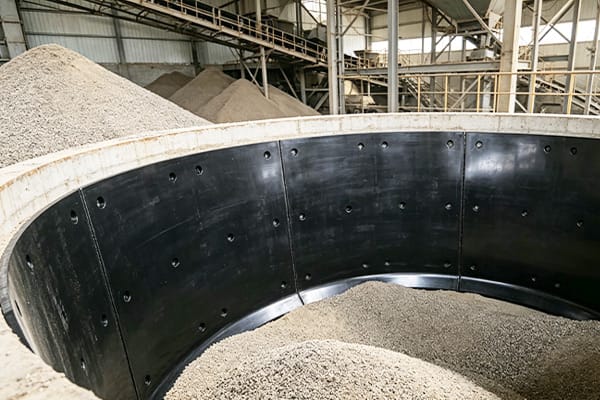
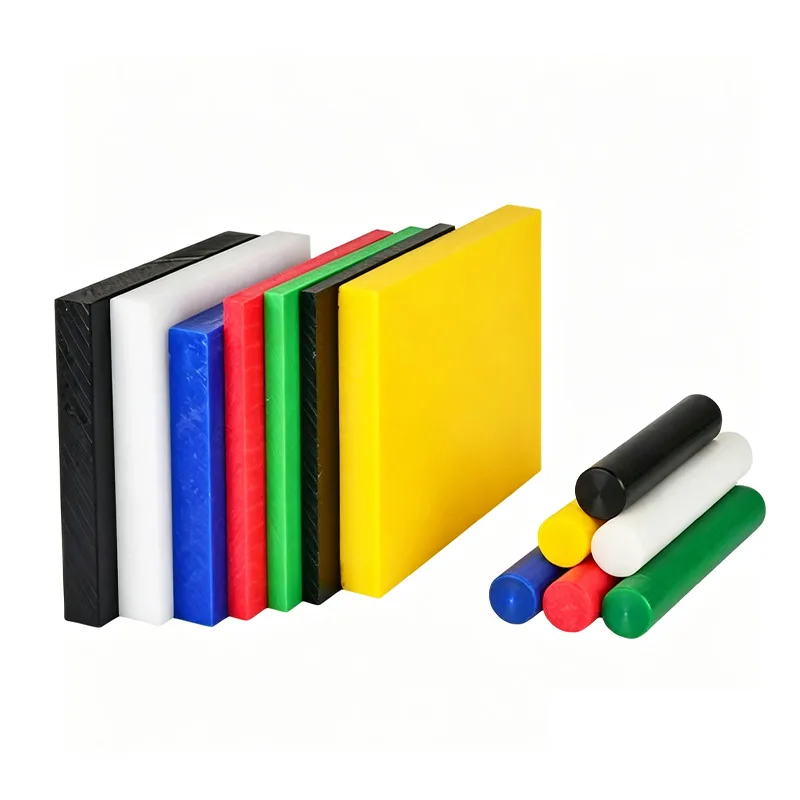
Paowo Group supplies UHMWPE wear liners for chutes, hoppers and bulk-material handling equipment where sliding wear, material flow and replaceable wear surfaces are important.
Why Wear Liner Material Properties Must Match the Wear Mechanism
Wear is not one single process.
A liner may experience:
- Fine abrasion
- Sliding abrasion
- Cutting
- Gouging
- Direct impact
- Repeated impact
- Adhesive buildup
- Corrosion combined with abrasion
Different wear liner material properties become important depending on which mechanism dominates.
For example, a low-friction surface can be valuable where material slides continuously and tends to stick. In another zone, resistance to concentrated impact may be more important than surface friction.
This is why a chute should often be divided into separate wear zones before a liner is specified.
Sliding Zones
Material moves along the liner rather than falling directly onto it.
Important wear liner material properties may include:
- Abrasion resistance
- Low friction
- Surface condition
- Resistance to moisture
- Dimensional stability appropriate to the installation
UHMWPE is frequently considered in these zones.
Direct Impact Zones
Large particles may fall directly onto the liner.
Here, useful wear liner material properties can include:
- Impact toughness
- Ability to distribute localized load
- Adequate thickness
- Suitable fastening design
The support structure beneath the liner also becomes especially important.
Transition Zones
At bends, outlets and changes in direction, material may combine sliding with impact.
These locations often experience severe localized wear and should not automatically use the same liner arrangement as the rest of the chute.
How Particle Size Changes Wear Liner Selection
Particle size is one of the most important application inputs.
A chute carrying fine powder presents a different wear environment from one handling 150 mm pieces of crushed stone.
When comparing wear liner material properties, always provide both:
- Typical particle size
- Maximum particle size
The maximum can matter more than the average in impact zones.
Fine Particles and Continuous Abrasion
Fine material can repeatedly move across a large liner area.
Depending on the material, it may act like an abrasive medium between the bulk flow and the liner surface.
Fine particles can also enter:
- Panel joints
- Fastener recesses
- Small gaps
- Damaged mounting areas
For fine dry material, wear liner material properties related to sliding wear and surface friction may become major selection factors.
If the material is also moist, buildup may become just as important as abrasion.
Medium-Sized Particles
Medium-size aggregate can combine sliding and localized impact.
Wear may be concentrated where the material:
- Leaves a conveyor
- Changes direction
- Hits a chute wall
- Enters a hopper
In these applications, wear liner material properties should be evaluated together with material trajectory and chute geometry.
Simply increasing liner thickness may not solve localized impact damage.
Large Lump Material
Large particles introduce greater local contact forces.
They may cause:
- Gouging
- Deep scratches
- Edge damage
- Fastener damage
- Concentrated impact
If large lumps occur only occasionally, they should still be included in the design inputs.
A liner selected around the average particle size may perform poorly when oversized material repeatedly enters the system.
Why Particle Shape Matters
Two particles with the same mass and hardness can produce different wear because their shapes are different.
Rounded gravel and freshly crushed angular rock do not contact a liner in the same way.
Particle shape changes:
- Contact area
- Cutting action
- Impact concentration
- Sliding behavior
Therefore, wear liner material properties should be matched not only to particle size but also to particle geometry.
Rounded Particles
Rounded particles generally have smoother contact surfaces.
They can still produce abrasion, particularly at high throughput and velocity, but their contact may be less cutting-oriented than sharp crushed material.
Applications handling rounded material may place greater emphasis on:
- Sliding wear
- Flow
- Surface friction
Angular Particles
Angular particles contain sharper edges.
When sliding across a liner, those edges can produce more aggressive scratching or cutting.
Angular stone may therefore create wear patterns such as:
- Deep scratches
- Directional grooves
- Localized gouges
When angular material is present, the relevant wear liner material properties include resistance to abrasion and cutting as well as the liner’s ability to withstand the actual contact conditions.
Why Freshly Crushed Material Can Behave Differently
Material immediately after crushing can contain relatively sharp edges.
As particles move through processing and handling systems, some edges may become less severe.
This means two applications both labeled “limestone” or “aggregate” can produce different liner wear.
The material name alone is therefore insufficient for determining wear liner material properties.
A photograph of the actual product can be valuable when detailed particle-shape data is unavailable.
How Particle Hardness Influences Abrasive Wear
Hardness describes another important part of the interaction between bulk material and liner.
Hard particles moving over a softer surface can produce significant abrasion.
However, hardness should not be interpreted alone.
Wear also depends on:
- Shape
- Pressure
- Velocity
- Impact
- Moisture
- Throughput
- Contact angle
A hard, rounded particle moving slowly may create a different wear rate from a similarly hard, angular particle traveling at high velocity.
That is why wear liner material properties cannot be selected using a single material-hardness value.
Hardness Does Not Automatically Tell You the Best Liner
A common procurement shortcut is:
“Our material is very hard, so we need the hardest liner.”
This can be misleading.
A very hard liner may perform well against some forms of abrasion but have different characteristics in:
- Impact
- Weight
- installation
- Brittleness
- repair
For example, a severe impact zone and a high-sliding-abrasion zone may benefit from different materials.
A better approach is to match wear liner material properties to the complete operating condition.
Particle Size, Shape and Hardness Work Together
The three variables should not be separated.
Consider three simplified cases.
Fine, Relatively Rounded Material
The dominant concern may be continuous sliding abrasion and material flow.
Coarse, Angular Material
Cutting, gouging and localized wear become more important.
Large, Hard, Angular Material with Significant Drop Height
The system now combines:
- Abrasion
- Gouging
- High impact
This can require a completely different liner strategy.
The correct wear liner material properties depend on the combination rather than any one variable.
Why Material Velocity Matters
Velocity determines how quickly particles move across or into a liner.
Higher velocity can increase the severity of:
- Sliding wear
- Impact
- Frictional interaction
Useful application data may include:
- Conveyor belt speed
- Material discharge speed
- Chute geometry
- Process throughput
If exact material velocity is unavailable, conveyor and transfer information can still help characterize the application.
In any technical review of wear liner material properties, “slow sliding” and “high-speed transfer” should not be treated as equivalent.
How Drop Height Changes Impact Conditions
Drop height is particularly important in transfer points and hoppers.
A particle falling directly onto a liner can create a very different load from the same particle sliding along an inclined chute.
When collecting data, provide:
- Approximate vertical drop
- Maximum particle size
- Direction of travel
- Impact angle
- Exact impact location
This allows wear liner material properties to be considered by wear zone.
A UHMWPE liner may be highly suitable for one sliding section while another direct-impact section requires a different design or material combination.
Why Impact Angle Matters
Material hitting a liner at a steep angle creates different stresses from material moving almost parallel to the surface.
A shallow angle may emphasize sliding and cutting.
A more direct angle can increase localized impact.
Therefore, drawings and photographs of the transfer geometry can be more useful than simply giving material name and throughput.
The orientation of the liner is part of the wear liner material properties selection process because material performance depends on how it is loaded.
Moisture Can Change the Entire Wear Environment
Material moisture is frequently underestimated.
Dry quarry fines may move freely through a chute.
After rain or washing, the same material may become:
- Cohesive
- Sticky
- Mud-like
The problem can shift from pure wear toward a combination of:
- Wear
- Buildup
- Restricted flow
- Difficult cleaning
In these conditions, low-friction wear liner material properties may become more valuable.
UHMWPE is commonly considered for applications where a combination of wear resistance and improved material release is desirable.
However, no liner should be promised to eliminate sticking under every moisture and geometry condition.
Why UHMWPE Is Often Considered for Sliding Wear
UHMWPE offers a useful combination of characteristics for many industrial sliding applications.
Relevant wear liner material properties include:
- Good abrasion resistance
- Low surface friction
- Impact toughness
- Very low water absorption
- Resistance to many chemicals
- Relatively low weight
These characteristics explain why UHMWPE is used for:
- Chute liners
- Hopper liners
- Bunker liners
- Conveyor wear surfaces
- Bulk-material handling components
For applications involving mining, quarrying and aggregate handling, see Paowo Group’s mining and bulk material handling solutions.
When UHMWPE May Not Be the Only Material Needed
UHMWPE should not be presented as a universal replacement for every liner material.
Some equipment contains zones with very different requirements.
One chute may include:
- Severe primary impact
- High sliding abrasion
- Wet buildup zones
- Low-wear transition sections
A hybrid design may therefore be more appropriate.
The best wear liner material properties may differ by location.
This is often more technically sound than forcing one material throughout the entire machine.
UHMWPE vs Steel for Wear Liners
Steel offers:
- High stiffness
- Familiar fabrication
- Structural strength
UHMWPE offers different advantages, particularly in applications where:
- Low friction is useful
- Sliding abrasion is significant
- Corrosion or moisture is present
- Replaceable lightweight panels are preferred
When comparing wear liner material properties, remember that UHMWPE is generally a wear surface, not a direct structural substitute for a steel chute wall.
The supporting equipment still needs adequate strength and stiffness.
UHMWPE vs Rubber for Wear Liners
Rubber may be considered where impact absorption, vibration or noise reduction are important.
UHMWPE may be attractive where sliding flow and low friction are dominant requirements.
For a high-impact zone, rubber characteristics may deserve consideration.
For a long sliding surface where buildup is a concern, UHMWPE wear liner material properties may better match the application.
Again, the wear mechanism should determine the comparison.
UHMWPE vs Ceramic for Wear Liners
Ceramic systems are commonly evaluated for severe abrasive conditions.
They offer a different property balance from UHMWPE.
Important differences can include:
- Hardness
- Brittleness
- Impact response
- Weight
- Installation
- Repair method
A system handling extremely abrasive fine material may create a different material-selection decision from one handling large impact loads.
Rather than asking whether ceramic or UHMWPE is “better,” compare which wear liner material properties correspond to the actual wear zone.
Why Throughput Matters
Particle characteristics describe how individual pieces interact with the liner.
Throughput tells you how much material creates that interaction.
Useful inputs include:
- Tonnes per hour
- Hours per day
- Days per year
A moderately abrasive material passing through equipment continuously may create substantial cumulative wear.
When reviewing existing liner life, combine service duration with throughput.
“Lasted six months” is much more meaningful when the total handled tonnage is also known.
Existing Wear Patterns Can Help Select the Next Liner
The current liner is one of the best sources of application information.
Before removing it, photograph and measure:
- Deepest wear area
- Wear direction
- Remaining thickness
- Cracks
- Gouges
- Fastener exposure
- Material buildup
The pattern can reveal which wear liner material properties are most relevant.
Smooth, Gradual Thinning
Often suggests continuous sliding abrasion.
Deep Directional Scratches
May indicate angular particles and cutting wear.
Localized Craters or Damage
Can point toward direct impact.
Wear Around Fasteners
May indicate insufficient countersink depth remaining, poor support or local stress.
Do not discard the worn panel before documenting it.
Why Liner Thickness Should Follow the Application
Thickness is important, but it is not a substitute for material selection.
Increasing thickness provides more material to wear through.
It does not automatically correct:
- Severe impact
- Poor fastening
- Unsupported panels
- Wrong material
- Bad chute geometry
Correct wear liner material properties and correct thickness need to work together.
The required thickness should consider:
- Wear mechanism
- Existing wear rate
- Impact
- Panel size
- Fastener design
- Required maintenance interval
Why Fastening Changes Liner Performance
Even a suitable liner material can fail early if installation is poorly designed.
Fastening considerations include:
- Hole spacing
- Hole edge distance
- Countersink geometry
- Substrate condition
- Panel support
For UHMWPE, thermal expansion should also be considered.
Long panels that are rigidly restrained may experience unnecessary stress as operating temperature changes.
These installation factors should be reviewed alongside wear liner material properties.
Panel Size Can Affect Maintenance Cost
Large liner sheets reduce joint count, but they are not automatically the best choice.
Smaller modular panels may be easier to:
- Replace
- Handle
- Ship
- Inspect
If a chute has one concentrated high-wear zone, dividing that area into a replaceable section may reduce maintenance cost.
Instead of changing the entire liner, only the worn module may need replacement.
A good liner design therefore combines wear liner material properties with practical maintenance planning.
How to Compare Wear Liner Materials Responsibly
Technical data can help, but buyers should check how the values were produced.
When suppliers provide abrasion, impact or mechanical data, ask:
- What test method was used?
- What specimen condition was used?
- What material grade was tested?
- Are the units comparable?
Numbers from different test methods should not be treated as directly equivalent.
Organizations such as ASTM International and ISO publish standardized material-testing methods.
The purpose is not to select a liner from a laboratory number alone, but to make sure comparisons of wear liner material properties use reasonably comparable evidence.
Common Wear Liner Selection Mistakes
Selecting by Material Name Only
“Coal,” “stone” or “sand” does not provide enough information.
Add particle size, shape and hardness.
Selecting Only by Thickness
Thickness cannot compensate for the wrong material or wear mechanism.
Ignoring Maximum Particle Size
Occasional large lumps can control impact requirements.
Ignoring Moisture
Wet material may behave completely differently from dry material.
Using One Liner Throughout Every Wear Zone
Impact and sliding sections may have different requirements.
Comparing Unsupported Performance Claims
Do not rely on statements such as “five times more wear resistant” without equivalent test conditions.
Ignoring Current Failure Evidence
Existing wear patterns can provide valuable information for the next specification.
What Information Should You Send for a Wear Liner Review?
A useful wear-liner review depends on the quality of the application data.
Instead of sending only:
“Please quote UHMWPE liner for stone,”
provide enough information for the supplier to understand the actual wear mechanism.
The following details are especially useful.
Bulk Material Information
Provide:
- Material name
- Typical particle size
- Maximum particle size
- Particle shape
- Hardness or mineral information where known
- Moisture content
- Material temperature
- Any chemical exposure
If the material condition changes during the year, describe both normal and worst-case conditions.
For example, aggregate that is normally dry but becomes wet during the rainy season should be described accordingly.
Process Information
Provide:
- Throughput
- Conveyor speed
- Material velocity if known
- Drop height
- Impact angle
- Operating hours per day
- Operating days per year
- Start-stop frequency
This information helps determine whether abrasion is mild and intermittent or continuous and severe.
Equipment Information
Provide:
- Chute type
- Hopper type
- Internal dimensions
- Wall angle
- Outlet dimensions
- Material-flow direction
- Panel arrangement
Attach:
- 2D drawings
- Equipment sketches
- Site photographs
A photograph showing the entire transfer point is often useful because it helps explain where material enters, changes direction and leaves the equipment.
Existing Liner Information
If the equipment already has a liner, include:
- Current liner material
- Original thickness
- Remaining thickness
- Time in service
- Approximate throughput during that period
- Current failure mode
Useful failure descriptions include:
- Gradual thinning
- Deep scratching
- Gouging
- Cracking
- Material buildup
- Fastener exposure
- Panel movement
Wear Photographs
Photographs are among the most useful troubleshooting inputs.
Include:
- Overall equipment view
- Entire liner panel
- Worst wear zone
- Impact area
- Sliding area
- Fasteners
- Panel joints
- Exposed substrate
If possible, place a ruler or another known scale beside the worn area.
Also mark the direction of material flow.
These details help connect the visible damage to the relevant wear liner material properties.
Installation Information
Provide details about how the liner is currently installed.
Include:
- Substrate material
- Fastener type
- Hole diameter
- Hole spacing
- Countersink details
- Panel size
- Support condition
If the liner repeatedly cracks around holes, photographs and dimensions around those fasteners are especially valuable.
The failure may involve installation geometry rather than only liner material.
Desired Maintenance Target
Tell the supplier what the project is trying to improve.
For example:
- Reduce shutdown frequency
- Improve material flow
- Reduce liner weight
- Simplify replacement
- Prevent steel exposure
- Increase inspection interval
This helps determine which wear liner material properties should receive the highest priority.
Wear Liner RFQ Information Checklist
Before requesting a quotation, collect the following information.
Material Being Handled
- Material name
- Typical particle size
- Maximum particle size
- Particle shape
- Hardness information
- Moisture content
- Material temperature
Flow Conditions
- Throughput
- Conveyor speed
- Drop height
- Impact angle
- Flow direction
- Operating hours
Equipment Geometry
- Chute dimensions
- Hopper dimensions
- Wall angles
- Outlet size
- Panel layout
- Drawings
Existing Liner
- Material
- Thickness
- Service life
- Remaining thickness
- Wear pattern
- Failure mode
- Photographs
Installation
- Substrate material
- Fastener type
- Hole pattern
- Countersink dimensions
- Panel joints
- Installation restrictions
Proposed Liner
- Preferred material if already specified
- Thickness
- Panel dimensions
- Quantity
- Color
- Machining requirements
- Identification requirements
Documentation Requirements
- Material information
- Technical data sheet
- Dimensional inspection
- Batch identification
- Packaging requirements
Providing this information allows the supplier to evaluate the actual application rather than quote a generic sheet solely from thickness and quantity.
Wear Liner Material Properties FAQ
Which Wear Liner Material Is Best for Aggregate?
There is no universal best liner for every aggregate application.
Selection depends on:
- Particle size
- Particle shape
- Hardness
- Moisture
- Velocity
- Impact
- Chute geometry
UHMWPE may be attractive for many sliding-wear and material-flow applications, while severe impact or extremely abrasive zones may require another material or a combined liner system.
Does Larger Particle Size Always Cause More Wear?
No.
Large particles can create stronger localized impact and gouging, but very fine hard particles can also create severe continuous abrasion.
The dominant wear mechanism matters more than particle size by itself.
Why Does Particle Shape Matter for Liner Selection?
Sharp or angular particles can create more concentrated scratching and cutting action than rounded particles.
This may change which wear liner material properties are most important.
For example, a liner exposed to angular crushed rock may experience a different wear pattern from one handling rounded gravel.
Does Harder Bulk Material Always Need a Harder Liner?
Not necessarily.
Hardness is only one part of the application.
The liner must also be evaluated for:
- Impact
- Brittleness
- Surface friction
- Installation
- Maintenance
- Weight
Selecting the hardest possible material without considering impact or flow can create another problem elsewhere in the system.
Is UHMWPE Suitable for Quarry Chute Liners?
UHMWPE is commonly considered for quarry, aggregate and mineral-handling applications where sliding abrasion, low friction and moisture resistance are useful.
Suitability should still be reviewed against:
- Maximum particle size
- Drop height
- Impact
- Temperature
- Throughput
Severe direct-impact areas may need separate evaluation.
Can UHMWPE Reduce Material Buildup?
UHMWPE’s relatively low-friction surface can help in many applications where material tends to drag or stick.
However, buildup also depends on:
- Moisture
- Particle characteristics
- Chute angle
- Pressure
- Temperature
No liner should be assumed to eliminate buildup in every system.
Can One Chute Use More Than One Liner Material?
Yes.
This can be an effective approach when different zones experience different wear mechanisms.
For example:
- Direct-impact zone
- Sliding zone
- Transition zone
may justify different wear liner material properties.
A hybrid liner arrangement can sometimes provide better overall performance than forcing one material into every position.
How Do I Know Whether My Problem Is Abrasion or Impact?
Wear appearance provides useful clues.
Gradual, relatively smooth thickness loss often suggests sliding abrasion.
Deep localized damage, craters, severe gouges or cracking may suggest stronger impact or concentrated loading.
Photographs, drop height and particle-size information should be evaluated together.
Does Increasing UHMWPE Thickness Always Increase Service Life?
Not necessarily.
More thickness provides additional wear allowance, but it does not correct:
- Severe impact
- Incorrect material selection
- Poor fastening
- Unsupported panels
- Bad chute geometry
Thickness should be selected together with the appropriate wear liner material properties.
How Should I Compare Wear Data from Different Suppliers?
Check:
- Material grade
- Test method
- Specimen condition
- Units
- Test environment
Do not directly compare two abrasion numbers if they were generated using different methods.
Should I Send Existing Wear Photos to the Supplier?
Yes.
Real wear photographs can reveal:
- Wear direction
- Impact locations
- Fastener problems
- Cracking
- Material buildup
They are often much more useful than a simple description such as “the liner wears quickly.”
Conclusion
Selecting the correct liner begins with understanding the particles that are actually creating the wear.
Particle size influences whether the application involves fine continuous abrasion, larger localized contact or severe lump impact.
Particle shape affects whether the material slides relatively smoothly or creates more aggressive cutting and gouging.
Hardness influences abrasive interaction, but hardness should never be considered alone.
The complete liner review should also include:
- Moisture
- Material velocity
- Drop height
- Impact angle
- Throughput
- Chute geometry
- Existing wear pattern
- Fastening method
These inputs determine which wear liner material properties matter most in each part of the equipment.
For many sliding-wear applications, UHMWPE offers a useful combination of:
- Abrasion resistance
- Low friction
- Impact toughness
- Moisture resistance
- Relatively low weight
However, a high-impact transfer point and a long sliding chute may not need exactly the same solution.
Dividing the equipment into separate wear zones can allow the liner specification to follow the actual failure mechanism.
The best question is therefore not:
“Which wear liner material is strongest?”
It is:
“What is damaging this exact area of the equipment, and which material properties best address that wear mechanism?”
Paowo Group supplies UHMWPE wear liners and customized wear components for mining and bulk material handling applications.
Request a Quote
Send Paowo Group your:
- Bulk-material name
- Typical and maximum particle size
- Particle shape
- Moisture condition
- Throughput
- Conveyor speed
- Drop height
- Material temperature
- Chute or hopper drawings
- Existing liner thickness
- Wear photographs
- Required quantity
These inputs can be used to review the actual wear mechanism and determine whether a UHMWPE liner, a different liner configuration or a mixed-material approach should be considered before quotation.