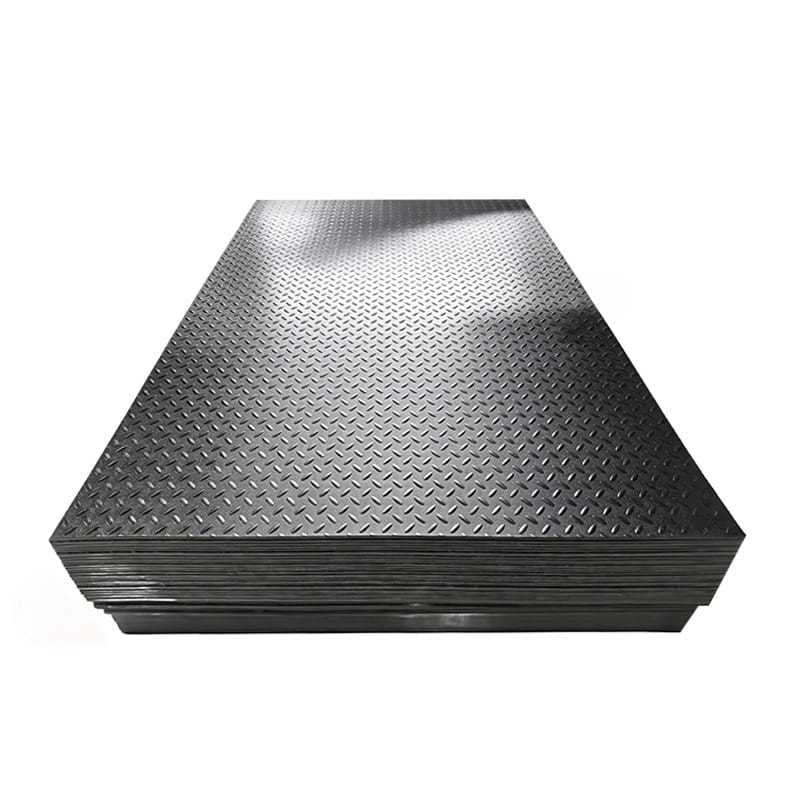
When a construction site, utility project, event venue or industrial job needs temporary vehicle access, buyers often compare ground protection mats vs bog mats.
At first glance, both systems appear to solve the same problem: create a temporary surface over soil, grass, mud or other ground that should not receive direct vehicle traffic.
But ground protection mats and bog mats are not simply interchangeable versions of the same product.
They can differ significantly in weight, material, handling method, intended vehicle loads, ground conditions, installation equipment, transportation requirements and project scale.
Lightweight HDPE ground protection mats are commonly selected where crews need a portable and reusable surface for wheeled equipment, landscaping machinery, utility vehicles and temporary site traffic. Traditional bog mats are typically much heavier systems intended for demanding access routes, heavy tracked machinery or very weak ground where a more substantial temporary roadway is required.
Understanding ground protection mats vs bog mats therefore starts with the site—not with the product catalog.
This guide compares the two approaches and explains which information contractors and procurement teams should collect before choosing a temporary access system.
What Are Ground Protection Mats?
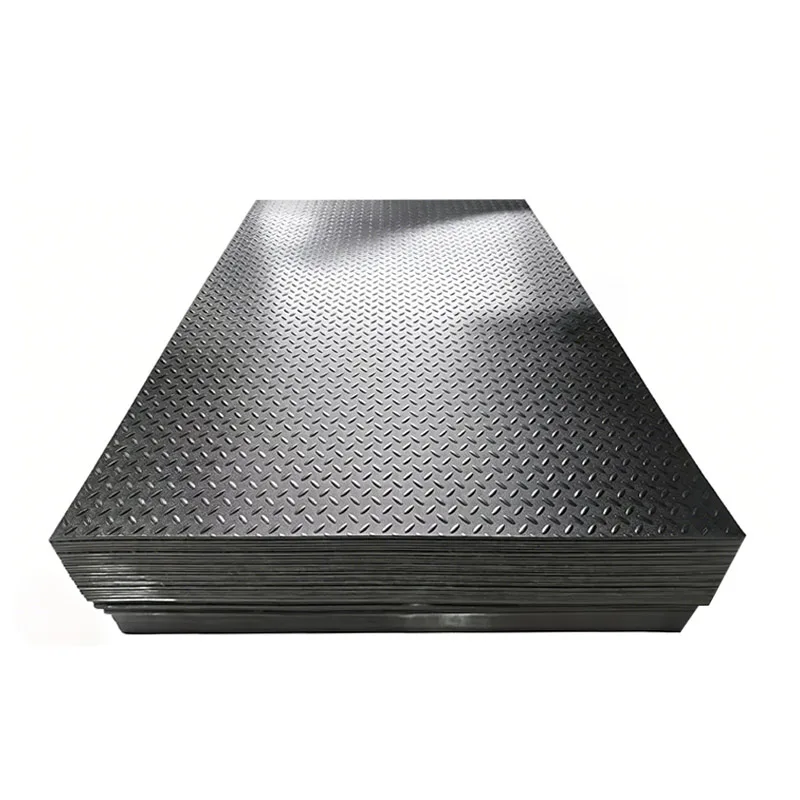
Ground protection mats are portable panels designed to create a temporary travel or working surface while reducing direct contact between vehicles and the underlying ground.
HDPE is commonly used because the material offers a practical combination of:
- Moisture resistance
- Impact toughness
- Reusability
- Relatively low weight
- Easy cleaning
- Customizable surface texture
- Resistance to many common site chemicals
Typical HDPE temporary road mats can be arranged into temporary routes for construction, landscaping, utilities and equipment access.
Depending on mat design and project requirements, panels may include:
- Textured surfaces
- Hand holes
- Connection holes
- Interlocking accessories
- Custom dimensions
- Different thicknesses
The ability to move individual mats without large lifting equipment is one of the major practical differences when considering ground protection mats vs bog mats.
What Are Bog Mats?
The term “bog mats” is commonly used for heavy-duty temporary access mats designed to create stable routes over soft, wet or environmentally sensitive terrain.
Traditional bog mats are often made from heavy timber, although other heavy-duty temporary roadway systems also exist.
Bog mats are commonly associated with applications involving:
- Excavators
- Cranes
- Tracked equipment
- Pipeline construction
- Energy projects
- Forestry
- Large civil works
- Very soft access areas
Because bog mats can be large and heavy, installation frequently requires mechanical handling equipment.
That difference affects far more than installation speed.
It also affects:
- Truck capacity
- Freight cost
- Storage
- Site logistics
- Labor
- Retrieval after the project
For buyers comparing ground protection mats vs bog mats, handling requirements should therefore be considered at the beginning of the project rather than after the mats arrive.
Ground Protection Mats vs Bog Mats: Key Differences at a Glance
The most useful comparison is not simply “plastic versus timber.”
Instead, evaluate the temporary access system according to the actual project.
| Selection Factor | HDPE Ground Protection Mats | Traditional Bog Mats | |—|—|—| | Typical material | HDPE | Heavy timber or similar heavy-duty system | | Individual panel weight | Relatively light | Usually much heavier | | Manual handling | Often possible depending on size | Usually requires machinery | | Transport efficiency | More panels can often fit per load | Weight may limit transport quantity | | Soft-ground applications | Suitable depending on conditions | Often used for demanding soft ground | | Light/medium vehicle access | Common application | Can be unnecessarily heavy | | Very heavy equipment | Requires project-specific evaluation | Common heavy-duty application | | Surface protection | Strong advantage | Application dependent | | Setup speed | Often fast | Usually more equipment-dependent | | Cleaning | Generally straightforward | Depends on material and site | | Moisture absorption | HDPE does not absorb water like timber | Timber condition may vary | | Storage | Relatively simple | Requires more space and handling | | Reuse | Common | Common with appropriate maintenance |
This comparison should not be interpreted as a universal capacity chart.
When evaluating ground protection mats vs bog mats, the final decision should always consider the actual equipment, soil, moisture, traffic pattern and support conditions.
Ground Protection Mats vs Bog Mats for Different Ground Conditions
Ground condition is one of the most important factors in temporary access design.
The same system can perform very differently on:
- Dry compacted soil
- Grass
- Wet clay
- Loose sand
- Saturated mud
- Prepared aggregate
- Recently disturbed ground
Neither ground protection mats nor bog mats should be evaluated independently from the supporting ground.
Firm and Prepared Ground
On relatively firm ground, the primary objective may be surface protection rather than creating substantial structural support.
Typical requirements include:
- Preventing tire marks
- Protecting turf
- Keeping vehicles out of mud
- Providing a clean travel route
- Reducing contamination between work areas
In these conditions, HDPE mats can offer a practical advantage because they are easier to transport and reposition.
Using very heavy bog mats on a firm site may add installation and transportation complexity without providing a proportionate benefit.
For these projects, the ground protection mats vs bog mats decision often favors the lighter temporary roadway system.
Moderately Soft Ground
Moderately soft ground requires a more detailed assessment.
Possible examples include:
- Damp grass
- Soft topsoil
- Recently disturbed construction ground
- Light mud
- Loose soil
HDPE ground protection mats may help distribute wheel or track contact and create a defined temporary route.
However, performance depends on:
- Equipment weight
- Tire size
- Track contact area
- Number of passes
- Turning
- Soil moisture
- Mat thickness
- Panel dimensions
Ground protection mats should not be expected to convert unlimited weak ground into a stable roadway.
Very Soft or Saturated Ground
This is where the ground protection mats vs bog mats comparison becomes much more important.
Deep mud, peat-like ground, saturated soil or areas with very low support strength may require a more substantial access system.
Heavy bog mats may be considered because their dimensions and structural characteristics can provide a different form of support and load distribution.
In some projects, neither product alone is sufficient.
The temporary road may require:
- Geotextile
- Aggregate
- Drainage improvements
- Additional layers
- Engineered road construction
For severe ground conditions, qualified site or geotechnical personnel should determine the required access-road structure.
Which Is Better for Wheeled Equipment?
For many wheeled vehicles, HDPE ground protection mats are attractive because of their balance between portability and surface protection.
Typical equipment can include:
- Utility vehicles
- Pickup trucks
- Small loaders
- Telehandlers
- Landscaping machinery
- Service vehicles
- Site trucks
However, the equipment’s total weight is not the only consideration.
Also collect:
- Maximum loaded weight
- Axle loads
- Tire width
- Tire pressure
- Traffic frequency
- Turning behavior
A vehicle driving straight over a temporary route creates different demands from a loader repeatedly turning in one location.
When comparing ground protection mats vs bog mats for wheeled traffic, route behavior is often more useful than a single vehicle tonnage.
Which Is Better for Tracked Equipment?
Tracked machinery introduces a different set of loads.
Examples include:
- Excavators
- Bulldozers
- Tracked cranes
- Drilling equipment
Tracks can distribute vertical loading across a relatively large area, but turning can create significant lateral and shear forces.
An excavator repeatedly rotating or pivoting on a temporary roadway may be much more demanding than the same machine traveling slowly in a straight line.
For heavy tracked machines and difficult ground, traditional bog mats may become more appropriate.
For lighter tracked equipment on more stable surfaces, HDPE mats may still be considered after technical review.
The ground protection mats vs bog mats decision should therefore include both machine weight and movement pattern.
How Mat Weight Changes Installation
Weight is one of the clearest operational differences between the two systems.
Lightweight ground protection mats can often be positioned by a small site crew.
This can be useful when:
- The route changes frequently
- Access is limited
- Mechanical lifting equipment is unavailable
- Installation needs to be fast
- Only a short temporary roadway is required
Bog mats generally require more organized handling.
Depending on the mat dimensions and weight, installation may involve:
- Excavators
- Loaders
- Cranes
- Dedicated lifting equipment
This adds equipment and planning requirements.
For short-duration projects, installation logistics can strongly influence the ground protection mats vs bog mats decision.
How Transportation Costs Compare
A temporary access system has to reach the jobsite before it can provide any value.
Mat weight affects how many units can be transported on a truck.
HDPE ground protection mats are generally much lighter than traditional timber bog mats of comparable plan dimensions.
This can mean:
- More units per shipment
- Easier unloading
- Lower dependence on lifting equipment
- Simpler relocation between sites
Bog mats may consume truck payload capacity quickly because of their weight.
For a large project, freight and equipment handling can become a meaningful part of total access-road cost.
The purchasing comparison should therefore include logistics rather than only unit price.
Ground Protection Mats vs Bog Mats for Temporary Road Length
The length of the required temporary access road can change the economics significantly.
Consider a short access route of only a few meters.
Using a system that requires heavy lifting equipment may be inefficient if portable mats can meet the actual ground and vehicle requirements.
Now consider a long construction corridor supporting very heavy machinery through difficult terrain.
The more substantial bog-mat approach may become easier to justify.
Important route information includes:
- Total road length
- Road width
- Passing areas
- Turning areas
- Working pads
- Number of access points
The best ground protection mats vs bog mats comparison considers the entire route rather than one individual mat.
Ground Protection Mats vs Bog Mats for Construction Sites
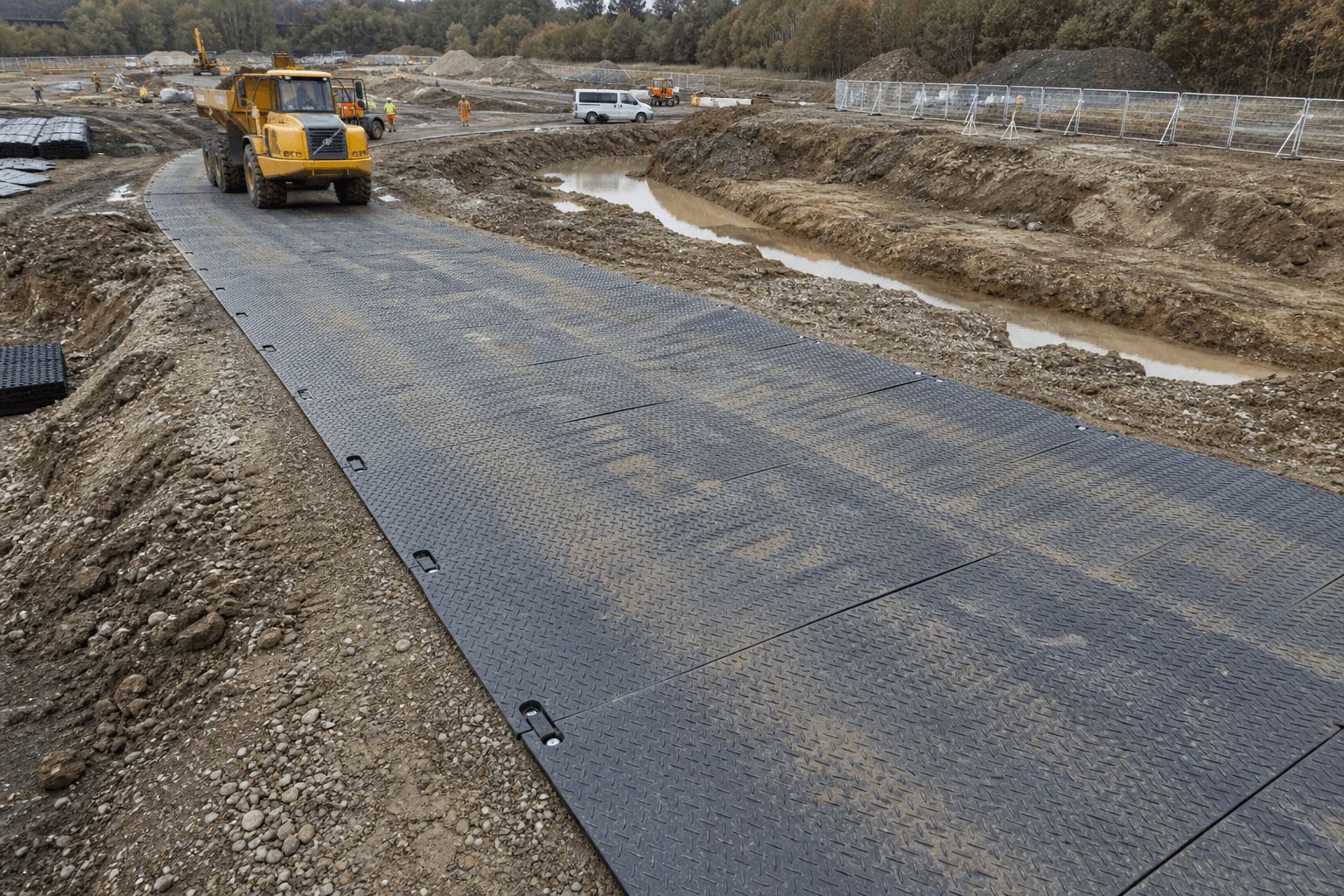
Construction sites cover a huge range of applications.
A residential landscaping project and a large energy infrastructure project should not use the same temporary-road assumptions.
HDPE ground protection mats may be useful for:
- Building construction
- Utility repair
- Landscaping around active construction
- Temporary vehicle access
- Equipment staging
- Surface protection
Bog mats are frequently considered where:
- Equipment is extremely heavy
- Ground conditions are poor
- The temporary route is structural in nature
- Large tracked equipment is operating continuously
Paowo’s construction site ground protection solutions are focused on applications where reusable HDPE mats can provide practical temporary access and surface protection.
Which System Is Better for Landscaping and Turf Protection?
For landscaping applications, the objective is often different from heavy civil construction.
The main requirement may be preventing:
- Lawn rutting
- Tire damage
- Soil disturbance
- Mud transfer
Equipment may include:
- Mini excavators
- Compact loaders
- Utility vehicles
- Tree-care equipment
Here, lightweight HDPE ground protection mats can provide an important practical advantage.
Crews can build a route and remove it after the work is complete without bringing heavy installation machinery onto the protected area.
Using bog mats purely for turf protection could create unnecessary handling complexity.
In this type of ground protection mats vs bog mats comparison, HDPE mats often better match the project objective.
Which System Is Better for Utility Work?
Utility contractors frequently need temporary access to:
- Power lines
- Telecommunications infrastructure
- Pipelines
- Water systems
- Remote maintenance areas
The access route may cross:
- Grass
- Farm ground
- Road shoulders
- Mud
- Sensitive landscaped areas
Portable HDPE mats can be attractive when crews move repeatedly between work locations.
Bog mats may become more appropriate when utility construction involves heavy drilling or lifting equipment on difficult ground.
Again, there is no single winner in ground protection mats vs bog mats.
Equipment and terrain determine the correct system.
How Repeated Traffic Affects the Decision
A temporary roadway used by one vehicle twice is not the same as a road carrying trucks all day.
Repeated traffic can progressively change the ground beneath the mats.
Potential effects include:
- Compaction
- Rutting
- Settlement
- Water pumping
- Edge movement
- Joint displacement
When evaluating ground protection mats vs bog mats, provide the expected traffic volume.
Useful information includes:
- Vehicle passes per day
- Project duration
- Loaded versus unloaded traffic
- Whether the same wheel path is repeatedly used
A lightweight solution that is suitable for occasional access may not be the preferred system for months of heavy traffic.
Why Turning Areas Need More Support
Temporary access roads are often designed around straight-line travel.
But equipment has to turn somewhere.
Turning creates lateral forces that can:
- Shift mats
- Disturb underlying soil
- Load connections
- Damage route edges
Tracked machinery can create particularly strong lateral forces during pivot turns.
If the project includes frequent turning, tell the mat supplier where those turns occur.
The straight road section and the equipment working area may need different approaches.
This detail can materially change the ground protection mats vs bog mats recommendation.
How Connections Affect HDPE Ground Protection Mats
Individual HDPE panels are often connected to help create a continuous temporary roadway.
Connections can help:
- Maintain alignment
- Reduce gaps
- Limit mat movement
- Simplify route layout
Connection design becomes more important as:
- Traffic increases
- Ground becomes softer
- Vehicles turn
- The route is installed on a slope
Paowo can manufacture HDPE temporary road mats with customized connection-hole and surface configurations according to project requirements.
Bog mats may use different joining or placement strategies depending on their design.
Connections should therefore be included when comparing the complete systems.
Which System Provides Better Traction?
Traction does not depend only on whether a mat is HDPE or timber.
It depends on:
- Surface texture
- Mud
- Water
- Equipment tires
- Tracks
- Slope
- Cleaning
HDPE ground protection mats can be manufactured with textured surfaces intended to improve grip.
However, mud can fill surface patterns.
Regular cleaning may therefore be necessary.
Bog mats also have their own surface characteristics and can become slippery depending on contamination and weather.
For sloped routes, traction should be evaluated as part of site safety rather than assumed from the material alone.
What About Rain and Drainage?
Rain can change temporary access conditions very quickly.
Water may soften soil underneath either system.
Signs of deterioration include:
- Pumping water
- Increasing settlement
- Mat rocking
- Deepening edge ruts
- Mud appearing through joints
If water cannot drain from beneath the temporary roadway, ground conditions can continue to worsen.
Neither side of the ground protection mats vs bog mats comparison eliminates the need for drainage planning.
For difficult projects, route preparation may need to include drainage measures before mats are installed.
Are Bog Mats Always Better for Heavy Equipment?
No.
“Heavy equipment” is too broad a category.
A machine’s effect on a temporary roadway depends on:
- Total operating weight
- Contact area
- Tire or track configuration
- Movement
- Ground strength
- Number of passes
A heavier system can be appropriate for demanding conditions, but that does not mean every excavator requires bog mats.
Likewise, it would be inappropriate to assume that every HDPE mat can support every heavy machine.
Each system should be matched to the actual application.
Are Ground Protection Mats Always Cheaper?
Not necessarily.
The lowest product price is not always the lowest project cost.
A useful cost comparison includes:
- Purchase cost
- Transportation
- Loading and unloading
- Installation equipment
- Installation labor
- Removal
- Cleaning
- Storage
- Reuse
- Repair or replacement
HDPE mats may reduce handling and transport requirements for suitable projects.
Bog mats may provide the level of support needed for conditions where lightweight systems are not appropriate.
The right economic question is:
Which system meets the project requirements at the lowest total installed and operating cost?
How Long Will Temporary Access Mats Last?
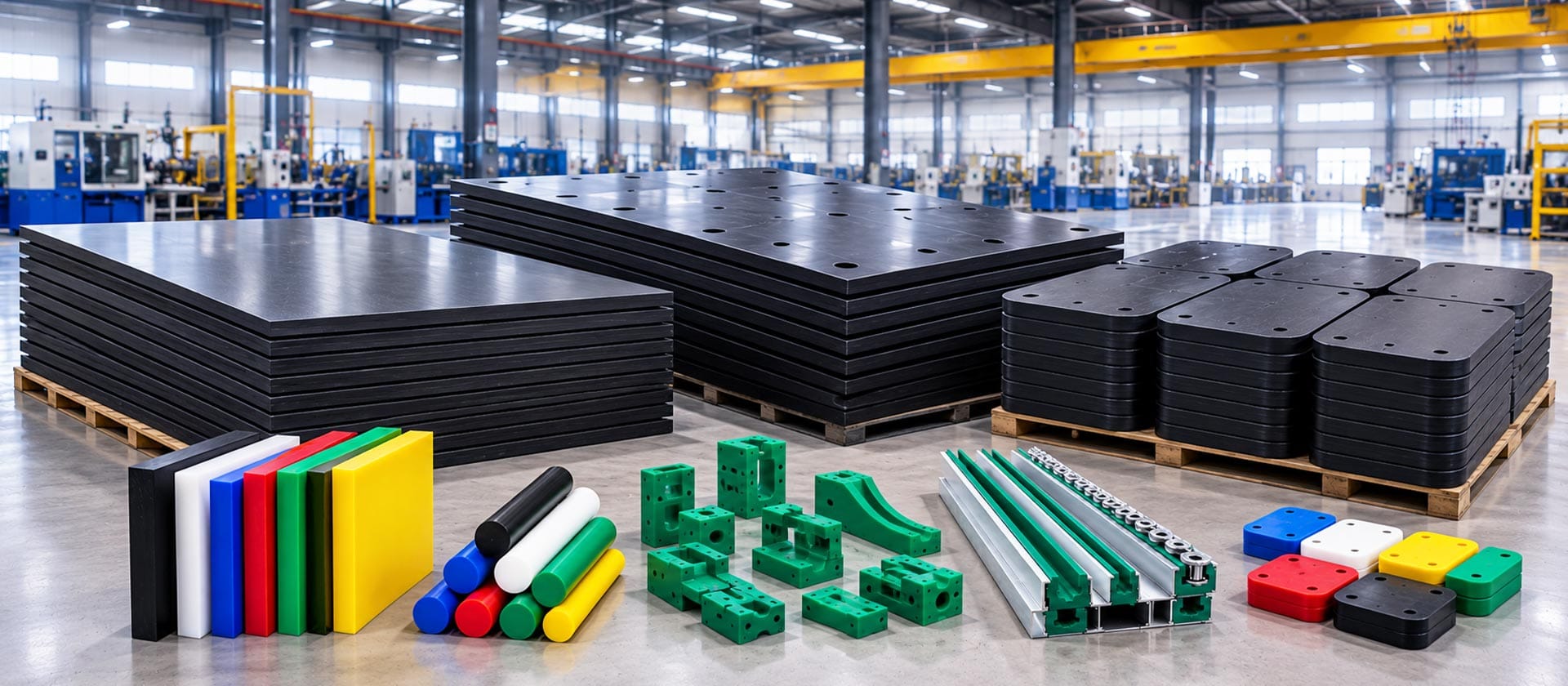
Service life cannot be predicted from material name alone.
For both ground protection mats vs bog mats, life depends on:
- Equipment
- Traffic frequency
- Surface condition
- Installation
- Handling
- Storage
- Environmental exposure
- Damage during use
A reusable mat should be inspected before and after projects.
Damaged panels should be evaluated rather than automatically returned to service.
Storage and Maintenance Differences
HDPE mats are relatively resistant to moisture and can usually be cleaned before storage.
For long-term use, store them in an organized manner that avoids unnecessary deformation.
Traditional timber bog mats require storage practices appropriate to timber condition and size.
Both systems also benefit from:
- Cleaning before storage
- Identifying damaged units
- Keeping compatible mats together
- Tracking inventory
For rental fleets, adding identification or asset numbers can simplify management.
When HDPE Ground Protection Mats Make More Sense
In a ground protection mats vs bog mats comparison, HDPE ground protection mats are particularly worth evaluating when:
- Ground is reasonably stable
- Surface protection is important
- Equipment is light or medium duty
- Routes change frequently
- Manual or simple handling is preferred
- Transportation efficiency matters
- The project duration is short
- Mats will be reused at multiple sites
They can also suit many construction applications when technical review confirms the ground and vehicle conditions are appropriate.
When Bog Mats May Make More Sense
Bog mats may deserve stronger consideration when:
- Ground is extremely soft
- Large heavy equipment is involved
- Tracked machinery is operating continuously
- Temporary-road demands are severe
- Mechanical installation equipment is already available
- A substantial heavy-duty access system is required
In these situations, the additional weight and handling requirements may be justified by the project conditions.
What Information Should You Send Before Choosing?
A supplier cannot responsibly resolve ground protection mats vs bog mats from a message saying:
“We have a 30-ton machine.”
Provide the site and operating context.
Ground Conditions
Include:
- Soil type
- Firm, medium or soft condition
- Wet or dry
- Existing mud depth
- Drainage
- Slope
- Existing rutting
Photographs are highly useful.
Equipment Information
Provide:
- Equipment type
- Manufacturer and model
- Operating weight
- Maximum loaded weight
- Tire dimensions
- Track dimensions
- Turning requirements
Traffic Information
Provide:
- Number of passes
- Hours per day
- Project duration
- Straight travel or frequent turning
Route Information
Provide:
- Road length
- Road width
- Working areas
- Curves
- Slopes
- Required quantity
The more complete these inputs are, the more useful the temporary-access recommendation can be.
Ground Protection Mats vs Bog Mats FAQ
What Is the Main Difference Between Ground Protection Mats and Bog Mats?
HDPE ground protection mats are generally lighter and easier to transport and install, while traditional bog mats are typically much heavier and commonly associated with demanding temporary access for heavy equipment and weak ground.
Are Ground Protection Mats Suitable for Mud?
They can be used in muddy conditions depending on the depth, ground strength, equipment and mat specification. Very weak or saturated ground may require a more substantial access system or additional ground preparation.
Are Bog Mats Only for Swamps?
No. Despite the name, bog mats are used in many construction, energy, pipeline, forestry and heavy-equipment access applications.
Can an Excavator Use HDPE Ground Protection Mats?
Potentially, depending on excavator weight, track dimensions, movement pattern, ground condition and the specific mat design. Pivoting and turning should be included in the assessment.
Which Is Easier to Transport?
For comparable route coverage, lightweight HDPE ground protection mats can offer simpler handling and transportation than heavy traditional bog mats.
Which Is Better for Protecting Grass?
HDPE ground protection mats are commonly suitable for temporary turf and landscaping access because they can create a protective surface without requiring heavy installation equipment.
Can Ground Protection Mats Replace an Engineered Temporary Road?
Not in every application. Severe ground conditions or very heavy traffic may require additional ground preparation, aggregate, geotextiles or another engineered roadway system.
How Do I Know Which Mat Thickness I Need?
Thickness should not be selected independently. Equipment, mat dimensions, contact conditions, ground strength, traffic and required support should be evaluated together.
Temporary Access Mat RFQ Checklist
Before requesting a quotation, prepare these project details.
Site Conditions
- Ground type
- Moisture condition
- Mud depth if applicable
- Slope
- Drainage
- Existing ground damage
- Site photos
Vehicle and Equipment
- Equipment model
- Operating weight
- Loaded weight
- Tire size
- Track size
- Number of machines
- Turning behavior
Traffic
- Estimated passes per day
- Hours of operation
- Project duration
Temporary Road
- Total length
- Width
- Number of routes
- Working platforms
- Turning areas
Mat Requirements
- Preferred material
- Preferred dimensions
- Thickness if specified
- Surface pattern
- Connection arrangement
- Quantity
- Color
- Logo or identification requirements
A detailed RFQ enables the supplier to evaluate the actual temporary-access requirement rather than recommending a product only from vehicle weight.
Conclusion
The right answer to ground protection mats vs bog mats depends on what the temporary roadway actually needs to accomplish.
HDPE ground protection mats offer clear advantages when portability, quick installation, surface protection, transport efficiency and repeated reuse are important.
Traditional bog mats provide a heavier temporary-access approach often associated with demanding ground conditions and large heavy equipment.
Neither system is automatically better.
The decision should consider:
- Ground strength
- Soil moisture
- Vehicle or equipment weight
- Tires or tracks
- Traffic frequency
- Turning
- Route length
- Installation resources
- Freight
- Project duration
For many construction, landscaping and utility projects, lightweight HDPE mats can provide a practical temporary-access solution without the logistics associated with heavy bog mats.
For extremely weak ground or demanding heavy-equipment projects, a more substantial bog-mat or engineered access system may be appropriate.
Paowo Group manufactures HDPE temporary road mats for temporary construction access and ground protection applications, with customizable dimensions, thicknesses, surface textures, connection holes, colors and identification options.
Send your ground condition, equipment model, operating weight, tire or track dimensions, required road length, traffic frequency and site photos for an application-based temporary access mat recommendation and quotation.