Table of Contents
A contractor adds larger pads to a fleet with limited handling equipment. For buyers reviewing large outrigger pads, the practical question is whether the offered product and its supporting evidence address this specific requirement.
This guide examines handling larger pads without field damage as a defined engineering and purchasing decision. It connects the duty, interface, qualification and quotation so procurement can resolve the important questions before releasing an order.
Handling Larger Pads Without Field Damage
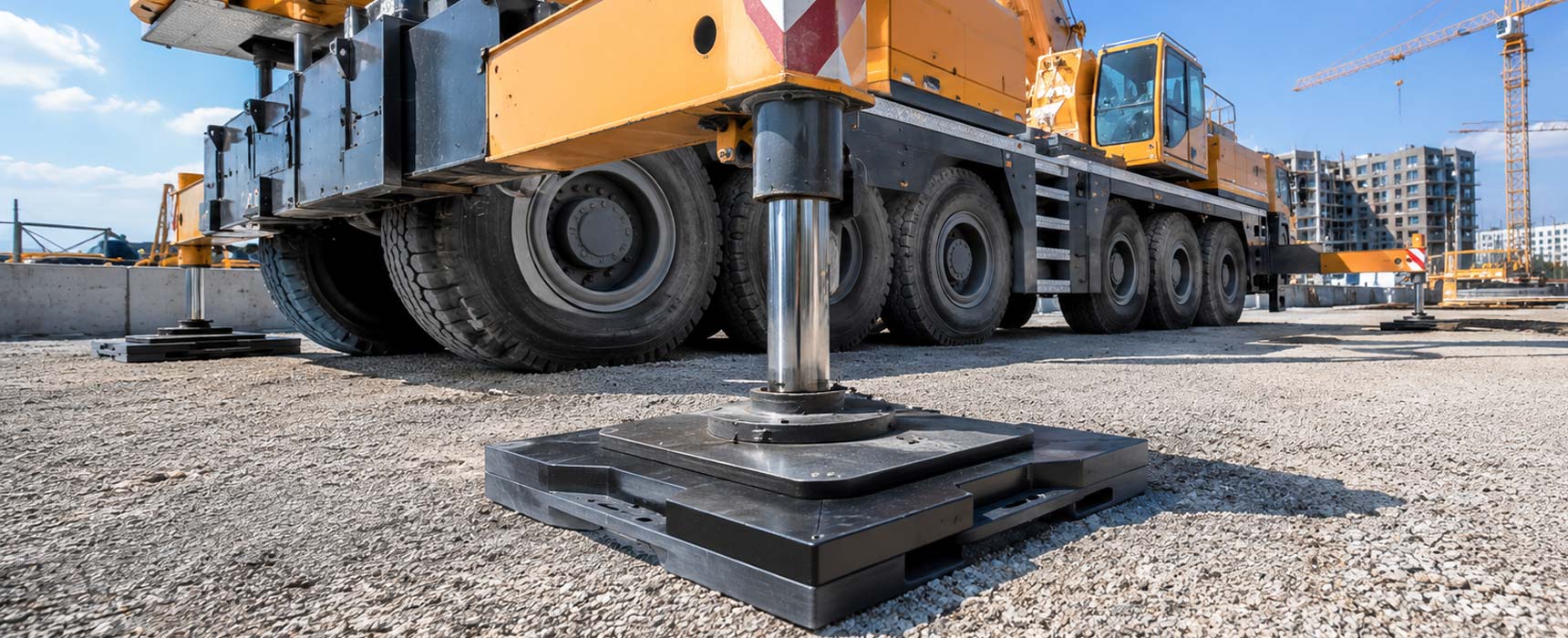
Increased area can introduce handling difficulty and unsupported bending during movement.
Plan the path from vehicle storage to final placement using the proposed pad's verified mass and dimensions. Identify gripping, turning and retrieval constraints. Trial the approved method in a controlled setting. If the accessory cannot be handled without dragging or loss of control, revise the handling arrangement before buying a larger set for the whole fleet.
Start by separating the observed symptom from the proposed product change. Record what happens, where it happens and the operating condition in which it matters. That makes the review of large outrigger pads specific enough to support a decision, rather than a comparison of broad product descriptions.
Handling and storage
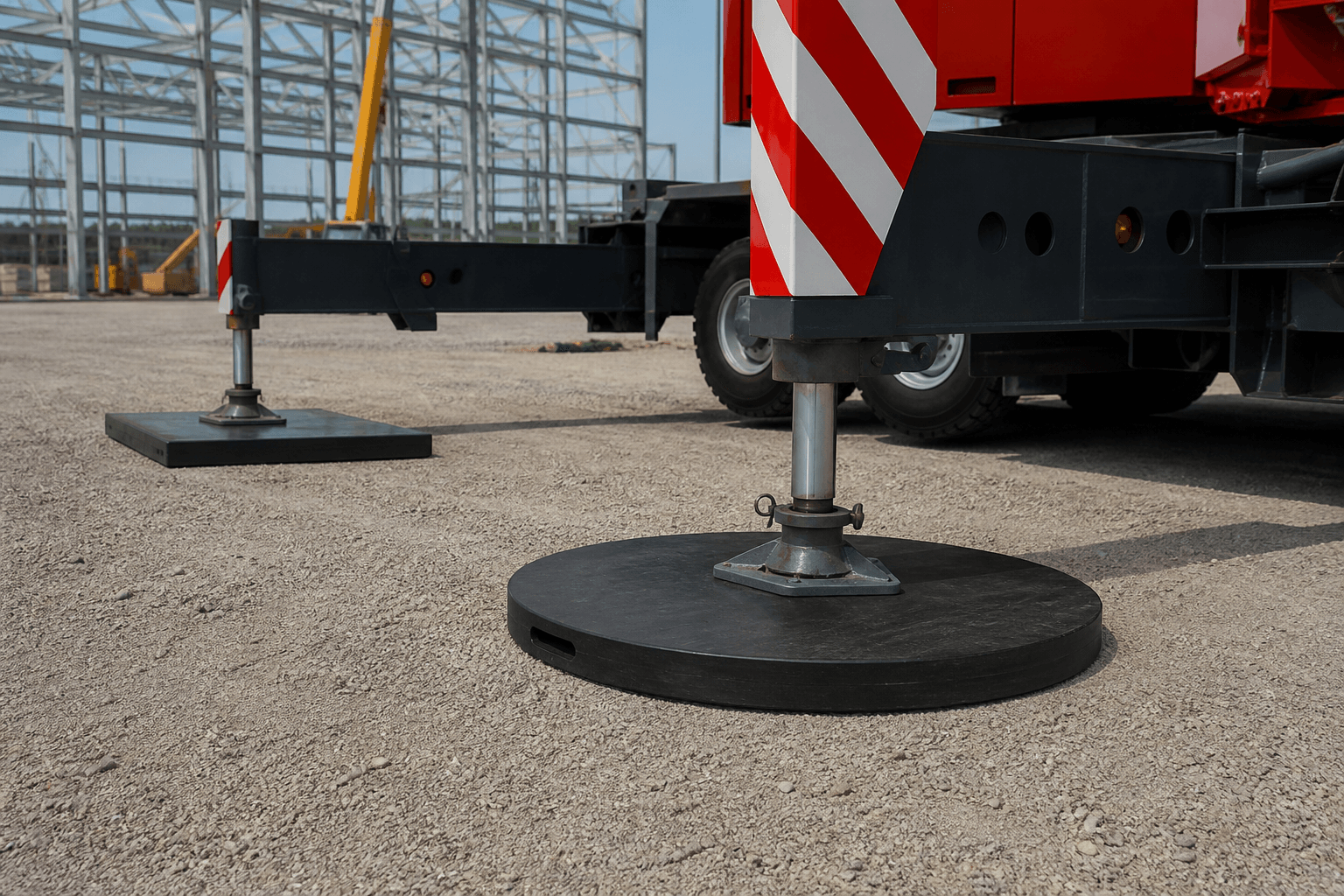
Verify the actual mass and handling instructions for large outrigger pads. Larger support accessories can be awkward even when made from a material lighter than steel. Plan carrying, positioning, cleaning and vehicle storage as one task. Provide suitable equipment and grips, and avoid methods that damage the working faces or allow an uncontrolled pad movement.
The inputs that define large outrigger pads
Record verified mass, grip positions, storage envelope, lifting method. Keep the units, revision and source of each input with the inquiry. Distinguish a measured value from an estimate, and identify the person responsible for resolving any critical unknown. A supplier can review an explicit assumption; an undocumented assumption is much harder to detect.
Vehicle restraint
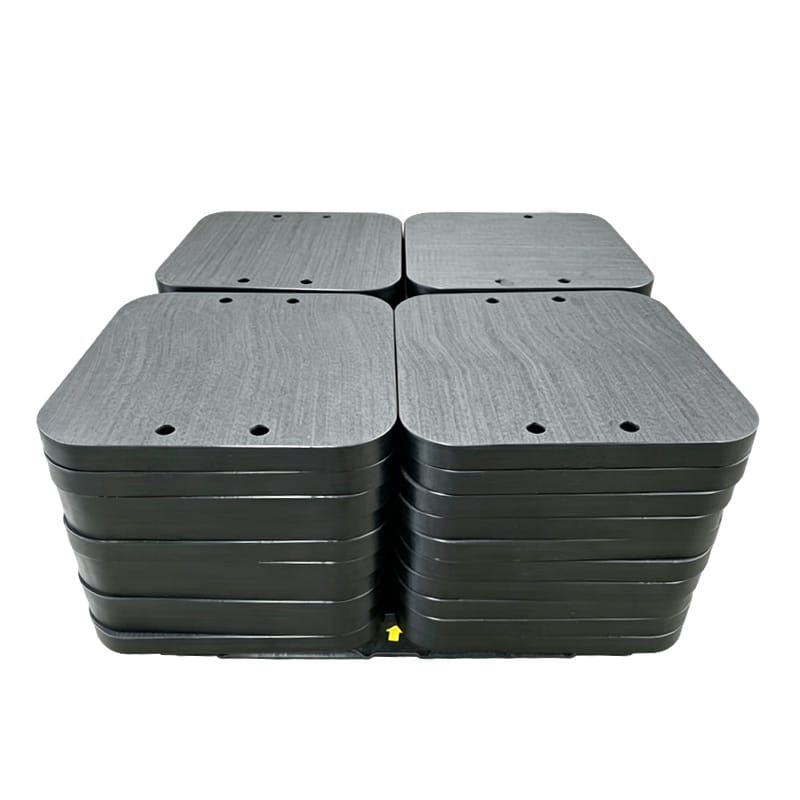
Storage of large outrigger pads on a vehicle needs an appropriate restraint and support arrangement. Check the available compartment, removal access and nearby tools or equipment. A pad should not have to be forced into storage or left loose for transport. Inspect for storage-related damage during handover so it is not mistaken for ordinary service wear.
Design the complete interface: large outrigger pads
Use a task-specific handling plan and compatible equipment for the selected size.
Review large outrigger pads in the installed arrangement. Show adjoining components, the direction of movement or load, and the space needed for installation and later removal. If the interface changes, update the released drawing and acceptance basis together so the quote and the technical approval still refer to the same requirement.
Damage disposition
Damage to large outrigger pads needs a defined disposition by the manufacturer or responsible technical owner. Cracks, excessive deformation, unknown history or unapproved alterations should not be assigned improvised reduced capacities. Segregate uncertain items and record the reason. A written process prevents damaged pads from reappearing as convenient spares during a busy dispatch period.
Compare the available procurement routes
Use the comparison below to decide what must happen before purchasing large outrigger pads. The routes describe different scopes of work; they are not interchangeable offers. In this application, the controlling issue is handling larger pads without field damage. An apparently cheaper route may leave that issue unresolved.
| Route | When it merits review | Evidence needed before release |
|---|---|---|
| Documented existing design | Potentially suitable when equipment and support conditions match its approval. | Verify identity, placement requirements and the complete design basis. |
| Reviewed custom pad | Potentially suitable when an approved foot or storage interface needs customization. | Approve all geometry changes and relevant qualification evidence. |
| Revised support arrangement | Necessary when ground, load or setup remains outside the reviewed conditions. | Obtain the site and equipment owner’s approval before use. |
Handover
Include large outrigger pads in equipment handover, with its identities, compatible machine, instructions and open defects. Make it clear which set is approved for the next deployment. An operator should not have to infer compatibility from a pile of accessories. Review damage reports and missing records before reuse, and retain the evidence needed for later investigations.
Qualify a representative sample or trial: large outrigger pads
Trial storage, removal and positioning under controlled conditions.
For large outrigger pads, write the trial objective before collecting results. Record the item or sample identity, drawing revision, conditions, observations and acceptance decision. Keep a photograph or measurement record where it helps explain the outcome. If the trial covers only one part of the duty, retain the remaining questions instead of treating a limited result as full approval.
Placement limits
Follow the specified placement requirements for large outrigger pads. Centering, permissible offsets and the support condition are part of the product's intended use. A confined site is a reason to reassess equipment position, not to assume that an edge-loaded pad will perform like a centered one. Make placement restrictions visible in the setup instructions and handover.
Recognize the limits and stop conditions
Dragging that damages a working face or uncontrolled handling requires a revised method.
Define who can suspend approval and who can authorize a correction. Preserve the failed item, relevant measurements and operating details where practical. Changing the product and the surrounding process simultaneously can make the cause difficult to establish. The next action should resolve the controlling uncertainty rather than merely repeat the purchase with a larger nominal size.
Temperature exposure
The duty for large outrigger pads includes realistic ambient conditions, sunlight and any abnormal heat exposure. Use manufacturer and grade-specific information rather than a generic polymer temperature statement. Inspect pads exposed to an unusual event according to the approved process. A normal-looking surface after an incident should not be used as the sole evidence for returning an affected accessory to service.
Build a complete quotation package
Request weight, handling instructions and storage dimensions before ordering.
The quotation package for large outrigger pads should identify the requested quantity, delivery destination and purchased condition, together with the relevant drawing or layout. Ask suppliers to list exclusions and deviations clearly. Compare like scope: material identity, functional dimensions, inspection, packing and any first-article work should be visible beside the unit price.
Top and bottom faces
Inspect both working faces of large outrigger pads. Mud, loose particles, oil or damage can affect handling and contact on either side. Follow the equipment and pad instructions for preparing the setup. A textured top surface does not compensate for poor support underneath. If contamination cannot be removed by an approved method, keep the item out of service pending assessment.
Foot articulation
The equipment foot used with large outrigger pads may pivot or have rims and recesses that control contact. Check the complete geometry, including handles or pockets on the pad. Preserve the manufacturer's intended seating and movement. A controlled unloaded fit review can expose interference before field use, but it does not replace the load and ground-support assessment.
Discuss the reviewed requirement with Paowo
Paowo lists UHMWPE Outrigger Pads among its current products and describes drawing- and sample-based work through its OEM and ODM custom service. For the application discussed here, send the specific interface and duty information before asking for a final recommendation.
You can also review the site’s related application area and the existing article UHMWPE Outrigger Pads vs Wood: Durability, Handling and Inspection for adjoining considerations. Keep the scope of this inquiry centered on handling larger pads without field damage.
For authoritative context, see OSHA 1926.1402 ground-conditions requirements. For US construction cranes within its scope, OSHA 1926.1402 addresses suitable ground and known subsurface hazards. This is context for site assessment, not a product certification or a pad capacity rating.
Request a review of large outrigger pads with your drawings, operating conditions, required outcome and delivery needs. Ask Paowo to identify the offered grade and specification, state unresolved assumptions and separate sample work from production scope. Use the inquiry form after the FAQ to share the requirement and request a quotation.
Frequently Asked Questions
What is the first issue to review for large outrigger pads?
Increased area can introduce handling difficulty and unsupported bending during movement. Start with the actual duty and the relevant interfaces rather than the product name alone.
What information is needed to specify large outrigger pads?
Provide verified mass, grip positions, storage envelope, lifting method. Include a drawing or layout showing the complete interface and identify critical unknowns before release.
How should a trial of large outrigger pads be assessed?
Trial storage, removal and positioning under controlled conditions. Keep sample identity, representative conditions and the agreed acceptance decision in the trial record.
When should approval of large outrigger pads be held?
Dragging that damages a working face or uncontrolled handling requires a revised method. Resolve the cause and obtain the responsible technical approval before release or continued use.
What should I send Paowo when requesting large outrigger pads?
Request weight, handling instructions and storage dimensions before ordering. Add the quantity, destination, current drawing revision and required documentation so offers can be compared on equivalent scope.