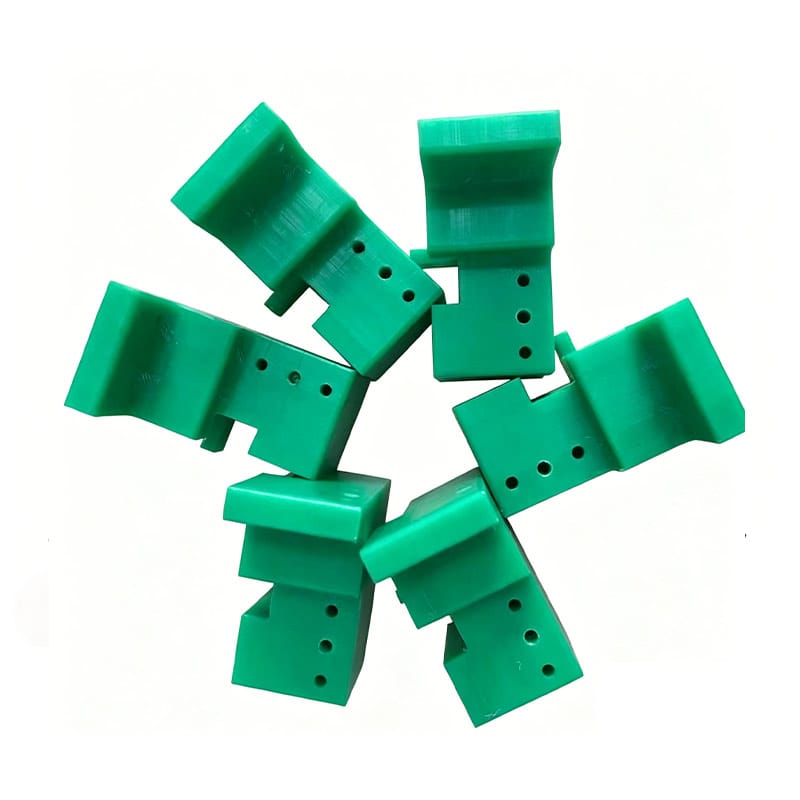
Wood has been used beneath crane and heavy-equipment outriggers for decades. It is familiar, widely available and easy to understand.
UHMWPE offers a different approach.
Instead of relying on timber blocks or pads, equipment operators can use engineered plastic support pads designed for repeated field handling and exposure to outdoor working conditions.
That naturally leads buyers to compare UHMWPE vs wood outrigger pads.
The answer should not be reduced to “plastic is better” or “wood is cheaper.”
An outrigger pad is part of a ground-support system. Its suitability depends on the maximum outrigger reaction, foot dimensions, pad geometry, supporting ground, inspection condition and equipment manufacturer’s requirements.
Material is only one part of that system.
However, material does influence practical issues such as:
- Moisture absorption
- Splitting and cracking
- Weight
- Handling
- Surface condition
- Inspection
- Cleaning
- Repeat use
For crane fleets, concrete pump operators, aerial work platforms and other mobile equipment, these differences can become important over repeated setups.
This guide compares UHMWPE vs wood outrigger pads from a procurement and field-use perspective without assigning unsupported universal load ratings or service-life claims.
What Is a UHMWPE Outrigger Pad?
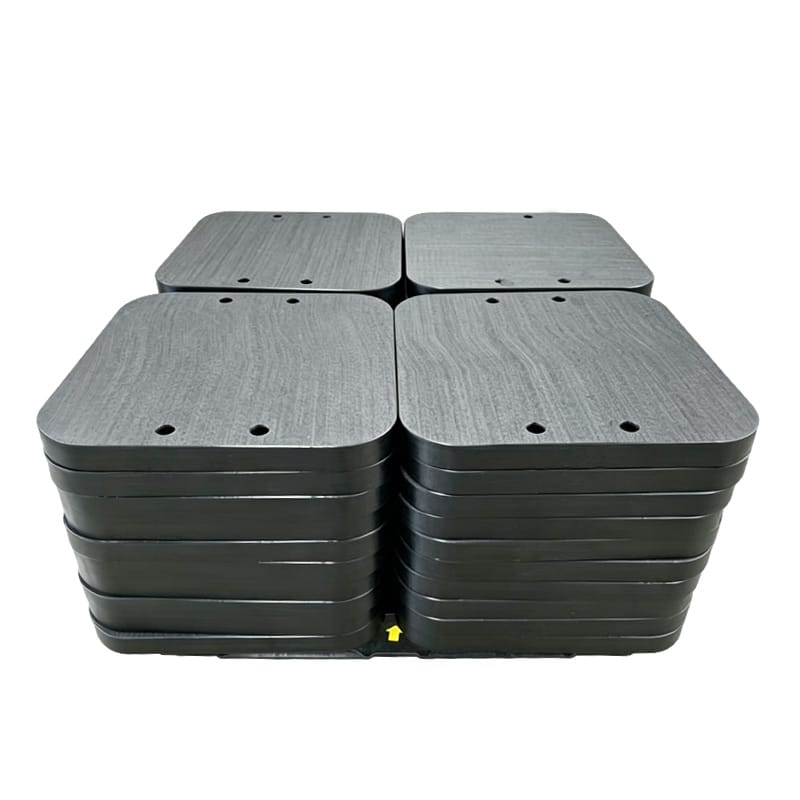
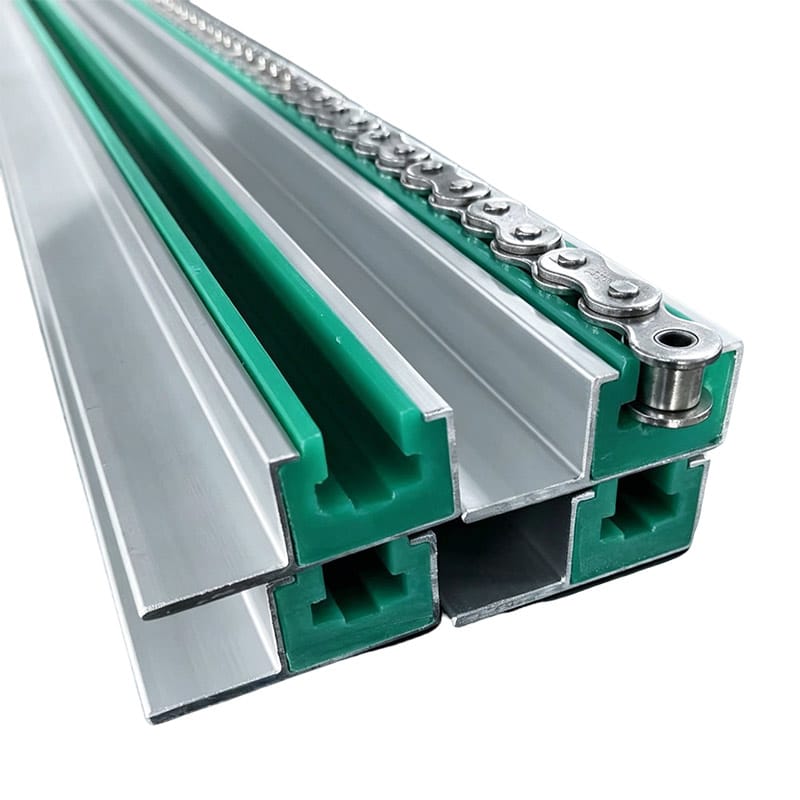
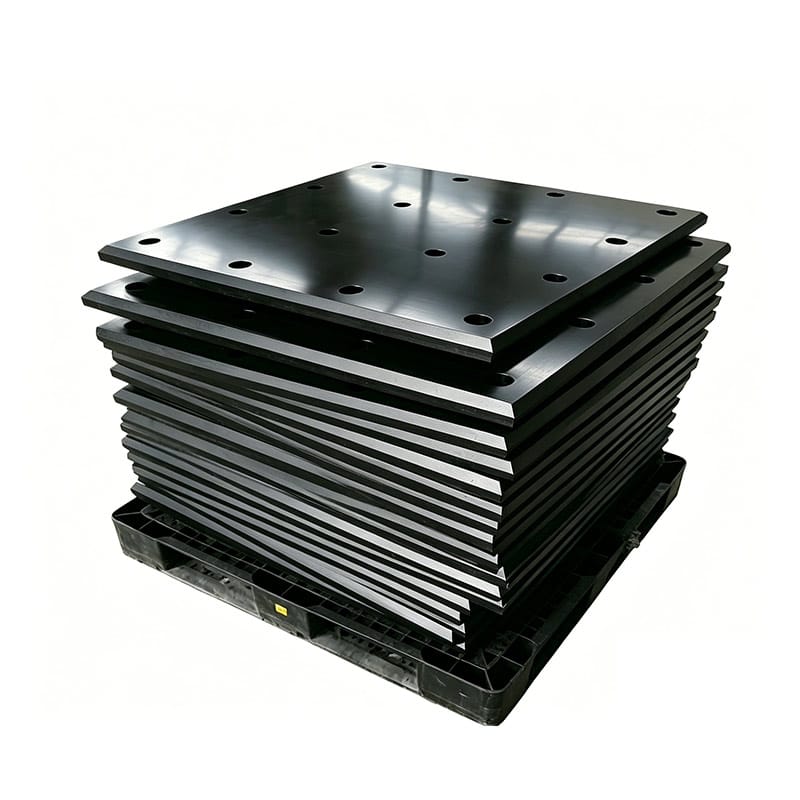
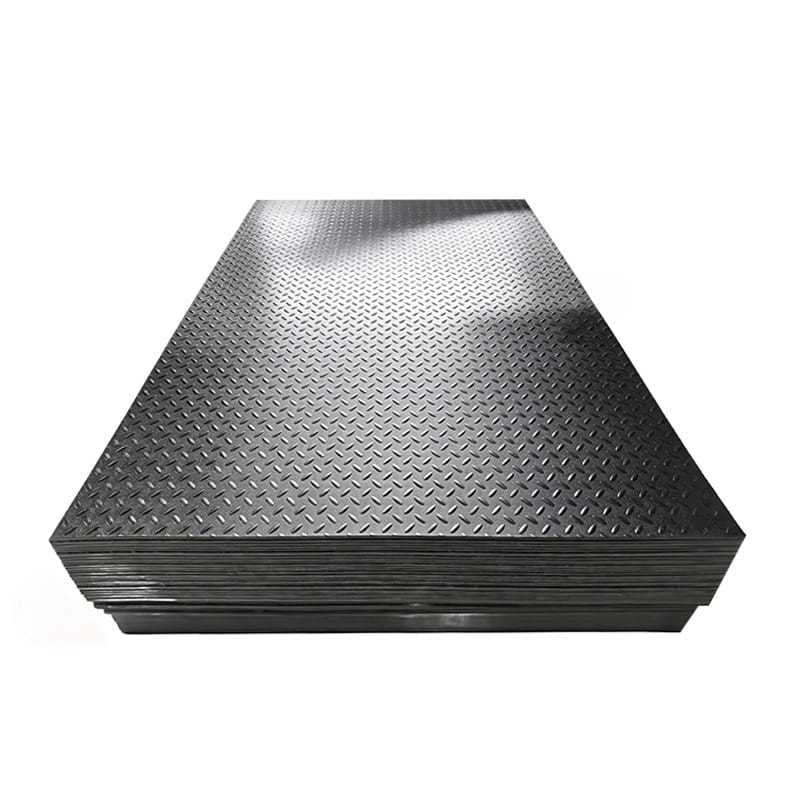
A UHMWPE outrigger pad is a support pad manufactured from ultra-high-molecular-weight polyethylene.
The pad is positioned beneath an outrigger foot or stabilizer to increase the effective bearing area through which equipment reaction is transferred toward the supporting ground.
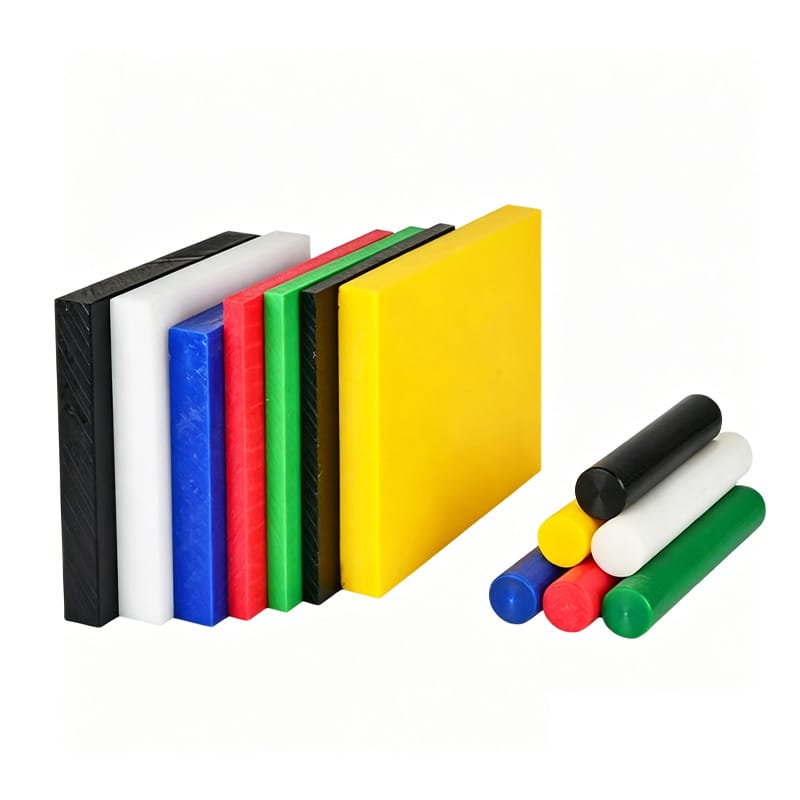
Depending on the application, UHMWPE outrigger pads can be produced in different:
- Lengths
- Widths
- Thicknesses
- Shapes
- Colors
- Handle configurations
- Identification formats
The pad dimensions should be selected according to actual equipment and ground conditions rather than a generic statement such as “suitable for a 50-ton crane.”
What Are Wood Outrigger Pads?
Wood outrigger pads may consist of individual timber pieces or engineered timber assemblies used to provide additional bearing area beneath outriggers.
Wood remains common because it can be:
- Locally available
- Cut into different sizes
- Familiar to field crews
- Relatively straightforward to replace
However, wood is a natural material.
Its condition can vary according to:
- Species
- Grain
- Knots
- Moisture
- Previous loading
- Storage
- Cracks
- Damage
These factors should be considered when comparing UHMWPE vs wood outrigger pads for repeated fleet use.
UHMWPE vs Wood Outrigger Pads: Key Differences at a Glance
| Selection Factor | UHMWPE Outrigger Pads | Wood Outrigger Pads |
|---|---|---|
| Material | Engineered thermoplastic | Natural timber or engineered wood assembly |
| Water absorption | Very low | Can absorb moisture |
| Splitting | Does not split along wood grain | Grain-related splitting can occur |
| Rot | Polymer does not rot like timber | Moisture and storage can affect wood |
| Weight | Depends on dimensions; often manageable for reusable pads | Depends strongly on wood type and moisture |
| Cleaning | Non-porous surface is generally easy to wash | Surface condition can make cleaning more difficult |
| Identification | Can be machined or marked | Can also be labeled or marked |
| Dimensional consistency | Manufactured material | Natural variation may be present |
| Inspection focus | Cracks, gouges, deformation, handle damage | Splits, cracks, rot, crushing, grain damage |
| Reuse | Designed for repeated use when condition remains acceptable | Possible when material condition remains acceptable |
This comparison does not establish the safe capacity of either option.
When evaluating UHMWPE vs wood outrigger pads, actual pad geometry and setup conditions still need to be reviewed.
The Most Important Point: Neither Material Fixes Weak Ground
Before discussing material durability, it is important to establish what an outrigger pad actually does.
A pad helps distribute the outrigger reaction over a larger area.
It does not magically increase the strength of weak ground.
A simple preliminary relationship is:
Required Bearing Area = Maximum Outrigger Reaction ÷ Allowable Ground Bearing Pressure
That calculation establishes a theoretical bearing-area requirement.
The selected support system must then be checked for:
- Pad dimensions
- Material
- Thickness
- Outrigger foot size
- Load position
- Ground uniformity
- Setup conditions
Therefore, UHMWPE vs wood outrigger pads should only be compared after the ground-support requirement is understood.
How Moisture Affects UHMWPE vs Wood Outrigger Pads
Outdoor equipment support pads frequently encounter:
- Rain
- Mud
- Snow
- Wash water
- Wet soil
- Humid storage
This is one of the clearest material differences in a UHMWPE vs wood outrigger pads comparison.
UHMWPE has very low water absorption.
It does not depend on remaining dry to maintain the basic structure of the polymer.
Wood behaves differently because moisture can enter the material.
Depending on the wood and its condition, moisture changes may influence:
- Weight
- Dimensions
- Surface condition
- Long-term degradation
For fleets operating in wet environments, this difference can influence storage and inspection routines.
Wet Wood Can Become Heavier to Handle
A wood pad that absorbs moisture can become heavier than it was when dry.
That matters when crews repeatedly load and unload pads.
Field handling may involve:
- Removing pads from vehicle storage
- Carrying them to the outrigger
- Positioning them
- Cleaning them
- Returning them to storage
For large support pads, even modest changes in handling difficulty can matter during repeated setups.
UHMWPE pads do not absorb water in the same way as wood, giving them more predictable handling characteristics after exposure to rain or washdown.
This is one reason equipment operators may favor UHMWPE in a UHMWPE vs wood outrigger pads evaluation.
Splitting Is a Different Issue for Wood
Wood has a natural grain structure.
Damage can develop along that grain.
Potential warning signs include:
- Longitudinal cracks
- Splits
- Broken corners
- Crushed areas
- Delamination in engineered assemblies
A crack does not automatically mean every timber pad has failed, but its condition should be assessed before reuse.
UHMWPE does not have wood grain, so it does not develop grain-related splitting.
However, that does not make UHMWPE indestructible.
Plastic pads still need inspection for:
- Cuts
- Gouges
- Cracks
- Distortion
- Local crushing
- Handle damage
The inspection method changes with the material.
Is UHMWPE More Durable Than Wood?
This question needs careful wording.
It is tempting to claim that a UHMWPE pad lasts a fixed number of times longer than wood.
Without comparable testing and identical service conditions, such a statement is not responsible.
Durability depends on:
- Reaction load
- Pad dimensions
- Ground condition
- Outrigger foot
- Storage
- Handling
- Frequency of use
- Damage history
Instead of making an absolute lifespan claim, the practical UHMWPE vs wood outrigger pads comparison should focus on known material behavior.
UHMWPE does not:
- Rot like timber
- Absorb significant water
- Split along grain
Wood may still provide appropriate service when correctly selected, stored and inspected.
How Handling Differs Between UHMWPE and Wood Pads
Outrigger pads are field tools.
A technically suitable pad that is difficult to move creates another operational challenge.
Handling depends mainly on:
- Pad dimensions
- Thickness
- Material density
- Handle design
A UHMWPE pad can be manufactured with dedicated handling features.
Possible options include:
- Rope handles
- Hand slots
- Recessed grips
These features can simplify moving and positioning pads.
Paowo Group’s crane and lifting equipment support solutions can include customized pad sizes and handling features based on actual requirements.
Large Pads May Still Require Mechanical Handling
UHMWPE should not automatically be described as “lightweight” without considering pad size.
A very large or thick UHMWPE pad can still be heavy.
If a calculated ground-support requirement leads to a large pad, manual handling may no longer be appropriate.
The solution might involve:
- Mechanical lifting
- Different pad geometry
- A multi-component support system
- Revised storage arrangements
The UHMWPE vs wood outrigger pads comparison should therefore use the actual proposed pad dimensions rather than only the material names.
Why Consistent Dimensions Matter for Fleet Standardization
Large equipment fleets may use multiple support pads across:
- Cranes
- Concrete pumps
- Aerial platforms
- Service equipment
UHMWPE pads can be manufactured to controlled nominal dimensions and standardized across a fleet.
This makes it possible to specify:
- Standard pad sizes
- Standard colors
- Asset numbers
- Equipment groups
- Storage positions
Wood pads can also be standardized, but natural material variation should still be considered.
For fleet managers, consistency can make inventory and replacement easier.
Inspection Is One of the Most Important Differences
Outrigger pads should be inspected before use regardless of material.
The inspection simply focuses on different failure indicators.
When comparing UHMWPE vs wood outrigger pads, buyers should ask:
Can our operators identify damage reliably before the pad returns to service?
This is more useful than focusing only on purchase price.
What to Inspect on UHMWPE Outrigger Pads
Before use, check for visible conditions such as:
- Cracks
- Severe gouges
- Cuts
- Permanent deformation
- Melted or heat-damaged areas
- Damaged hand slots
- Damaged rope handles
- Unusual surface damage
Also check whether the pad still sits appropriately on the intended support surface.
If damage raises uncertainty about suitability, the pad should be removed from service pending appropriate evaluation.
What to Inspect on Wood Outrigger Pads
Wood pads require inspection for indicators such as:
- Splitting
- Cracking
- Rot
- Crushing
- Broken sections
- Damaged joints
- Loose fasteners in built assemblies
- Severe moisture damage
The internal condition of wood may sometimes be more difficult to infer from a quick exterior inspection.
Inspection procedures should therefore reflect the type of wood support system being used.
Why Cleaning Matters
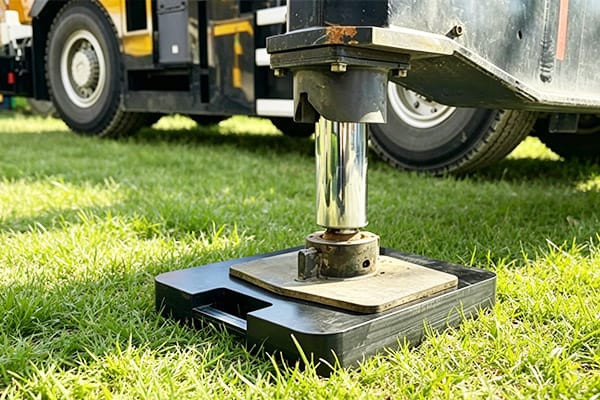
A pad covered in thick mud is harder to inspect.
That applies to both materials.
UHMWPE’s relatively smooth, non-porous surface can simplify washing after muddy site use.
Keeping pads clean helps operators identify:
- Cracks
- Cuts
- Surface damage
- Identification markings
Wood can also be cleaned, but damaged or rough surfaces can hold dirt more readily.
In a practical UHMWPE vs wood outrigger pads comparison, cleanability can matter for high-utilization rental or crane fleets.
Storage Conditions for UHMWPE Pads
UHMWPE support pads should be stored in a way that:
- Prevents unnecessary distortion
- Keeps pads organized
- Protects handles
- Allows inspection
Large flat pads should not be left in storage arrangements that impose unnecessary bending for long periods.
Storage should also allow the crew to identify the correct pad easily.
Storage Conditions for Wood Pads
Wood storage should take moisture and ventilation into account.
Leaving timber continuously exposed to moisture can affect its condition.
Good storage practices help:
- Keep pads organized
- Reduce unnecessary environmental exposure
- Make inspection easier
The exact procedure depends on the timber and pad construction.
What About Chemical Exposure?
Industrial jobsites may expose support pads to:
- Oil
- Hydraulic fluid
- Fuel
- Mud
- Salt
- Cleaning chemicals
UHMWPE has resistance to many common chemicals, which can be useful in field applications.
However, compatibility should be checked when unusual or aggressive chemicals are involved.
Wood may absorb liquids into its surface, depending on treatment and condition.
If chemical contamination is routine, include it when evaluating UHMWPE vs wood outrigger pads.
Do UHMWPE Pads Need to Be Thicker Than Wood?
There is no universal conversion.
A buyer should not say:
“Replace a 100 mm wood pad with a 50 mm UHMWPE pad”
unless a technical evaluation supports that change.
Different materials have different:
- Stiffness
- Strength behavior
- Load distribution
- Deformation characteristics
A pad should be selected as a complete component.
If changing from timber to UHMWPE, provide:
- Maximum reaction
- Outrigger foot size
- Existing pad dimensions
- Ground condition
- Actual application
The new pad should be reviewed based on those inputs.
Can You Choose UHMWPE Pads by Crane Tonnage?
No.
Crane capacity or overall vehicle weight is not enough to determine pad dimensions.
For example, two cranes described as “100-ton cranes” may have different:
- Outrigger reactions
- Foot sizes
- Configurations
- Operating envelopes
The maximum outrigger reaction from the equipment manufacturer is a better starting input.
This principle applies whether the final comparison is UHMWPE vs wood outrigger pads.
Why Ground Bearing Capacity Changes the Required Pad
The same equipment may require different bearing areas at different sites.
Imagine one crane operating on prepared ground and another setup on softer soil.
If the allowable ground pressure decreases, the required bearing area increases.
This means no support pad should be treated as having one universal crane-size rating independent of the ground.
Before replacing wood with UHMWPE, verify whether the existing wood arrangement was actually sized from known ground conditions or simply used because “that is what we always use.”
Why Outrigger Foot Size Matters
The outrigger foot creates the concentrated load applied to the pad.
A large foot and a small foot do not load the same pad identically.
Provide:
- Foot length
- Foot width
- Diameter if circular
- Foot shape
The foot should be positioned according to the equipment and support-system requirements.
A UHMWPE vs wood outrigger pads comparison that ignores foot size is incomplete.
Do Not Place Either Material Over Unsupported Voids
No pad should be assumed capable of safely bridging arbitrary gaps simply because it looks strong.
Check the ground beneath the pad for:
- Holes
- Trenches
- Depressions
- Large rocks
- Underground structures
- Unstable edges
A pad that is fully supported behaves differently from a pad spanning a void.
This applies to both wood and UHMWPE.
Excavation Edges Need Separate Evaluation
Outriggers are frequently positioned near:
- Trenches
- Foundations
- Pits
- Excavations
A larger support pad reduces average bearing pressure, but it does not automatically solve excavation stability.
Ground failure near an excavation involves more than surface pressure alone.
The correct setup location should be determined according to site conditions and relevant technical requirements.
Neither side of a UHMWPE vs wood outrigger pads comparison should be presented as a way to bypass proper ground assessment.
Why Identification Is Useful on Reusable Pads
Reusable fleet pads can be marked with:
- Asset numbers
- Company name
- Dimensions
- Batch number
- Internal identification code
UHMWPE can be machined or marked for identification.
This can help fleet managers answer:
- Which pads belong to which truck?
- When was the pad placed into service?
- Which pad was involved in a damage event?
- Which units need inspection?
This traceability can be valuable for repeated professional use.
Avoid Unsupported Load Labels
Buyers often want a large number printed on the pad:
“50 TONS”
“100 TONS”
“200 TONS”
Such markings can create confusion if the test and setup conditions are not defined.
A pad’s suitability can depend on:
- Load position
- Foot area
- Ground support
- Dimensions
- Thickness
It is usually more meaningful to maintain traceable specifications and equipment-specific procedures than to rely on one universal tonnage printed on the surface.
UHMWPE vs Wood Outrigger Pads for Rental Fleets
Rental fleets have specific priorities.
Pads may move between:
- Operators
- Trucks
- Jobsites
- Weather conditions
Useful characteristics can include:
- Easy identification
- Repeatable dimensions
- Cleaning
- Visible inspection
- Handle options
For these reasons, UHMWPE can be attractive for standardized fleet equipment.
Wood can remain practical where:
- Suitable timber is readily available
- The support arrangement is well established
- Inspection procedures are effective
- Replacement is straightforward
The decision should reflect fleet operating practice rather than marketing claims.
UHMWPE vs Wood Outrigger Pads for Wet Jobsites
Wet jobsites highlight several differences.
UHMWPE does not absorb water like timber.
Therefore, it does not experience moisture-related weight gain or timber rot in the same way.
For crews working regularly in:
- Rain
- Mud
- Coastal areas
- Washdown environments
this can simplify cleaning and storage.
However, wet ground itself may also have lower supporting strength.
Changing from wood to UHMWPE does not eliminate the need to reassess the ground.
This distinction is critical in any UHMWPE vs wood outrigger pads comparison.
UHMWPE vs Wood Outrigger Pads for Cold Conditions
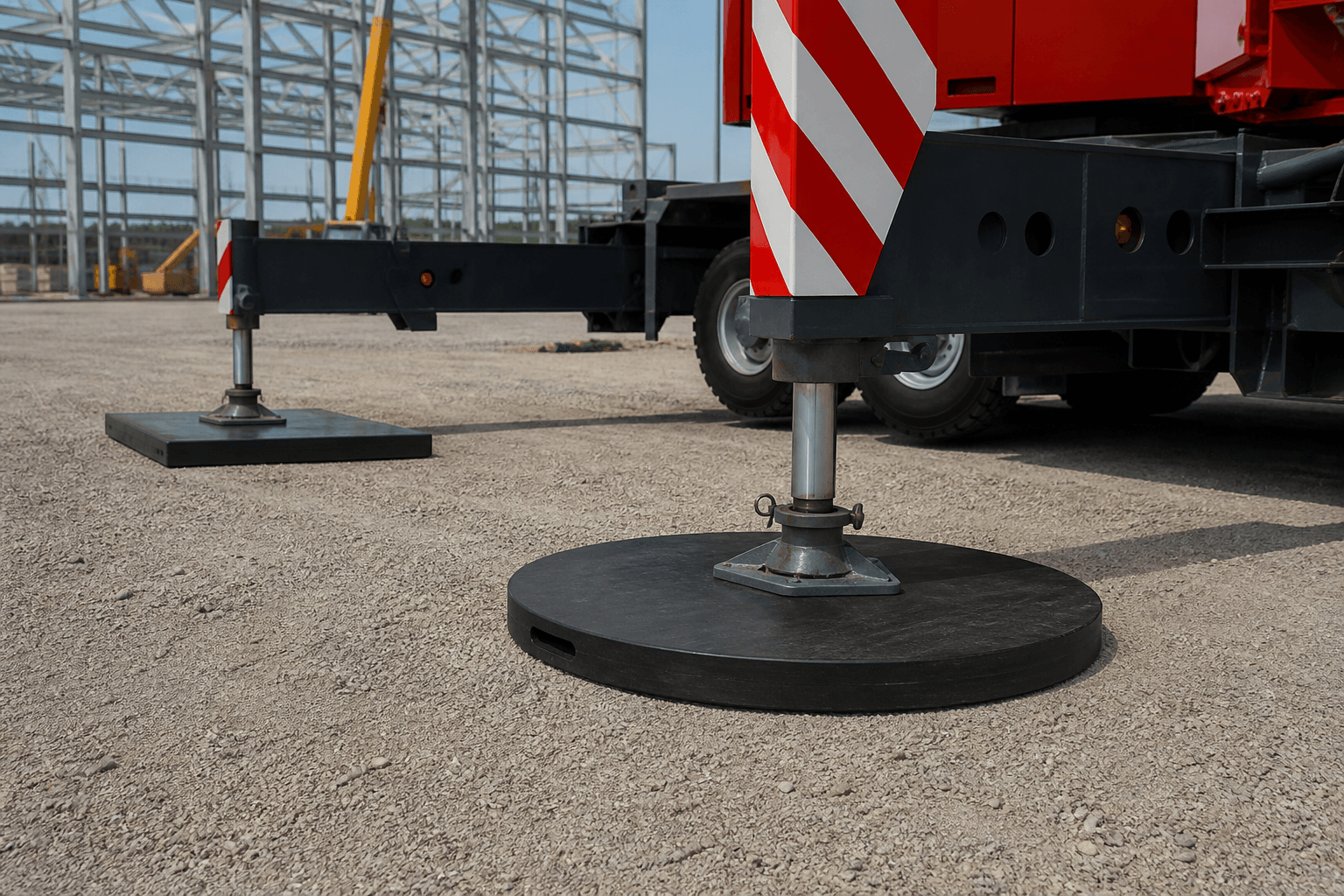
Cold environments can affect both equipment and support materials.
Material behavior should be checked against the expected temperature range.
Do not assume a support pad that performs well under one temperature condition automatically behaves identically at another extreme.
For UHMWPE, request technical data for the exact grade.
For wood, inspect the actual physical condition.
Temperature should be included in the procurement specification when the application involves unusual environmental conditions.
Cost Comparison: Look Beyond Initial Purchase Price
Wood may initially appear less expensive than UHMWPE, particularly when suitable timber is readily available locally.
UHMWPE outrigger pads may require a higher initial investment depending on:
- Pad dimensions
- Thickness
- Material grade
- Quantity
- Handle configuration
- Custom machining
- Identification requirements
However, comparing UHMWPE vs wood outrigger pads only by purchase price can leave out several operational costs.
A more useful comparison considers the complete period in which the pads will be used.
Replacement Frequency
A support pad is only economical while it remains suitable for use.
Wood can be affected by:
- Splitting
- Cracking
- Crushing
- Moisture
- Rot
- Handling damage
UHMWPE has different failure and inspection considerations and does not experience timber-style moisture absorption, rot or grain splitting.
This does not justify assigning an unsupported universal lifespan to either material.
Instead, buyers should compare actual replacement records from their own fleet wherever possible.
Handling Cost
Pads are moved during almost every equipment setup.
Handling requirements can influence:
- Labor
- Setup time
- Manual handling
- Vehicle storage
- Lifting equipment
When comparing UHMWPE vs wood outrigger pads, compare the weight of the actual proposed pads rather than assuming one material will always be lighter.
Cleaning and Inspection Cost
Mud and jobsite contamination need to be removed before a pad can be inspected properly.
UHMWPE’s non-porous surface can make routine cleaning relatively straightforward.
Wood surfaces may become rough, cracked or moisture affected over time, potentially making inspection more involved.
For a high-utilization fleet, even small differences in cleaning and inspection time can accumulate across many setups.
Storage and Transportation
The cost comparison should also include:
- Storage space
- Vehicle payload
- Loading and unloading
- Moisture exposure
- Pad organization
The relevant purchasing question is therefore not simply:
“Which pad costs less?”
A better question is:
“Which support system provides the required performance with practical handling, inspection and lifecycle cost for our actual operation?”
When UHMWPE Outrigger Pads May Be the Better Fit
In a UHMWPE vs wood outrigger pads evaluation, UHMWPE may deserve stronger consideration when pads are expected to be used repeatedly across many jobsites.
Typical situations include:
- Crane rental fleets
- Concrete pump fleets
- Utility equipment
- Mobile lifting equipment
- Aerial work platforms
- Equipment operating frequently outdoors
UHMWPE may be particularly attractive when:
- Wet conditions are common
- Pads require frequent washing
- Timber splitting has been a recurring issue
- Standardized dimensions are desired
- Asset identification is important
- Custom handles would improve handling
- Pads move between multiple vehicles or crews
These are operational advantages.
They should not be interpreted as proof that a particular UHMWPE pad has adequate capacity for every machine or ground condition.
The maximum outrigger reaction, ground bearing pressure, foot dimensions and pad design must still be reviewed.
When Wood Outrigger Pads May Still Be Practical
Wood should not automatically be rejected simply because UHMWPE is available.
A timber support system may remain practical when:
- Suitable wood is readily available
- The existing arrangement has been technically established
- Pads are correctly sized
- Inspection procedures are effective
- Storage conditions are controlled
- Replacement is straightforward
- Handling requirements are acceptable
For some operations, replacing a functioning timber system may provide little practical benefit.
The decision between UHMWPE vs wood outrigger pads should solve an actual operational or technical problem rather than become a material change for its own sake.
How to Evaluate a Change from Wood to UHMWPE
If existing equipment currently uses timber support pads, avoid treating the conversion as a direct material substitution.
Do not simply copy the timber pad’s outside dimensions and manufacture the same shape from UHMWPE.
The materials have different mechanical behavior.
A structured conversion review is more appropriate.
Record the Existing Wood Pad Configuration
Document:
- Length
- Width
- Thickness
- Number of pads or layers
- Construction method
- Handle arrangement
- Current condition
Take photographs before removing damaged pads from service.
Identify Why You Want to Change Materials
Possible reasons include:
- Repeated splitting
- Water absorption
- Rot
- Difficult handling
- Inconsistent dimensions
- Cleaning problems
- Fleet standardization
Defining the problem helps determine whether UHMWPE actually addresses it.
Obtain the Maximum Outrigger Reaction
Use the maximum individual outrigger reaction provided by the equipment manufacturer or appropriate technical documentation.
Do not base the replacement solely on:
- Total crane weight
- Crane capacity
- Vehicle weight
Maximum individual support reaction is a more useful design input.
Measure the Outrigger Foot
Record:
- Length
- Width
- Diameter if circular
- Shape
The concentrated load from the foot affects how the pad behaves.
Establish the Ground Requirement
Determine the allowable ground bearing pressure appropriate to the actual setup location.
The preliminary required bearing area can then be considered from the relationship between outrigger reaction and allowable ground pressure.
A change from wood to UHMWPE does not remove the need for this ground assessment.
Review the Proposed UHMWPE Geometry
Once the required bearing area is understood, evaluate:
- Pad length
- Pad width
- Thickness
- Foot position
- Handling requirements
The proposed plastic pad should be reviewed as a complete component.
Define Handling Features
Depending on pad size, possible features include:
- Rope handles
- Machined hand slots
- Recessed grips
Large pads may require mechanical handling regardless of material.
Define Identification Requirements
Reusable fleet pads can include:
- Company logo
- Asset number
- Dimensions
- Batch identification
- Internal equipment code
This can make the new system easier to control across multiple machines.
Selection Guide: UHMWPE vs Wood Outrigger Pads
A practical selection can be made by asking a series of application questions.
Is Frequent Outdoor Exposure Expected?
If pads routinely encounter rain, mud or wash water, UHMWPE’s very low water absorption may offer an operational advantage.
Are Timber Pads Frequently Splitting?
If grain-related splitting is creating repeated replacement or inspection concerns, UHMWPE removes that particular timber failure mechanism.
Is Fleet Standardization Important?
Manufactured UHMWPE pads can be produced to defined dimensions, colors and identification requirements.
This may simplify fleet management.
Is Local Replacement More Important Than Standardization?
Where timber is readily available and existing support procedures work well, wood may remain practical.
Are the Pads Extremely Large?
Compare the actual weight and handling requirements.
Do not assume a large UHMWPE pad can automatically be handled manually.
Is Ground Capacity Known?
If not, material selection is premature.
Neither UHMWPE nor wood can compensate for an unknown or unsuitable supporting surface.
Is the Existing Timber Arrangement Engineered or Informal?
If crews have historically selected random timber pieces at the jobsite, moving to standardized pads may improve consistency.
However, the new pad dimensions should still be based on actual equipment and ground requirements.
UHMWPE vs Wood Outrigger Pads for Crane Fleets
Crane fleets often use support pads repeatedly across changing jobsites.
This makes inspection and traceability particularly important.
UHMWPE pads can be standardized according to:
- Dimensions
- Equipment group
- Color
- Asset number
Operators can then identify which pads belong to a particular truck or equipment class.
However, fleet standardization should not become a reason to use one pad blindly under every condition.
The ground can change from one project to another.
The same crane may require different support arrangements on:
- Prepared aggregate
- Asphalt
- Dry soil
- Soft ground
The UHMWPE vs wood outrigger pads decision therefore has two levels:
fleet material strategy and site-specific setup assessment.
Both matter.
UHMWPE vs Wood Outrigger Pads for Concrete Pumps
Concrete placing booms can create significant reactions through individual outriggers as boom position changes.
For concrete pump applications, useful selection inputs include:
- Pump manufacturer
- Pump model
- Maximum outrigger reaction
- Outrigger configuration
- Foot dimensions
- Ground bearing pressure
UHMWPE can provide a reusable, moisture-resistant support-pad option for pump fleets.
Wood may also remain suitable when the support arrangement has been properly established and pads remain in acceptable condition.
The material comparison does not replace the concrete pump manufacturer’s setup instructions.
UHMWPE vs Wood Outrigger Pads for Wet Jobsites
Wet jobsites highlight one of the clearest differences between the materials.
UHMWPE has very low water absorption.
Wood can absorb moisture depending on species, treatment, construction and condition.
Moisture can influence timber:
- Weight
- Dimensions
- Surface condition
- Long-term deterioration
This can make UHMWPE attractive for operations frequently working in:
- Rain
- Mud
- Coastal environments
- Washdown conditions
However, wet weather can also reduce the supporting capacity of the ground.
That means a UHMWPE pad remaining unaffected by water does not mean the entire setup remains unaffected.
After substantial rainfall, ground conditions may need to be reassessed.
UHMWPE vs Wood Outrigger Pads for Repeated Use
Repeated use is where lifecycle considerations become more important.
A reusable support pad may experience:
- Loading
- Unloading
- Dragging
- Transport
- Mud
- Rain
- Storage
- Cleaning
For high-frequency operations, buyers should maintain inspection records rather than relying on an assumed service life.
A useful fleet system can record:
- Asset number
- Date placed in service
- Inspection history
- Damage events
- Retirement date
This provides real operating data for future UHMWPE vs wood outrigger pads purchasing decisions.
What Information Should You Send for a UHMWPE Outrigger Pad Quote?
A meaningful quotation requires more than the overall crane capacity.
Equipment Information
Provide:
- Equipment manufacturer
- Equipment model
- Maximum individual outrigger reaction
- Outrigger configuration
Outrigger Foot Information
Provide:
- Foot length
- Foot width
- Diameter if circular
- Photograph or drawing
Ground Information
Provide:
- Ground type
- Allowable ground bearing pressure if available
- Wet or dry condition
- Slope
- Known underground hazards
- Site photographs
Existing Wood Pad Information
If replacing timber, provide:
- Existing length
- Width
- Thickness
- Number of layers
- Current failure or maintenance problem
- Photographs
New Pad Requirements
Provide:
- Required quantity
- Preferred dimensions if already calculated
- Handle requirements
- Color
- Logo
- Asset-number requirements
- Packaging requirements
Paowo Group can use these inputs to review UHMWPE outrigger pads for the actual equipment and application.
UHMWPE vs Wood Outrigger Pads FAQ
Are UHMWPE Outrigger Pads Better Than Wood?
Not universally.
UHMWPE offers advantages such as very low water absorption, consistent manufactured geometry, easy cleaning and no timber grain that can split.
Wood can still provide an effective support solution when the material, dimensions, condition and setup are appropriate.
The correct choice depends on the actual application.
Do UHMWPE Outrigger Pads Absorb Water?
UHMWPE has very low water absorption compared with timber.
This can be useful for pads exposed repeatedly to rain, mud or washdown.
Can UHMWPE Outrigger Pads Crack?
Yes, UHMWPE pads can still be damaged.
Operators should inspect for:
- Cracks
- Severe gouges
- Cuts
- Permanent deformation
- Heat damage
- Damaged handles
UHMWPE should never be treated as indestructible.
Do Wood Outrigger Pads Need Regular Inspection?
Yes.
Wood pads should be checked for:
- Splitting
- Cracking
- Crushing
- Rot
- Broken sections
- Damaged joints
- Moisture-related deterioration
A damaged support pad should not automatically return to service.
Are UHMWPE Outrigger Pads Lighter Than Wood?
It depends on the actual pads being compared.
Weight is determined by:
- Material density
- Length
- Width
- Thickness
- Wood species and moisture condition
Compare the finished pad weights rather than making a general assumption from the material name.
Can I Replace a Wood Pad with the Same Size UHMWPE Pad?
Not automatically.
UHMWPE and wood have different stiffness and deformation characteristics.
Before making the change, review:
- Maximum outrigger reaction
- Foot dimensions
- Ground bearing pressure
- Existing support arrangement
- Proposed UHMWPE dimensions
How Do I Determine the Required Outrigger Pad Area?
A preliminary calculation uses:
Required Bearing Area = Maximum Outrigger Reaction ÷ Allowable Ground Bearing Pressure
The resulting area must then be considered together with pad material, dimensions, thickness, foot size and support conditions.
Can One UHMWPE Pad Size Be Used for Every Crane in a Fleet?
Not necessarily.
Different machines may have different maximum outrigger reactions and foot dimensions.
Even the same crane may require different support arrangements when ground conditions change.
Can UHMWPE Outrigger Pads Be Customized?
Yes.
Depending on manufacturing requirements, UHMWPE pads can be produced with:
- Custom dimensions
- Different thicknesses
- Rope handles
- Hand slots
- Colors
- Logos
- Asset identification
Can a Load Rating Be Printed on the Pad?
Marking is possible, but universal tonnage claims should be treated carefully.
A pad’s suitability depends on the defined:
- Load
- Foot dimensions
- Pad geometry
- Support condition
- Ground condition
- Test or engineering basis
Identification and traceability can be more useful than an unsupported capacity number.
How Often Should Outrigger Pads Be Inspected?
Inspection frequency should reflect:
- Equipment procedures
- Usage frequency
- Working environment
- Damage history
- Manufacturer or fleet requirements
At minimum, the pad should be visually checked before use and after abnormal loading or damage events.
UHMWPE Outrigger Pad RFQ Checklist
Before requesting a quotation, prepare the following information.
Equipment Data
- Equipment manufacturer
- Model
- Maximum outrigger reaction
- Outrigger configuration
Foot Dimensions
- Length
- Width
- Diameter if circular
- Shape
- Photograph or drawing
Ground Conditions
- Allowable ground bearing pressure
- Surface type
- Moisture condition
- Slope
- Excavations or trenches
- Known underground hazards
Existing Wood Support
- Pad dimensions
- Number of layers
- Construction
- Current condition
- Existing problems
- Photographs
Proposed UHMWPE Pad
- Required bearing area if calculated
- Preferred length
- Preferred width
- Thickness if specified
- Quantity
- Handle type
- Color
- Logo
- Asset identification
Quality and Procurement Requirements
- Material information
- Dimensional inspection
- Batch identification
- Packaging
- Delivery destination
Providing these details makes a UHMWPE vs wood outrigger pads comparison technically useful rather than simply comparing the price of plastic with timber.
Conclusion
The decision between UHMWPE vs wood outrigger pads should be based on the complete support system and the way the pads will actually be used.
Wood remains a familiar and practical option in many operations. When suitable timber is correctly sized, stored and inspected, it can continue to serve as an equipment-support material.
UHMWPE offers a different set of operational advantages.
For reusable professional support pads, these can include:
- Very low water absorption
- No timber-style rot
- No grain-related splitting
- Consistent manufactured dimensions
- Easy cleaning
- Custom handling features
- Asset identification
- Fleet standardization
None of these characteristics creates a universal load capacity.
Before selecting either material, the support arrangement should still consider:
- Maximum individual outrigger reaction
- Allowable ground bearing pressure
- Outrigger foot dimensions
- Pad dimensions
- Pad thickness
- Ground condition
- Equipment manufacturer’s setup requirements
If an existing timber system is experiencing repeated splitting, moisture deterioration, handling problems or inconsistent pad dimensions, UHMWPE may be worth evaluating.
But the conversion should be treated as a new support-pad specification rather than a simple one-for-one material substitution.
Paowo Group manufactures UHMWPE outrigger pads and customized components for crane and lifting equipment support.
Request a Quote
Send Paowo Group your:
- Equipment manufacturer and model
- Maximum outrigger reaction
- Outrigger foot dimensions
- Allowable ground bearing pressure
- Existing wood pad dimensions
- Photos of the current support system
- Required quantity
- Handle and identification requirements
These inputs allow the proposed UHMWPE pad dimensions and configuration to be reviewed against the actual application before quotation.