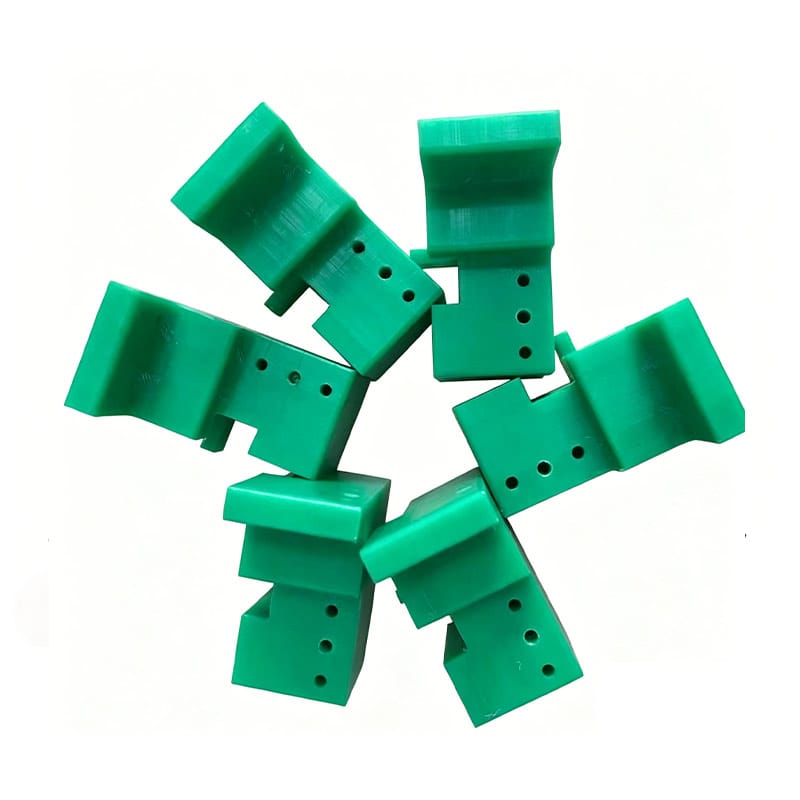
A concrete pump truck can weigh many tonnes, but its total vehicle weight is not usually the number that determines the required outrigger pad size.
When a boom is deployed, loads are transferred through individual outriggers into relatively small contact areas on the ground. Depending on boom position, machine configuration and operating conditions, one outrigger can carry a significantly different load from another.
That is why selecting concrete pump outrigger pads should begin with the pump manufacturer’s maximum outrigger reaction or support force—not with a generic statement such as “this pad is suitable for a 40-ton truck.”
The ground matters just as much.
A pad that works on a properly prepared concrete surface may not provide the same support on compacted gravel, wet clay, recently backfilled soil or ground beside an excavation.
For concrete pump operators, rental companies, contractors and equipment procurement teams, the right approach is therefore to evaluate the whole support system:
pump reaction load + outrigger foot + pad area + pad properties + ground bearing capacity + site conditions.
This guide explains what information should be collected before selecting Miếng đệm chân chống UHMWPE, how pad area relates to ground pressure, and which jobsite conditions should trigger additional engineering review.
Why Concrete Pump Trucks Need Outrigger Pads
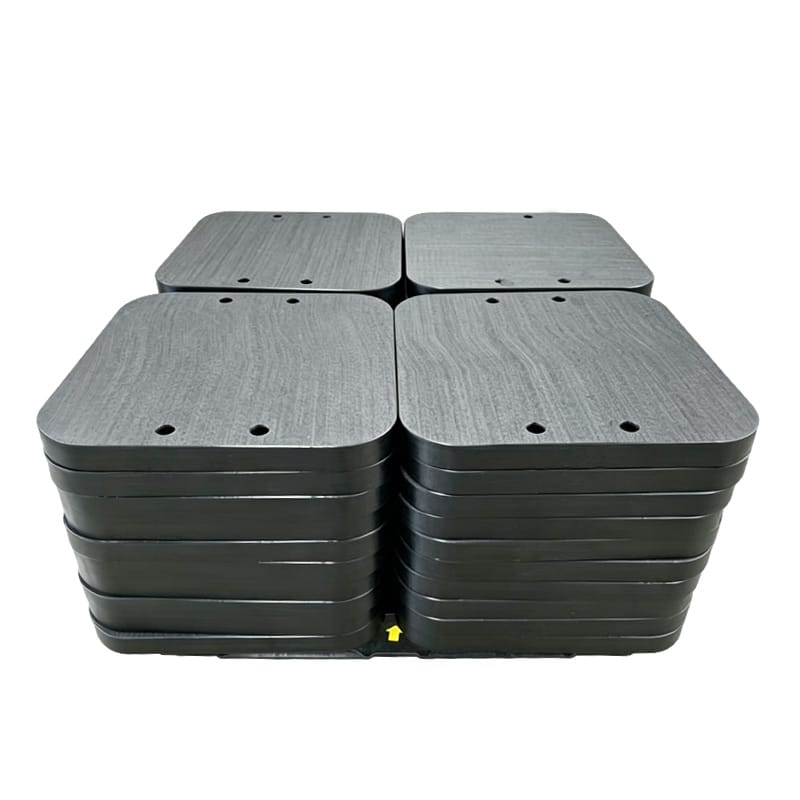
A mobile concrete placing boom needs a stable support base while the boom operates.
The outriggers increase the footprint of the machine, but the metal outrigger feet themselves still transmit concentrated forces into the supporting surface.
An outrigger pad increases the contact area between the support point and the ground.
In simplified terms:
larger effective bearing area = lower average pressure applied to the supporting surface.
However, the pad must also be sufficiently stiff and properly supported so that it can transfer the load across that area.
This is why outrigger pads should not be selected from surface area alone.
WorkSafe Queensland guidance for mobile concrete placing booms states that the ground bearing capacity should exceed the maximum pressure applied by the equipment and notes that increasing outrigger pad area may be one control measure when ground capacity is insufficient. It also emphasizes following the concrete pump manufacturer’s instructions for outrigger setup.
Why Pump Truck Weight Is Not Enough to Size an Outrigger Pad
One of the most common RFQ messages for outrigger pads looks like this:
> “Our concrete pump weighs 35 tonnes. What pad size do we need?”
That information is useful, but it is not enough.
The reason is simple: the vehicle’s total weight is not divided equally between four outriggers during every operating condition.
Maximum Outrigger Reaction Is the More Important Input
When the placing boom moves, the center of gravity and resulting support reactions change.
One outrigger may experience a higher reaction than the others depending on:
- Boom direction
- Boom extension
- Concrete delivery configuration
- Machine geometry
- Outrigger deployment configuration
- Manufacturer-defined operating envelope
For pad selection, the preferable input is therefore:
maximum outrigger reaction / maximum outrigger force
for the exact concrete pump model and operating configuration.
This information should come from the equipment manufacturer, operating manual, load chart or other approved equipment documentation.
Do not estimate it from truck weight if manufacturer data is available.
How Ground Bearing Pressure Relates to Outrigger Pad Area
A useful first-stage sizing relationship is:
Required Bearing Area = Maximum Outrigger Load ÷ Allowable Ground Bearing Pressure
This equation helps explain why the same concrete pump may need different support arrangements on different jobsites.
Example of the Basic Principle
Suppose, only as an illustrative example, that an outrigger reaction is known and the site engineer has established an allowable ground bearing pressure.
Dividing the reaction by the allowable pressure gives the theoretical minimum bearing area needed to keep average ground pressure within that limit.
This does không phải automatically mean that a pad with that exact plan area is suitable.
The final selection must also consider:
- Pad stiffness
- Vị trí tải
- Kích thước chân
- Độ dày pad
- Khoảng cách cạnh
- Tính đồng nhất của mặt đất
- Support across the entire underside
- Pad deflection
- Dynamic effects
- Safety requirements
- Manufacturer instructions
The equation is therefore a starting point for engineering review rather than a standalone approval method.
Why Ground Bearing Capacity Must Be Known
The pad does not make weak ground disappear.
It redistributes the load onto the ground beneath it.
If the underlying soil cannot support the resulting pressure, settlement can still occur.
WorkSafe Queensland specifically advises that mobile concrete placing booms be set up on ground capable of supporting the load and highlights hazards including soft ground, recently backfilled areas, trenches, holes and underground voids.
This makes ground assessment one of the most important steps before choosing concrete pump outrigger pads.
Concrete Pump Outrigger Pads on Compacted Ground
Properly prepared and compacted ground can provide a more predictable support condition than disturbed or saturated soil.
However, “compacted ground” should not be assumed merely because the surface looks hard.
Project personnel may need to establish:
- Loại vật liệu
- Nén
- Layer thickness
- Điều kiện ẩm
- Previous excavation
- Thoát nước
- Allowable bearing pressure
For critical pump setup, ground capacity should come from appropriate site or engineering information rather than visual estimation alone.
Concrete Pump Outrigger Pads on Soft Soil
Soft soil creates a greater risk of settlement and pad movement.
Common warning signs include:
- Dấu chân sâu
- Existing wheel ruts
- Bơm nước
- Lỏng điền
- Bùn
- Surface movement under traffic
- Giải quyết không đồng đều
Increasing pad area may reduce average bearing pressure, but severely weak ground can still require additional measures such as improved preparation, engineered cribbing or relocation of the pump.
Concrete Pump Outrigger Pads on Wet Ground
Rain can change a previously acceptable setup area.
Water may:
- Reduce soil strength
- Create hidden soft zones
- Cause pumping beneath the pad
- Increase settlement
- Erode supporting material
Conditions should therefore be reassessed after significant weather changes rather than assuming yesterday’s setup remains valid.
Concrete Pump Outrigger Pads on Concrete
Concrete may appear to be the simplest support surface, but it should not automatically be treated as having unlimited bearing capacity.
Kiểm tra cho:
- Slab thickness
- Condition
- Nứt
- Underground voids
- Basements
- Cống
- Chiến hào
- Suspended slabs
- Pavement edges
A concrete surface over a weak void or unsupported area may create a very different risk from a slab supported directly on competent ground.
Tại sao Outrigger Kích thước chân Matters
When requesting a pad, provide the dimensions of the machine’s outrigger foot or float.
The pad should provide adequate area around the foot and keep the concentrated load away from vulnerable edges.
Các kích thước quan trọng bao gồm:
- Chiều dài chân
- Chiều rộng chân
- Foot diameter if circular
- Any unusual geometry
The foot should normally sit fully on the pad rather than partially overhanging an edge.
Why the Outrigger Should Be Centered on the Pad
Where the equipment manufacturer’s instructions permit, placing the outrigger foot near the center of the pad generally creates a more balanced load path.
An eccentric load close to one edge can increase:
- Local bending
- Edge stress
- Uneven pad deflection
- Risk of instability
The exact setup should always follow the concrete pump manufacturer’s operating instructions.
A bigger pad does not compensate for incorrect foot placement.
Why Pad Thickness Cannot Be Selected from Load Alone
Buyers often ask:
> “How thick should a pad be for a certain tonnage?”
There is no responsible universal thickness answer based only on tonnage.
A pad’s behavior depends on the combination of:
- Lớp vật liệu
- Pad width and length
- Độ dày
- Applied reaction
- Kích thước chân Outrigger
- Vị trí tải
- Hỗ trợ mặt đất
- Các khu vực không được hỗ tr
- Nhiệt độ
- Duration of loading
A large thin panel and a smaller thick panel do not behave the same way even if they contain a similar amount of material.
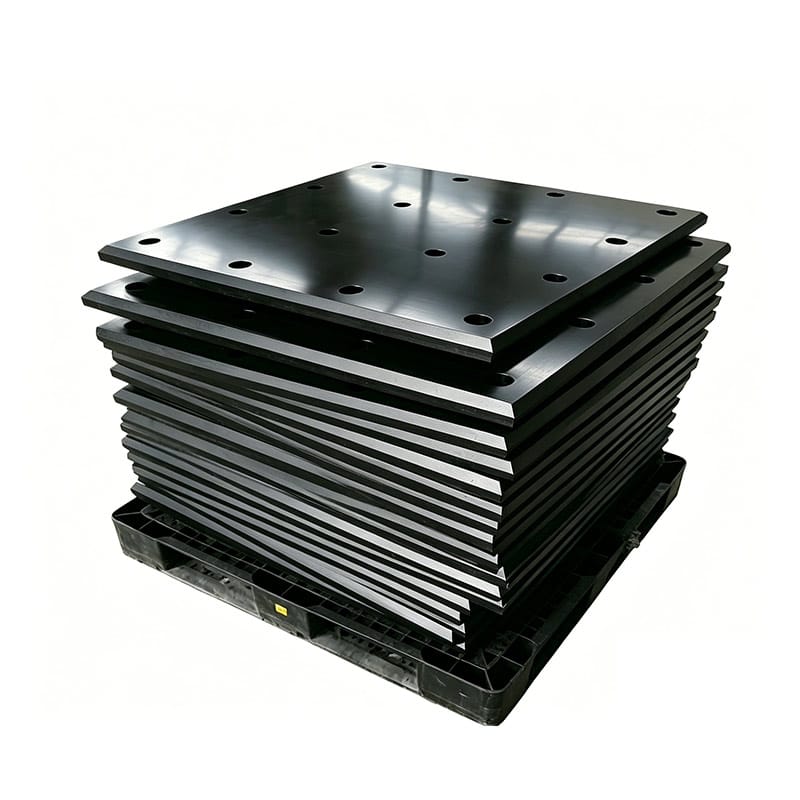
For this reason, Paowo recommends providing actual equipment and ground information when requesting Miếng đệm chân chống UHMWPE.
Why UHMWPE Is Used for Concrete Pump Outrigger Pads
UHMWPE is widely used for heavy-equipment support pads because it offers a useful combination of properties for field handling.
Typical characteristics include:
- Độ dẻo dai tác động tốt
- Khả năng chống ẩm
- Kháng nhiều hóa chất
- Relatively low weight compared with many traditional support materials
- Khả năng gia công
- Ability to produce custom shapes and dimensions
The material can also be machined with handles, recessed areas, identification markings or other features depending on the application.
However, the material name alone does not establish a safe working load.
Pad performance should be tied to actual dimensions, material grade, test conditions and application requirements.
Why Portable Weight Matters for Pump Operators
Concrete pump crews may move support pads multiple times during a working week.
Ease of handling therefore has practical importance.
A support pad that is difficult to move may increase:
- Manual handling effort
- Thời gian thiết lập
- Storage difficulty
- Transportation requirements
UHMWPE can provide a useful balance between physical size and manageable handling compared with some traditional alternatives.
Where pads become too large or heavy for manual handling, mechanical handling procedures should be considered instead of relying on operators to move them manually.
Why Handles Need Proper Design
Handles may appear to be a small feature, but poor handle placement can create practical problems.
Depending on the pad size, options can include:
- Tay cầm dây thừng
- Khe tay gia công
- Tay nắm lõm
- Custom lifting points
Handle selection should consider:
- Pad weight
- Expected lifting method
- Storage arrangement
- Edge clearance
- Structural effect of machined slots
A handle opening should not be added blindly in an area where it could interfere with the required load-transfer section.
What Happens When an Outrigger Pad Is Too Small?
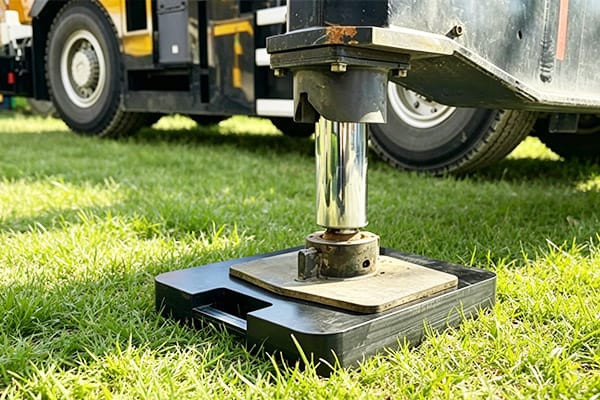
If a pad area is insufficient for the actual reaction and ground condition, average pressure on the ground may remain too high.
Hậu quả có thể xảy ra bao gồm:
- Local settlement
- Pad sinking
- Chuyển động của máy
- Loss of level
- Increased instability
The important lesson is that a pad does not “hold” a machine in isolation.
The pad transfers load to the ground.
If the soil fails, the support system can still move.
Can You Simply Use the Largest Pad Possible?
A larger pad may reduce calculated average bearing pressure, but “larger is always better” is still too simplistic.
A very large pad may introduce:
- Handling problems
- Storage problems
- Increased weight
- Increased cost
- Greater need for uniform ground preparation
If the underside is not properly supported, increasing panel dimensions can also increase bending demands.
Pad size should therefore be optimized around actual ground and equipment requirements rather than increased indefinitely.
Why the Entire Bottom Surface Should Be Supported
A support pad should generally bear on a stable, reasonably level surface.
Avoid configurations where the pad bridges across:
- Lỗ
- Large stones
- Chiến hào
- Uneven timbers
- Voids
- Abrupt height differences
A pad spanning unsupported gaps behaves more like a structural beam than a bearing plate.
That can greatly change stresses and deflection.
WorkSafe Queensland specifically warns against inappropriate bridging arrangements when supporting mobile concrete placing booms.
Why Setup Near Excavations Is Dangerous
Concrete pumps are frequently used precisely where excavation work is taking place.
That creates an important conflict: the pump needs to be close enough for the pour, but excavation edges may have reduced ground stability.
Potential hazards include setup near:
- Chiến hào
- Nền tảng
- Hố
- Basement excavations
- Recently backfilled areas
- Retaining edges
WorkSafe Queensland advises special caution around excavations and previously disturbed ground because these conditions can affect support stability.
A larger outrigger pad should not be assumed to make an unsafe excavation setback acceptable.
Site-specific engineering or relocation may be required.
Why Backfilled Trenches Need Special Attention
Recently backfilled trenches can look similar to surrounding ground while having significantly different compaction and bearing behavior.
This makes them easy to overlook.
Before setting outriggers, check site drawings and speak with the principal contractor about:
- Utility trenches
- Drainage lines
- Sewer work
- Backfilled foundations
- Underground tanks
- Recent excavation
The operator should not rely only on surface appearance.
Why Underground Voids Matter
A surface may appear strong while hiding:
- Cống
- Basements
- Utility chambers
- Tanks
- Drainage structures
- Old excavations
- Voids
The concentrated reaction from a concrete pump outrigger can make these hidden conditions significant.
This is another reason why site information is necessary before selecting and positioning support pads.
How Boom Position Affects Outrigger Loading
The support loads of a boom pump are not necessarily constant throughout a pour.
As the boom:
- Rotates
- Extends
- Changes elevation
- Moves concrete delivery equipment
the distribution of reactions can change.
Therefore, using an arbitrary “average load per outrigger” calculated by dividing machine weight by four can be misleading.
The correct maximum reaction should come from manufacturer information for the applicable operating configuration.
Full Outrigger Extension vs Restricted Setup
Some concrete pumps allow different outrigger configurations.
A restricted setup may be required because of:
- Buildings
- Giao thông
- Jobsite boundaries
- Khai quật
- Thiết bị khác
However, not every boom working zone is necessarily permitted in every outrigger configuration.
Always follow the concrete pump manufacturer’s approved setup and working-envelope instructions.
The outrigger pad supplier should not be expected to redefine the equipment manufacturer’s permissible operating geometry.
A Practical Concrete Pump Outrigger Pad Sizing Workflow
Instead of starting with a catalog pad size, use a sequence that begins with the equipment and site.
Identify the Exact Pump Model
Kỷ lục:
- Nhà sản xuất
- Mô hình
- Boom length
- Equipment configuration
This avoids sizing pads around a generic “concrete pump.”
Obtain Maximum Outrigger Reaction
Find the manufacturer’s maximum outrigger reaction or force for the relevant operating configuration.
Do not substitute total vehicle weight unless no better information exists and a qualified technical review has determined how to proceed.
Determine the Allowable Ground Bearing Pressure
This value should come from appropriate site information.
Depending on the project, that may involve:
- Geotechnical data
- Site engineering
- Contractor ground assessment
- Verified prepared-base information
Do not simply assign a soil capacity based on appearance.
Calculate the Preliminary Bearing Area
Sử dụng:
Area = Maximum Outrigger Reaction ÷ Allowable Ground Bearing Pressure
Keep units consistent.
For example, do not mix kN with psi without conversion.
Check Available Pad Geometry
Convert the required area into practical pad dimensions.
A square pad can be approximated by:
Side Length = √Required Area
Then choose an available or custom size that meets the technical requirements.
Check Pad Structural Behavior
Xác nhận:
- Lớp vật liệu
- Độ dày
- Độ lệch
- Kích thước chân Outrigger
- Vị trí tải
- Hỗ trợ mặt đất
- Any required safety factors or applicable procedures
Confirm Setup with Responsible Site Personnel
The final installation should comply with:
- Pump manufacturer instructions
- Site safety requirements
- Applicable regulations
- Qualified engineering guidance where required
This separation of responsibilities is important.
A pad manufacturer supplies a support component; it does not replace the equipment manufacturer’s operating requirements or the site’s responsibility to verify ground conditions.
Example: Why Two Identical Pump Trucks May Need Different Pads
Consider two identical concrete pump trucks.
Both have the same maximum outrigger reaction.
Site A
The first pump is positioned on a properly prepared and verified compacted surface.
The ground has a relatively high allowable bearing pressure.
The calculated minimum bearing area may therefore be comparatively small.
Site B
The second pump is operating on softer ground after rainfall.
The allowable bearing pressure is lower.
Even though the pump is identical, the calculated required support area increases.
This illustrates the main sizing principle:
outrigger pad requirements depend on both equipment reaction and ground capacity.
There is no universal pad size for a particular boom length or truck weight.
Common Concrete Pump Outrigger Pad Selection Mistakes
Several errors appear repeatedly during procurement and setup.
Selecting Pads from Truck Tonnage
Total truck weight does not define maximum individual outrigger reaction.
Use manufacturer reaction data wherever possible.
Using Generic Soil Values Without Verification
Soil appearance alone is not a reliable engineering measurement.
Actual site information should be used for critical setups.
Assuming a Pad Has a Universal “Tonnage Rating”
A support pad does not experience the same stress under every ground condition.
Any load statement should specify its assumptions and test conditions.
Placing the Foot Near the Pad Edge
Off-center loading can change pad behavior and should be avoided unless an approved setup specifically permits it.
Bridging Over Uneven Ground
A pad should not be assumed capable of spanning holes or voids.
The underside should have appropriate support.
Ignoring Weather Changes
Rain can materially change site conditions between setup periods.
Ground should be reassessed when conditions change.
Setting Up Too Close to Excavations
A larger pad cannot automatically compensate for unstable excavation edges.
Using Damaged Pads Without Inspection
Pads should be inspected before use for signs such as:
- Vết nứt
- Severe cuts
- Deep gouges
- Biến dạng
- Damaged handle areas
- Other abnormal wear
Whether a damaged pad remains suitable depends on its design and condition.
What Information Should Be Included in a Concrete Pump Outrigger Pad RFQ?
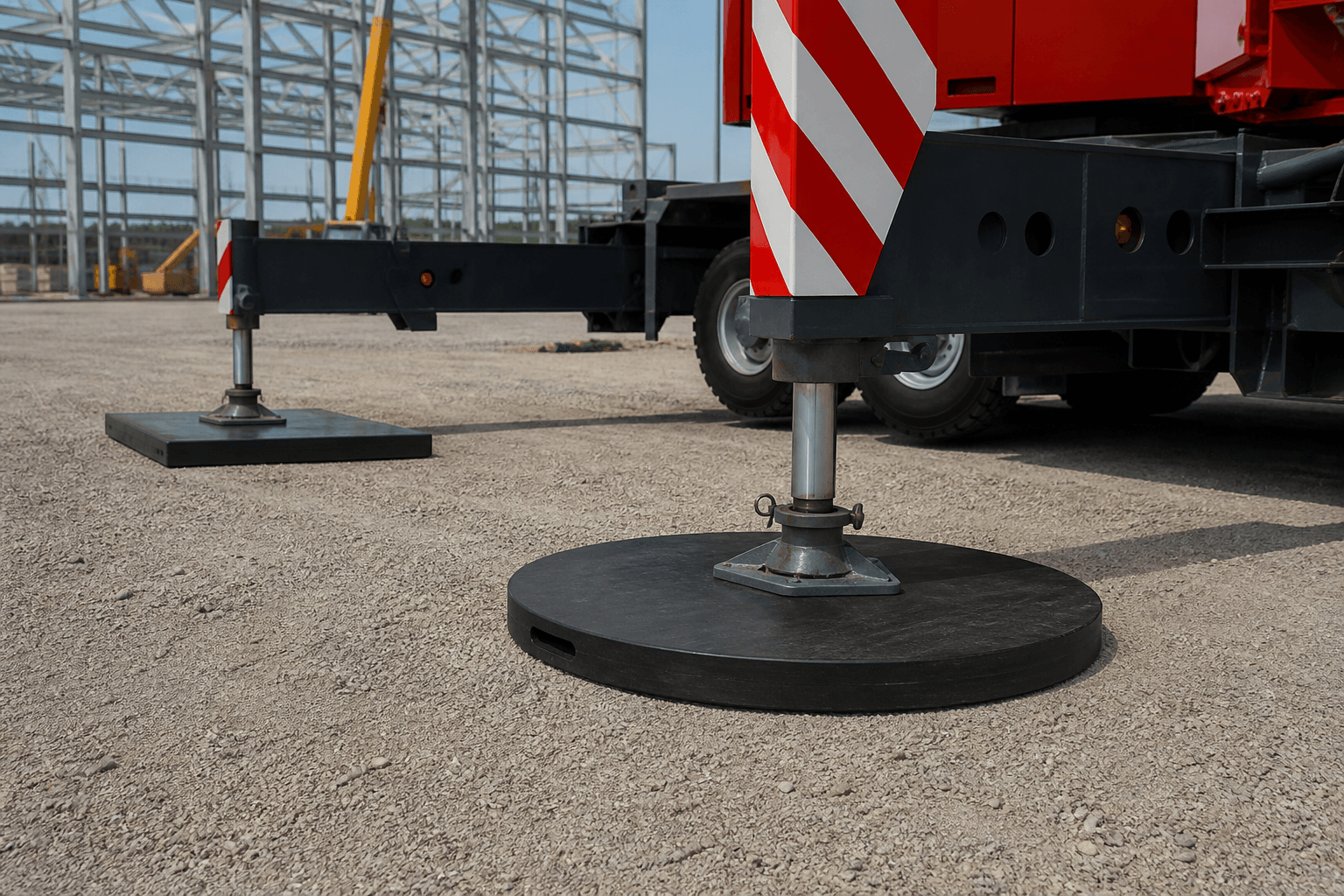
A useful RFQ should provide more than “quote 20 outrigger pads.”
The following information allows a manufacturer to evaluate the request properly.
Concrete Pump Information
Cung cấp:
- Nhà sản xuất bơm
- Mô hình bơm
- Boom length
- Number of outriggers
- Phản ứng kích thích tối đa
- Cấu hình Outrigger
Thông tin chân Outrigger
Cung cấp:
- Chiều dài chân
- Chiều rộng chân
- Foot diameter if applicable
- Photo or drawing
Thông tin mặt đất
Cung cấp:
- Loại đất
- Allowable bearing pressure if known
- Điều kiện ướt hoặc khô
- Prepared or natural ground
- Độ dốc
- Presence of excavations
- Ảnh trang web
Pad Requirements
Cung cấp:
- Required dimensions if already calculated
- Preferred thickness
- Số lượng
- Hình dạng
- Loại tay cầm
- Màu sắc
- Logo
- Dấu hiệu nhận biết
Yêu cầu về tài liệu
If required for procurement, specify whether you need:
- Tài liệu tài liệu
- Kiểm tra kích thước
- Nhận dạng hàng loạt
- Ảnh sản phẩm
- Yêu cầu đóng gói
- Other agreed inspection documents
Paowo Group có thể sản xuất Miếng đệm chân chống UHMWPE according to project dimensions and machining requirements.
Should Concrete Pump Pads Have Identification Markings?
For rental fleets and large contractors, identification can make pad management easier.
Useful markings can include:
- Logo công ty
- Số tài sản
- Kích thước pad
- Nhận dạng vật liệu
- Nhận dạng hàng loạt
- Internal tracking code
However, avoid printing unverified capacity claims on the pad.
A statement such as “100-ton capacity” can be misleading if the value does not define:
- Load arrangement
- Foot size
- Điều kiện hỗ tr
- Tình trạng mặt đất
- Phương pháp thử nghiệm
Traceability information is more useful than an oversimplified universal load claim.
Tấm đệm chân chống UHMWPE có thể được tùy chỉnh không?
Yes. UHMWPE can be machined into different sizes and features for industrial support applications.
Possible customization includes:
- Square pads
- Rectangular pads
- Round pads
- Độ dày khác nhau
- Tay cầm dây thừng
- Khe tay gia công
- Recessed areas
- Logo
- Số nhận dạng
- Kích thước tùy chỉnh
For OEM or fleet projects, standardized dimensions and markings can also help simplify storage and replacement.
Paowo Group cung cấp giải pháp hỗ trợ cần cẩu và thiết bị nâng for UHMWPE support-pad applications.
Concrete Pump Outrigger Pads FAQ
How Do I Know What Size Outrigger Pad a Concrete Pump Needs?
Start with the maximum individual outrigger reaction from the concrete pump manufacturer and the allowable bearing pressure of the ground. These values can be used to establish a preliminary minimum bearing area, followed by checks for pad material, thickness, foot size and actual support conditions.
Can I Choose a Pad Based on the Concrete Pump’s Total Weight?
Not reliably. Maximum individual outrigger reaction is generally a more useful input because support loads can change as the boom position changes.
Are Larger Outrigger Pads Safer?
Larger area can reduce average ground pressure, but pad stiffness, setup, ground support and handling also matter. An oversized pad placed over poor or uneven support is not automatically safe.
Are UHMWPE Pads Suitable for Concrete Pump Trucks?
UHMWPE is widely used for equipment support pads because of its toughness, moisture resistance and practical handling characteristics. Suitability still depends on dimensions, material grade and the actual operating conditions.
Can Concrete Pump Outrigger Pads Be Used on Mud?
They may be used as part of a suitable support arrangement, but severely soft or saturated ground may require additional preparation or another engineered solution. A pad cannot correct unlimited ground weakness.
Should the Outrigger Foot Be in the Center of the Pad?
Where consistent with the equipment manufacturer’s setup instructions, centered loading generally provides a more balanced load path than placing the foot near an edge.
Can I Stack UHMWPE Outrigger Pads?
Do not assume stacking is acceptable. Stacked systems can introduce movement and load-transfer issues. Follow the pump manufacturer’s instructions and approved site support procedures.
Bao lâu nên kiểm tra miếng đệm Outrigger?
They should be checked as part of the equipment’s normal setup and maintenance process, particularly after abnormal loading, visible damage or difficult site conditions.
Concrete Pump Outrigger Pad RFQ Checklist
Trước khi yêu cầu báo giá, hãy chuẩn bị những điều sau.
Dữ liệu thiết bị
- Concrete pump manufacturer
- Mô hình
- Boom length
- Phản ứng kích thích tối đa
- Outrigger deployment configuration
Kích thước Chân
- Chiều dài
- Chiều rộng
- Đường kính nếu tròn
- Drawing or photograph
Điều kiện mặt đất
- Loại đất
- Ground bearing capacity if available
- Điều kiện ẩm
- Độ dốc
- Excavations or trenches nearby
- Ảnh trang web
Pad Specification
- Chiều dài
- Chiều rộng
- Độ dày
- Số lượng
- Xử lý cấu hình
- Màu sắc
- Logo
- Đánh dấu
Procurement Requirements
- Điểm đến giao hàng
- Required date
- Bao bì
- Yêu cầu kiểm tra
- Tài liệu tài liệu
- Batch or asset identification
Providing these details makes it easier to move from a generic pad inquiry to a technically meaningful product discussion.
Kết luận
Đang chọn concrete pump outrigger pads is not simply a question of finding a pad rated for the total weight of the truck.
The support system must be evaluated using the concrete pump’s maximum outrigger reaction, the size of the outrigger foot, the allowable bearing pressure of the ground, the pad’s dimensions and structural behavior, and the actual conditions at the jobsite.
The core relationship is straightforward:
more concentrated outrigger force or weaker ground requires more effective bearing area.
The application, however, is more complex.
Wet ground, backfilled trenches, excavations, underground voids, slopes, uneven support and changing weather conditions can all alter whether a setup is appropriate.
For that reason, the concrete pump manufacturer’s operating instructions and qualified site assessment should always take precedence over generic pad recommendations.
Paowo Group sản xuất Miếng đệm chân chống UHMWPE in custom dimensions, thicknesses, shapes and handle configurations for concrete pumps, cranes and other heavy equipment.
Gửi của bạn concrete pump model, maximum outrigger reaction, outrigger foot dimensions, ground bearing information, required quantity and site conditions for an application-based pad recommendation and quotation.
External Technical References
WorkSafe Queensland – Mobile Concrete Placing Boom Rollover and Ground Conditions