Índice
Cutting UHMWPE Sheets becomes a useful engineering topic when it is tied to a real operating problem. Buyers rarely need an isolated material fact; they need a defensible way to compare quotations, review drawings, plan installation, and agree on inspection. This guide explains how blade selection, feed, support, heat control, chip removal, edge finish, and dimensional allowance influence a clean and repeatable cut.
A defensible cutting UHMWPE sheets decision starts with the application, not a catalogue label. The useful starting point is to record the duty, identify the controlling conditions, and ask the supplier to confirm what is included in the proposed solution. That process reduces ambiguity without pretending that one rule fits every machine or site.
The guidance below is intended for procurement and technical planning. It does not replace equipment instructions, a competent site assessment, or a project-specific engineering review. Where safety or acceptance depends on cutting UHMWPE sheets, use documented inputs and obtain approval from the responsible person.
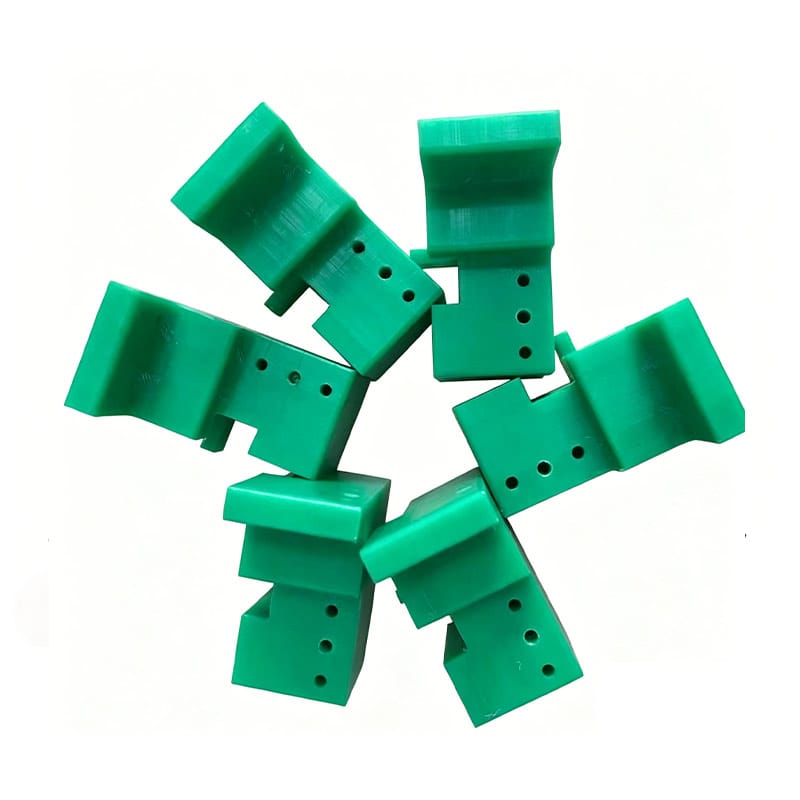
What Cutting UHMWPE Sheets Means in a Real Project
Cutting UHMWPE Sheets is best understood as a set of application requirements connected to drawing revision, datum strategy, tolerance, tool access, clamping, inspection, and the actual function of the part. The phrase should not be treated as a complete specification by itself. Two requests using the same words can require different dimensions, grades, layouts, or inspection methods because their service conditions are different.
For technical buyers, the practical meaning of cutting UHMWPE sheets is a shared decision record. It should show what information was supplied, what assumptions were used, which features control performance, and what will be checked before shipment or use. This makes technical discussions easier and prevents nominal descriptions from becoming accidental guarantees.
Por que esta decisão merece uma base escrita
A written basis for cutting UHMWPE sheets protects both purchasing and operations. Purchasing can compare quotations on the same scope, while engineering can see whether exclusions, tolerances, and site responsibilities are clear. Maintenance also gains a baseline for future inspection rather than relying on memory after the component has been in service.
The review is not intended to create unnecessary paperwork. A concise cutting UHMWPE sheets record should focus on the few conditions that can change the outcome. If a value is only an estimate, label it as an estimate. If a dimension is critical, identify the datum and measurement method. If the site must verify ground, alignment, or support, assign that responsibility explicitly.
Fatores-chave a serem revisados
Document these controlling conditions before approving cutting UHMWPE sheets. They are connected, so changing one may require a second look at the others:
- Functional datums: describe the actual condition and avoid relying on a broad product name.
- Critical and noncritical tolerances: describe the actual condition and avoid relying on a broad product name.
- Tool access: describe the actual condition and avoid relying on a broad product name.
- Clamping distortion: describe the actual condition and avoid relying on a broad product name.
- Inspection method: describe the actual condition and avoid relying on a broad product name.
These factors turn cutting UHMWPE sheets from a search phrase into an actionable specification. A supplier can respond more accurately when the RFQ describes duty and interfaces instead of asking for a generic recommendation.
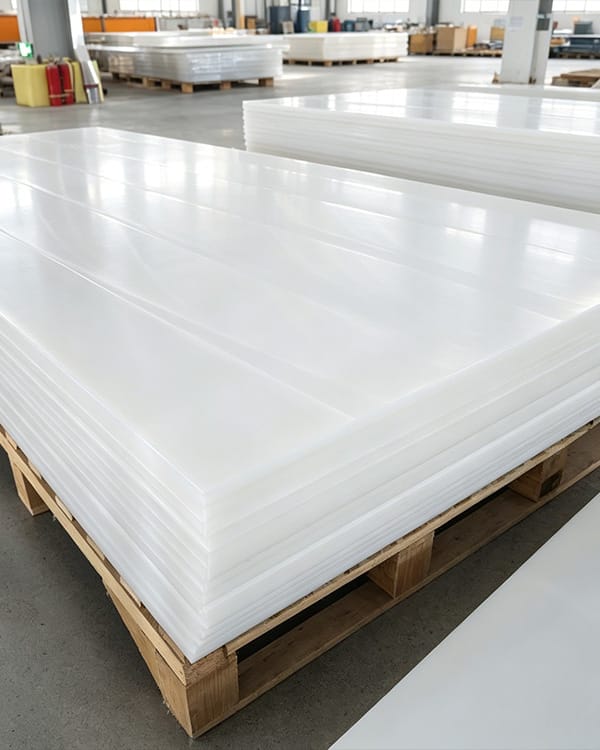
Technical Focus for Cutting UHMWPE Sheets
The technical focus of cutting UHMWPE sheets is how blade selection, feed, support, heat control, chip removal, edge finish, and dimensional allowance influence a clean and repeatable cut. Break that broad question into reviewable items so an engineer, buyer, installer, and supplier can discuss the same conditions.
- Functional datums: Define the condition in measurable project language. Note the implication for product selection and verification.
- Critical and noncritical tolerances: Identify who owns the input and where it came from. Note the implication for product selection and verification.
- Tool access: Connect the condition to a drawing, site check, or acceptance point. Note the implication for product selection and verification.
- Clamping distortion: Record the normal case and the credible limiting case. Note the implication for product selection and verification.
- Inspection method: State what would trigger a new technical review. Note the implication for product selection and verification.
Do not assume that a favourable result for one of these items settles the entire cutting UHMWPE sheets decision. Interfaces often control the outcome: a suitable material can still perform poorly with inadequate support, a sound calculation can fail with an incorrect site input, and a precise part can be rejected if the measurement basis was never agreed.
Um método de avaliação passo a passo
Follow the same decision path for cutting UHMWPE sheets so that important inputs do not disappear between the first inquiry and the final purchase order.
- Mark functional features: record the finding, the source of the information, and any open question that still needs approval.
- Separate critical tolerances: record the finding, the source of the information, and any open question that still needs approval.
- Check tool access and corner radii: record the finding, the source of the information, and any open question that still needs approval.
- Plan stable workholding: record the finding, the source of the information, and any open question that still needs approval.
- Define inspection temperature: record the finding, the source of the information, and any open question that still needs approval.
- Approve a controlled drawing revision: record the finding, the source of the information, and any open question that still needs approval.
At the end of this sequence, summarize the selected cutting UHMWPE sheets approach in plain language. Include assumptions and limits beside the decision rather than hiding them in an email chain. If conditions change, revise the record before production or installation.
Tabela de Decisão para Compradores e Engenheiros
The table can serve as a practical way to review cutting UHMWPE sheets during supplier discussions. It is a decision aid, not a substitute for project calculations or equipment requirements.
| Área de decisão | O que verificar | Por que isso importa |
|---|---|---|
| Aplicação | Dever, ambiente e interfaces | Define o problema real |
| Entradas | Valores, unidades e fonte de informação | Faz cálculos rastreáveis |
| Produto | Grau, dimensões e configuração | Mantém as cotações comparáveis |
| Verificação | Método de inspeção e ponto de aceitação | Evita aprovação subjetiva |
| Ciclo de vida | Instalação, limpeza e substituição | Suporta uso seguro e planejado |
A useful cutting UHMWPE sheets comparison should explain why an option fits the stated duty. Avoid rankings based on a single property when the application depends on several interacting conditions.
Um Exemplo de Planejamento Prático
Imagine a wear block with two mounting holes, a guide face, and an overall envelope. For cutting UHMWPE sheets, the guide face and hole pattern may be functional while the outside edge is only clearance. A controlled drawing should identify one stable datum scheme and avoid applying the tightest tolerance to every surface.
The machinist can then plan workholding and inspection around function. This cutting UHMWPE sheets example also leaves room to discuss edge break, internal radius, measurement temperature, and whether dimensions are checked while clamped or in a relaxed condition.
O que colocar na RFQ
A purchase enquiry covering cutting UHMWPE sheets should give the supplier enough information to confirm scope without requiring guesswork. Attach drawings in a controlled format and identify the revision. Use consistent units; the Guarda-máquina OSHA fornece uma referência para apresentação clara do SI.
- State the intended function and the reason cutting UHMWPE sheets is being reviewed.
- Liste as condições operacionais, interfaces, cargas, velocidade, temperatura, umidade, produtos químicos ou informações básicas conforme aplicável.
- Forneça dimensões, quantidades, revisão de desenho e recursos críticos claramente marcados.
- Defina registros de inspeção, certificados, marcação, embalagem e idioma do documento realmente necessários.
- Peça ao fornecedor para identificar suposições, exclusões e informações ainda necessárias antes da aprovação.
Para verificações relacionadas a materiais, use referências reconhecidas em vez de reivindicações da web não suportadas Dependendo do tópico, os pontos de partida úteis incluem Guia do NIST SI, Orientação de comprimento NIST, e ISO GPS overview. O padrão de projeto aplicável e as instruções do equipamento permanecem controladores.
Planejamento de Instalação, Uso e Inspeção
Responsible cutting UHMWPE sheets planning continues after a purchase order is issued. Confirm how the product will be unloaded, stored, identified, and moved to the work area. Protect reference surfaces and labels. Where components are supplied in matched sets or panels, preserve the installation sequence.
Before the item enters service, compare the delivered item with the approved cutting UHMWPE sheets record. Check visible damage, dimensions or identification specified in the inspection plan, and the condition of supports or mating parts. Do not force an item into a misaligned assembly or use a support product over an unverified surface simply because the nominal size appears correct.
Inspection intervals for cutting UHMWPE sheets should reflect duty and consequence, not an arbitrary universal period. Establish a baseline, identify high-load or high-wear locations, and record changes consistently. The Revisão de materiais do NIH é uma referência de apoio útil para medição disciplinada ou contexto de padrões.
Erros comuns a evitar
Avoid these recurring problems in cutting UHMWPE sheets decisions:
- Copying metal tolerances without review: document the missing input and resolve it before approval.
- Dimensioning every feature from a different datum: document the missing input and resolve it before approval.
- Specifying impossible internal corners: document the missing input and resolve it before approval.
- Ignoring relaxation after clamping: document the missing input and resolve it before approval.
- Sending an uncontrolled drawing: document the missing input and resolve it before approval.
Common cutting UHMWPE sheets problems begin as information gaps. A short technical review before production is generally easier than changing a finished part, rebuilding a route, or investigating unexplained wear after installation.
Perguntas frequentes
What information is needed to specify cutting UHMWPE sheets?
Start with the function, operating conditions, interfaces, dimensions, quantity, and the consequence of failure. A useful cutting UHMWPE sheets request also identifies critical acceptance checks and the source of any load or environmental data.
Can cutting UHMWPE sheets be selected from a standard size alone?
Standard sizes can simplify sourcing, but size alone does not confirm suitability. Review duty, support, environment, tolerance, and installation before approving cutting UHMWPE sheets.
Which test or standard applies to cutting UHMWPE sheets?
There is no single universal answer for every application. Use the project specification, equipment instructions, applicable regulations, and recognized material or measurement standards. State the exact document and edition when cutting UHMWPE sheets depends on a formal requirement.
How should suppliers quote cutting UHMWPE sheets?
Peça a cada fornecedor para cotar contra a mesma revisão RFQ e identificar suposições, exclusões, descrição do material, dimensões, inspeção, embalagem e lead-time base Isso torna as propostas de requisitos mais fáceis de comparar sem depender apenas do preço.
When should cutting UHMWPE sheets be reviewed again?
Revise a decisão quando a carga, o ambiente, a geometria, o equipamento, o método de instalação ou o requisito de aceitação muda Também revisite o requisito quando a inspeção mostrar problemas incomuns de desgaste, movimento, rachaduras, deformação ou suporte.
Lista de verificação final de compras
Antes de aceitar o requisito, confirme se a base de inscrição e aceitação estão completas.
- O objetivo do requisito é declarado em uma frase clara.
- O controle de cargas, ambiente, dimensões e interfaces está documentado.
- As suposições e a responsabilidade pela verificação do site são visíveis.
- O produto, a revisão do desenho, a quantidade e os recursos críticos são confirmados.
- São definidas expectativas de inspeção, marcação, embalagem, manuseio e substituição.
- As partes interessadas internas e o fornecedor estão trabalhando a partir da mesma revisão.
1TP3 T fornece produtos plásticos de engenharia para projetos industriais, mas uma recomendação útil depende de informações precisas sobre a aplicação Revise o relevante página produto, o guia técnico relacionado, o recurso aplicativo, e o artigo suporte. Em seguida, use o página contato enviar desenhos e condições operacionais para uma discussão específica do projeto sobre o requisito.