Inhaltsverzeichnis
A fleet buys custom pads for machines with several different foot shapes. For buyers reviewing custom outrigger pads, the practical question is whether the offered product and its supporting evidence address this specific requirement.
This guide examines foot geometry and full contact as a defined engineering and purchasing decision. It connects the duty, interface, qualification and quotation so procurement can resolve the important questions before releasing an order.
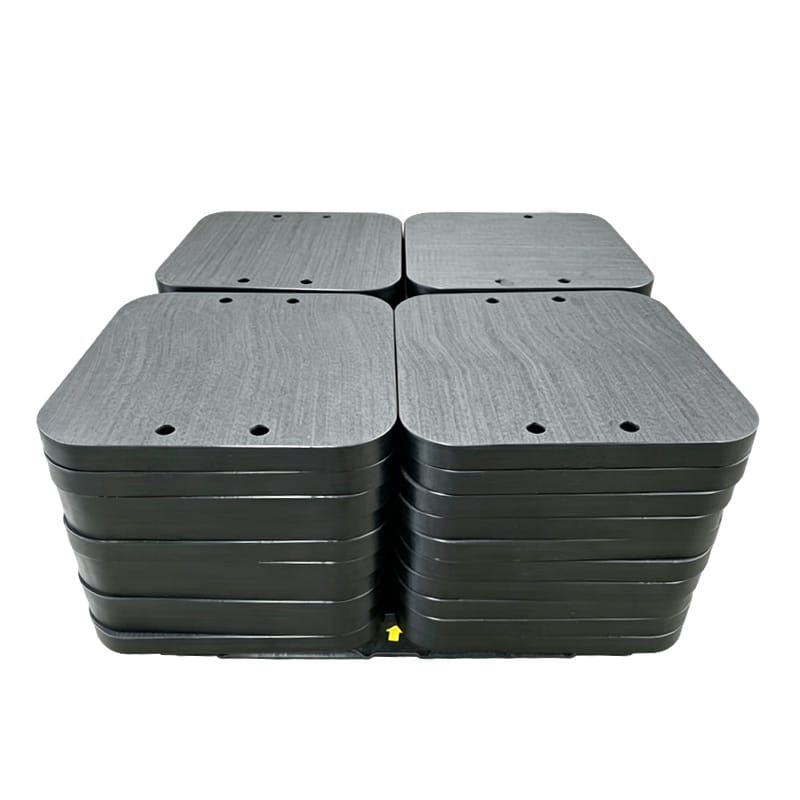
Foot Geometry and Full Contact
Nominal pad area does not guarantee that the foot loads the pad as intended.
Overlay the equipment foot outline on the proposed pad drawing and mark its permitted placement. Check the rim, articulation and nearby handle features in section. Confirm the resulting arrangement against the manufacturer's requirements. A drawing can reveal an interference before purchase, but a successful geometric fit must remain separate from the pad-capacity and site-ground assessments.
Start by separating the observed symptom from the proposed product change. Record what happens, where it happens and the operating condition in which it matters. That makes the review of custom outrigger pads specific enough to support a decision, rather than a comparison of broad product descriptions.
Equipment identity
A request for custom outrigger pads begins with the exact equipment model and support arrangement. Record the manufacturer's setup requirements, foot geometry and the relevant reactions for the approved configuration. Gross machine mass is not a substitute for outrigger reaction data. Keep different equipment variants clearly identified so a pad approved for one machine is not silently dispatched with another.
The inputs that define custom outrigger pads
Record foot dimensions, articulation, contact shape, pad support condition. Keep the units, revision and source of each input with the inquiry. Distinguish a measured value from an estimate, and identify the person responsible for resolving any critical unknown. A supplier can review an explicit assumption; an undocumented assumption is much harder to detect.
Foot articulation
The equipment foot used with custom outrigger pads may pivot or have rims and recesses that control contact. Check the complete geometry, including handles or pockets on the pad. Preserve the manufacturer's intended seating and movement. A controlled unloaded fit review can expose interference before field use, but it does not replace the load and ground-support assessment.
Design the complete interface: custom outrigger pads
Review the complete contact interface and keep loading within the approved pad design.
Review custom outrigger pads in the installed arrangement. Show adjoining components, the direction of movement or load, and the space needed for installation and later removal. If the interface changes, update the released drawing and acceptance basis together so the quote and the technical approval still refer to the same requirement.
Custom features
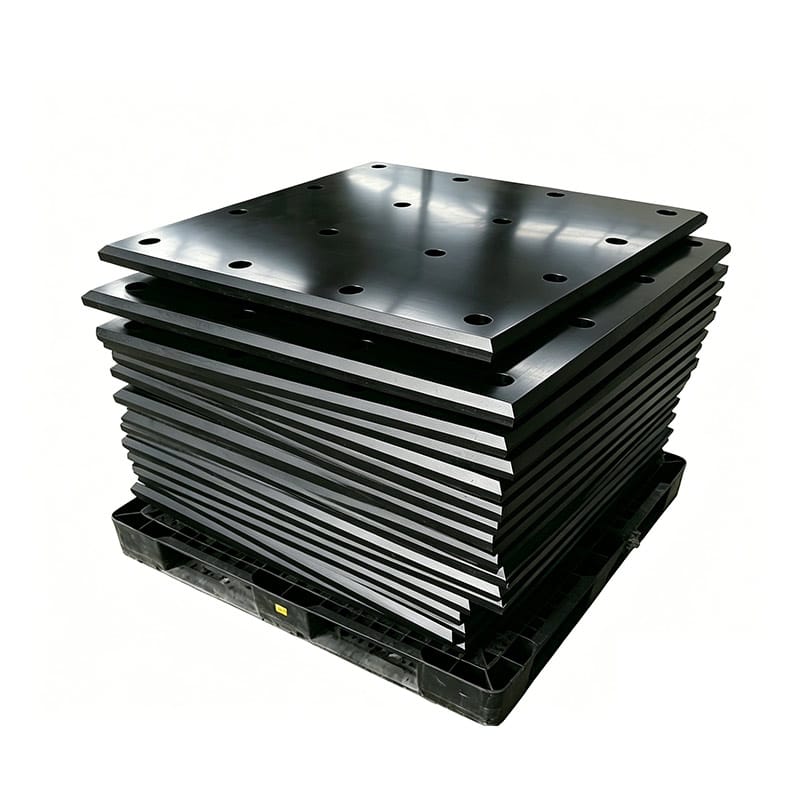
Handles, recesses and cutouts on custom outrigger pads should be included in the approved design. Removing material or drilling extra holes changes the section and may invalidate the original assumptions. Request approval before fabrication rather than modifying pads on site. The released drawing should show the working contact zone and all features that affect its load path.
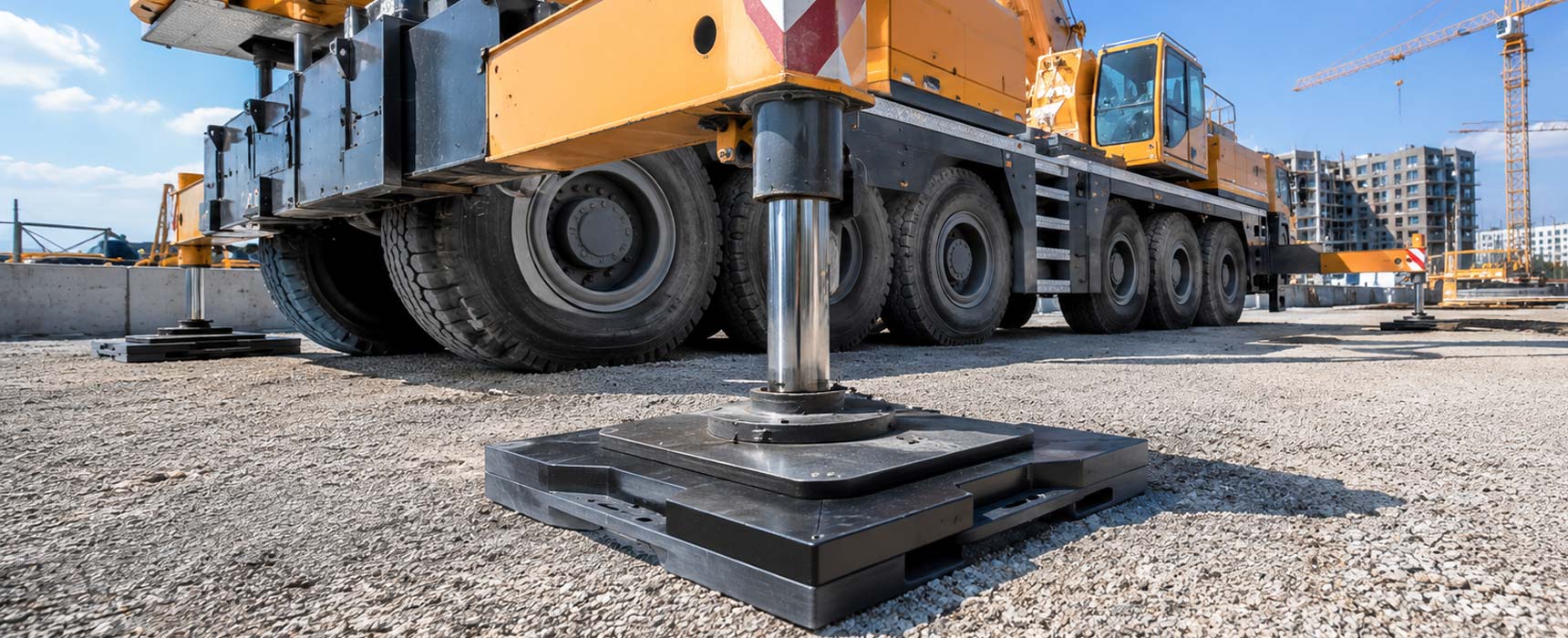
Compare the available procurement routes
Use the comparison below to decide what must happen before purchasing custom outrigger pads. The routes describe different scopes of work; they are not interchangeable offers. In this application, the controlling issue is foot geometry and full contact. An apparently cheaper route may leave that issue unresolved.
| Route | When it merits review | Evidence needed before release |
|---|---|---|
| Documented existing design | Potentially suitable when equipment and support conditions match its approval. | Verify identity, placement requirements and the complete design basis. |
| Reviewed custom pad | Potentially suitable when an approved foot or storage interface needs customization. | Approve all geometry changes and relevant qualification evidence. |
| Revised support arrangement | Necessary when ground, load or setup remains outside the reviewed conditions. | Obtain the site and equipment owner’s approval before use. |
Identifikation
Durable identification connects custom outrigger pads with its specification, approved equipment and inspection record. Color or approximate size is insufficient where several designs coexist. Keep untraceable accessories separate until their suitability is established. A fleet register should record which sets are available and which are quarantined, rather than merely counting all pads in a depot.
Qualify a representative sample or trial: custom outrigger pads
Check fit using an unloaded or otherwise safely controlled setup before field use.
For custom outrigger pads, write the trial objective before collecting results. Record the item or sample identity, drawing revision, conditions, observations and acceptance decision. Keep a photograph or measurement record where it helps explain the outcome. If the trial covers only one part of the duty, retain the remaining questions instead of treating a limited result as full approval.
Pre-use checks
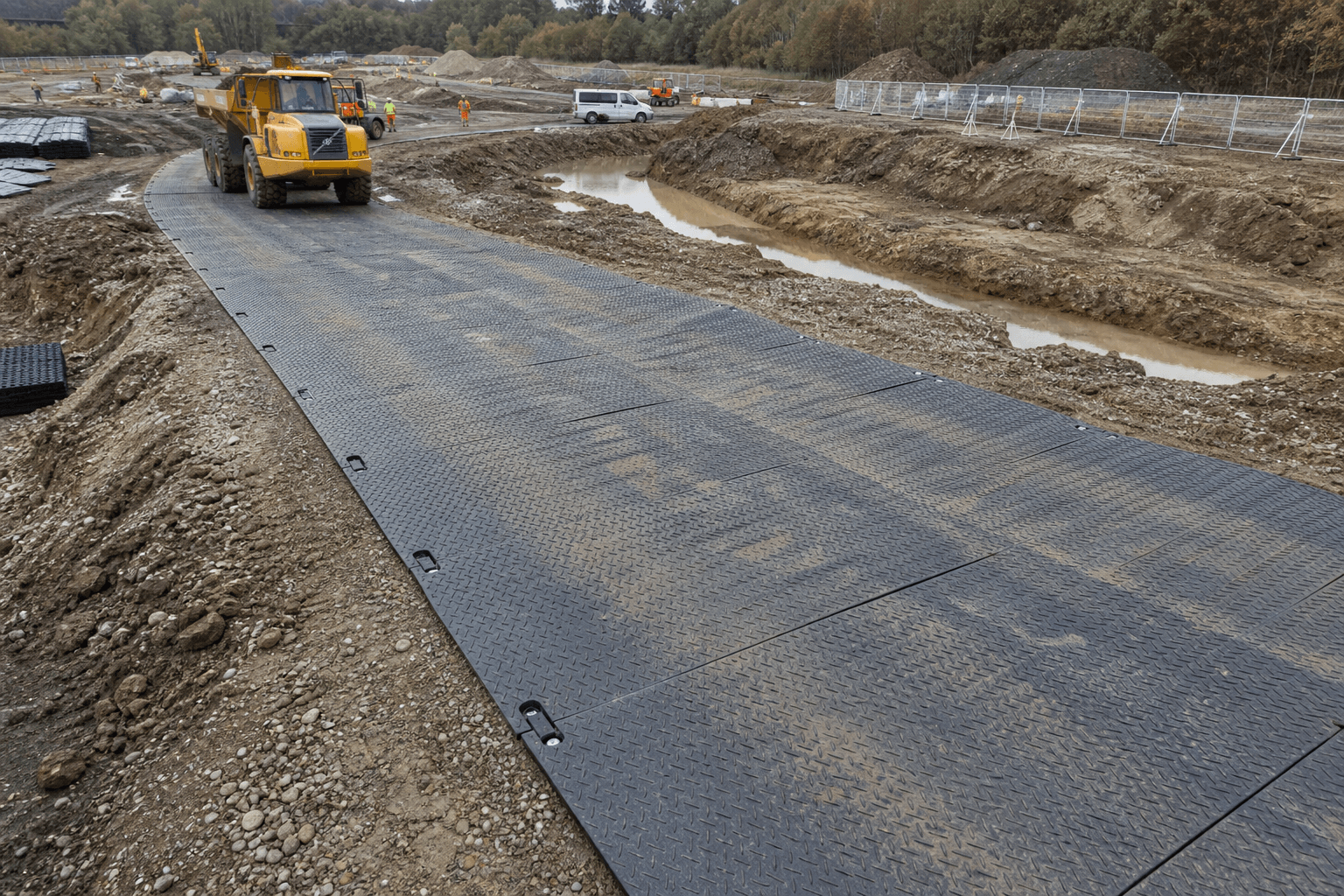
Use the manufacturer's and equipment owner's inspection requirements for custom outrigger pads. Check identity, condition, contact surfaces and any critical features before deployment. The review should also confirm that the site and equipment configuration match the approved setup. Do not use an apparently intact accessory as a reason to skip the wider ground and machine checks.
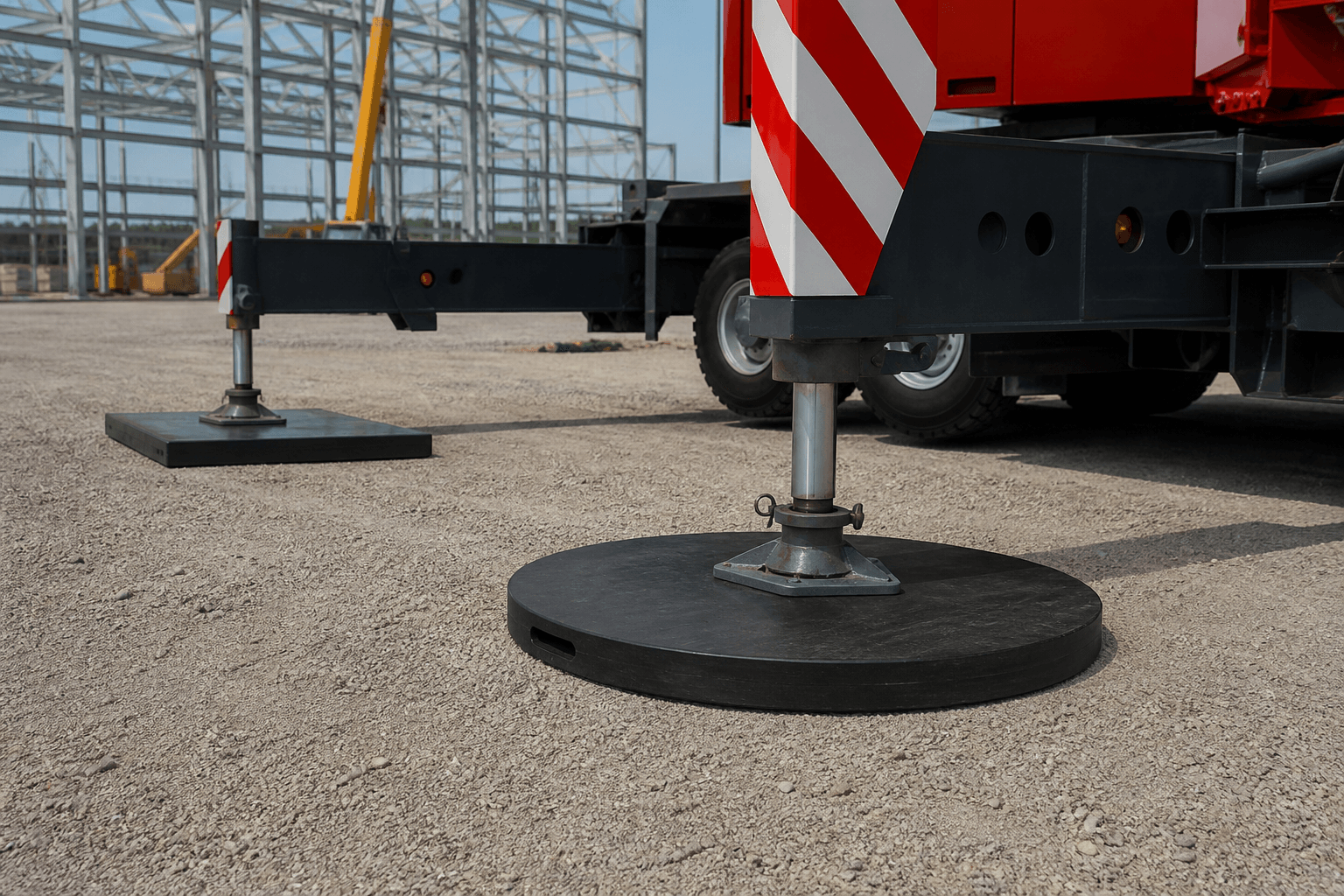
Recognize the limits and stop conditions
Partial contact, an interfering rim or a rocking foot requires a revised detail.
Define who can suspend approval and who can authorize a correction. Preserve the failed item, relevant measurements and operating details where practical. Changing the product and the surrounding process simultaneously can make the cause difficult to establish. The next action should resolve the controlling uncertainty rather than merely repeat the purchase with a larger nominal size.
Mixed support types
Equipment associated with custom outrigger pads may operate on outriggers, stabilizers, wheels or a combination. Establish the actual support mode before choosing accessories. A product name cannot approve an improvised setup for a different support configuration. Follow the specific machine manufacturer's instructions and use a responsible technical review where the intended arrangement differs.
Build a complete quotation package
Send foot drawings and equipment-specific support requirements with the inquiry.
The quotation package for custom outrigger pads should identify the requested quantity, delivery destination and purchased condition, together with the relevant drawing or layout. Ask suppliers to list exclusions and deviations clearly. Compare like scope: material identity, functional dimensions, inspection, packing and any first-article work should be visible beside the unit price.
Capacity records
Keep the complete capacity basis for custom outrigger pads, including loading footprint, support assumptions and any test or design limits. Do not detach a headline figure from the conditions that make it meaningful. Procurement should compare evidence for the intended duty, while the responsible owner approves operational use. Missing critical conditions remain an unresolved requirement.
Erster Artikel
A first article of custom outrigger pads can confirm dimensions, identification, handling and fit to the specified foot and storage envelope. State clearly what that approval demonstrates. A visual fit sample does not establish ground suitability or an untested load capacity. Review the relevant technical evidence separately and preserve any open requirements before a volume order is released.
Discuss the reviewed requirement with Paowo
Paowo lists UHMWPE Auslegerpads among its current products and describes drawing- and sample-based work through its OEM- und ODM-Kundendienst. For the application discussed here, send the specific interface and duty information before asking for a final recommendation.
You can also review the site’s related application area and the existing article Runde Auslegerpads: Auswahl- und Einrichtungshandbuch for adjoining considerations. Keep the scope of this inquiry centered on foot geometry and full contact.
For authoritative context, see OSHA 1926.1402 ground-conditions requirements. For US construction cranes within its scope, OSHA 1926.1402 addresses suitable ground and known subsurface hazards. This is context for site assessment, not a product certification or a pad capacity rating.
Request a review of custom outrigger pads with your drawings, operating conditions, required outcome and delivery needs. Ask Paowo to identify the offered grade and specification, state unresolved assumptions and separate sample work from production scope. Use the inquiry form after the FAQ to share the requirement and request a quotation.
Häufig gestellte Fragen
What is the first issue to review for custom outrigger pads?
Nominal pad area does not guarantee that the foot loads the pad as intended. Start with the actual duty and the relevant interfaces rather than the product name alone.
What information is needed to specify custom outrigger pads?
Provide foot dimensions, articulation, contact shape, pad support condition. Include a drawing or layout showing the complete interface and identify critical unknowns before release.
How should a trial of custom outrigger pads be assessed?
Check fit using an unloaded or otherwise safely controlled setup before field use. Keep sample identity, representative conditions and the agreed acceptance decision in the trial record.
When should approval of custom outrigger pads be held?
Partial contact, an interfering rim or a rocking foot requires a revised detail. Resolve the cause and obtain the responsible technical approval before release or continued use.
What should I send Paowo when requesting custom outrigger pads?
Send foot drawings and equipment-specific support requirements with the inquiry. Add the quantity, destination, current drawing revision and required documentation so offers can be compared on equivalent scope.