Table of Contents
A maintenance buyer needs replacement blanks to behave consistently across quarterly deliveries. For buyers reviewing UHMWPE sheets, the practical question is whether the offered product and its supporting evidence address this specific requirement.
This guide examines traceable stock for repeat orders as a defined engineering and purchasing decision. It connects the duty, interface, qualification and quotation so procurement can resolve the important questions before releasing an order.
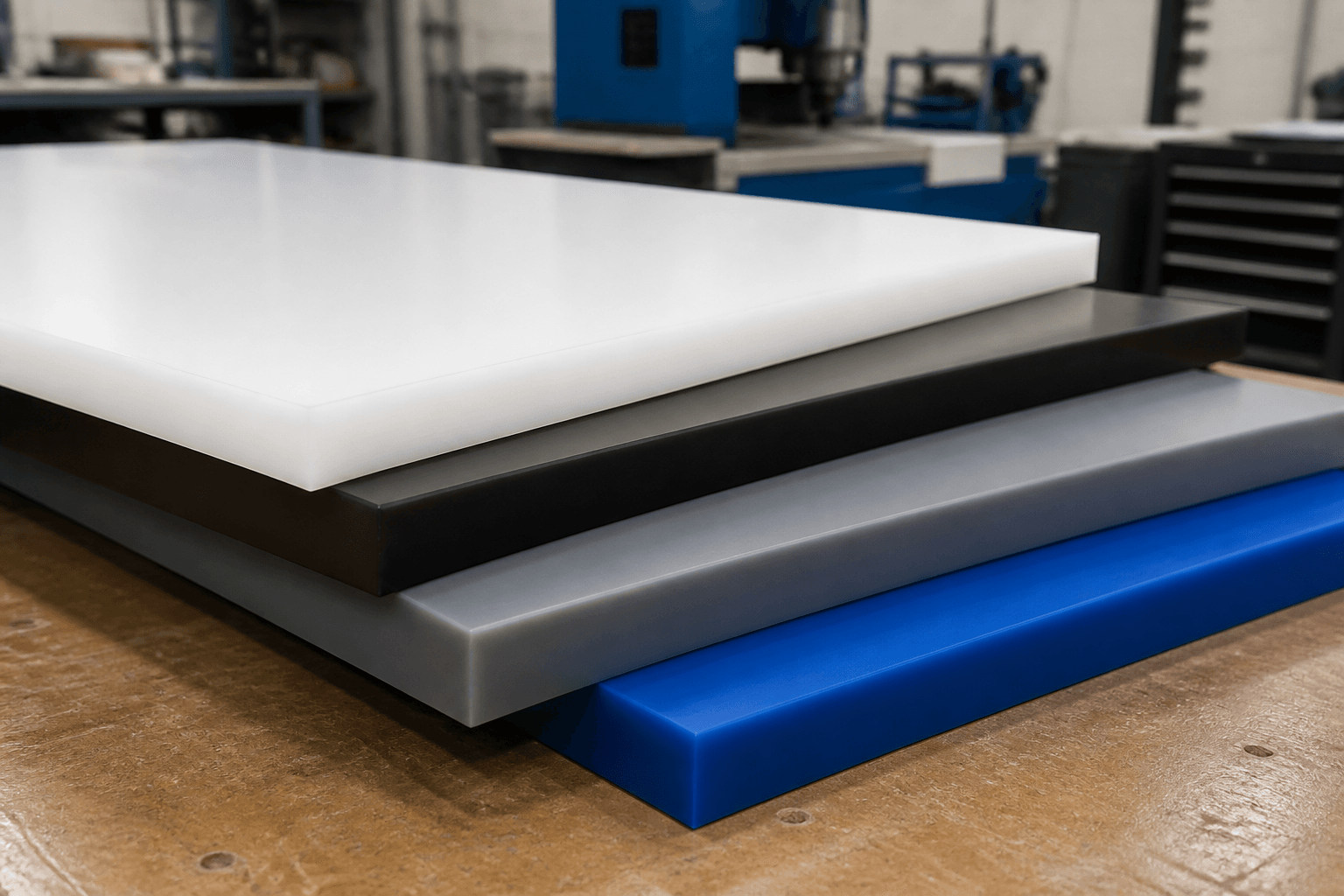
Traceable Stock for Repeat Orders
Similar color and thickness do not establish the same resin formulation or manufacturing history.
A useful repeat-order record links three identifiers: the approved resin designation, the delivered stock lot and the finished part batch. If machining suddenly produces a different chip or a sliding trial changes, first compare those records and the operating conditions. Retaining a labeled coupon helps investigation; it does not by itself prove the cause of a discrepancy or replace the material declaration.
Start by separating the observed symptom from the proposed product change. Record what happens, where it happens and the operating condition in which it matters. That makes the review of UHMWPE sheets specific enough to support a decision, rather than a comparison of broad product descriptions.
Material identity
When specifying UHMWPE sheets, record the resin grade, any required modification and the supplier's product designation. UHMWPE is a material family rather than a complete application specification. Color, surface gloss and a generic brochure do not establish a particular formulation. If a declaration or test record is required, identify the supplied grade and relevant lot rather than attaching an unrelated company document.
The inputs that define UHMWPE sheets
Record batch identifier, grade declaration, incoming sample dimensions. Keep the units, revision and source of each input with the inquiry. Distinguish a measured value from an estimate, and identify the person responsible for resolving any critical unknown. A supplier can review an explicit assumption; an undocumented assumption is much harder to detect.
Temperature at inspection
Dimensional checks on UHMWPE sheets should state the measurement condition. A sheet brought directly from a hot vehicle into a cooler inspection room may not represent the agreed reference state. Allow suitable stabilization and record temperature where it matters to acceptance. Compare like conditions and use the agreed grade data for any engineering allowance rather than assuming a universal expansion coefficient.
Design the complete interface: UHMWPE sheets
Keep a retained reference coupon and record the approved grade separately from the purchasing description.
Review UHMWPE sheets in the installed arrangement. Show adjoining components, the direction of movement or load, and the space needed for installation and later removal. If the interface changes, update the released drawing and acceptance basis together so the quote and the technical approval still refer to the same requirement.
Wear evidence
Evaluate wear on UHMWPE sheets using defined measurement locations and a recorded exposure interval. A polished track, a gouge and broad thickness loss may indicate different mechanisms. Keep the original dimensions or an unworn reference and record operating changes. Do not convert one favorable trial into an unsupported universal service-life multiplier for every machine or bulk material.
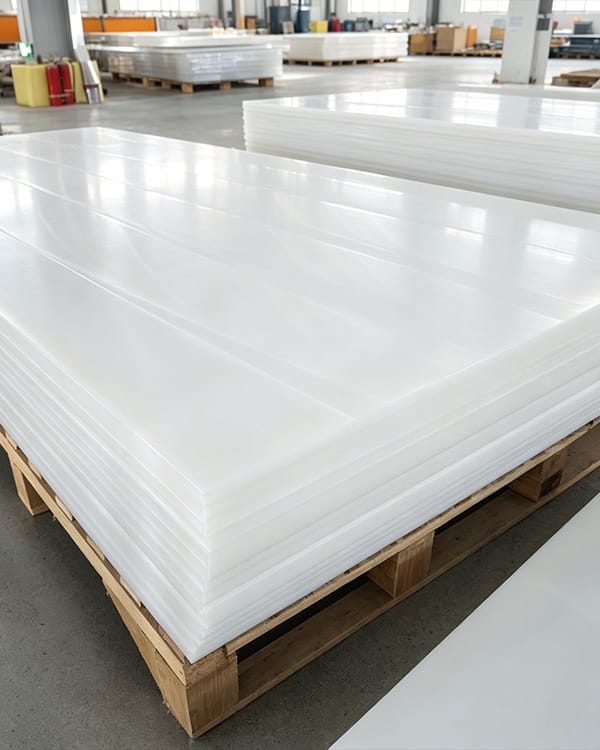
Compare the available procurement routes
Use the comparison below to decide what must happen before purchasing UHMWPE sheets. The routes describe different scopes of work; they are not interchangeable offers. In this application, the controlling issue is traceable stock for repeat orders. An apparently cheaper route may leave that issue unresolved.
| Route | When it merits review | Evidence needed before release |
|---|---|---|
| Stock sheet | Useful when the buyer controls cutting and final machining. | Verify usable dimensions, grade and sufficient allowance. |
| Cut blanks | Useful when rectangular preparation and material yield matter. | Approve blank dimensions separately from finished-part dimensions. |
| Finished component | Useful when critical interfaces should be supplied complete. | Approve a released drawing, inspection method and first article. |
Lot control
For repeat purchases of UHMWPE sheets, preserve the connection between the delivered stock, the production batch and any finished parts cut from it. A simple retained coupon and clear lot labels can make a later investigation more useful. Define what changes require buyer approval so a substitute grade or different purchased condition does not enter production silently.
Qualify a representative sample or trial
Compare incoming coupons using the same conditioning, measuring locations and fixture.
For UHMWPE sheets, write the trial objective before collecting results. Record the item or sample identity, drawing revision, conditions, observations and acceptance decision. Keep a photograph or measurement record where it helps explain the outcome. If the trial covers only one part of the duty, retain the remaining questions instead of treating a limited result as full approval.
Inspection scope
Incoming inspection of UHMWPE sheets should follow the purchased specification. Identify which dimensions need full measurement, which can be sampled and what documents must accompany the lot. A sample plan should be agreed according to application risk and supply history. Do not treat a generic inspection checklist as proof that every critical functional feature was checked.

Recognize the limits and stop conditions
Unexplained changes in machining response or sliding behavior require lot segregation.
Define who can suspend approval and who can authorize a correction. Preserve the failed item, relevant measurements and operating details where practical. Changing the product and the surrounding process simultaneously can make the cause difficult to establish. The next action should resolve the controlling uncertainty rather than merely repeat the purchase with a larger nominal size.
Transport packaging
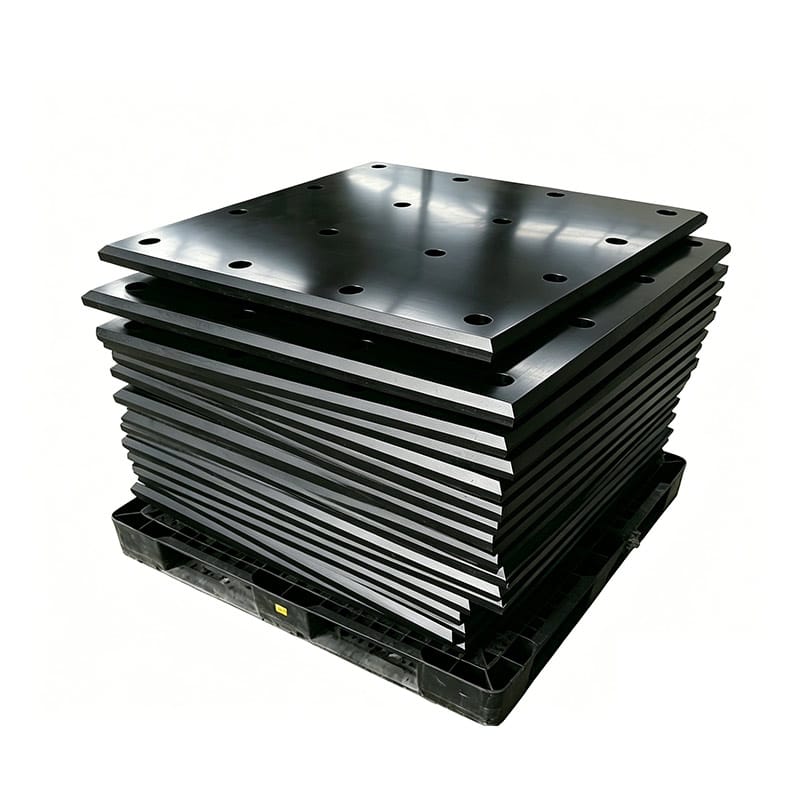
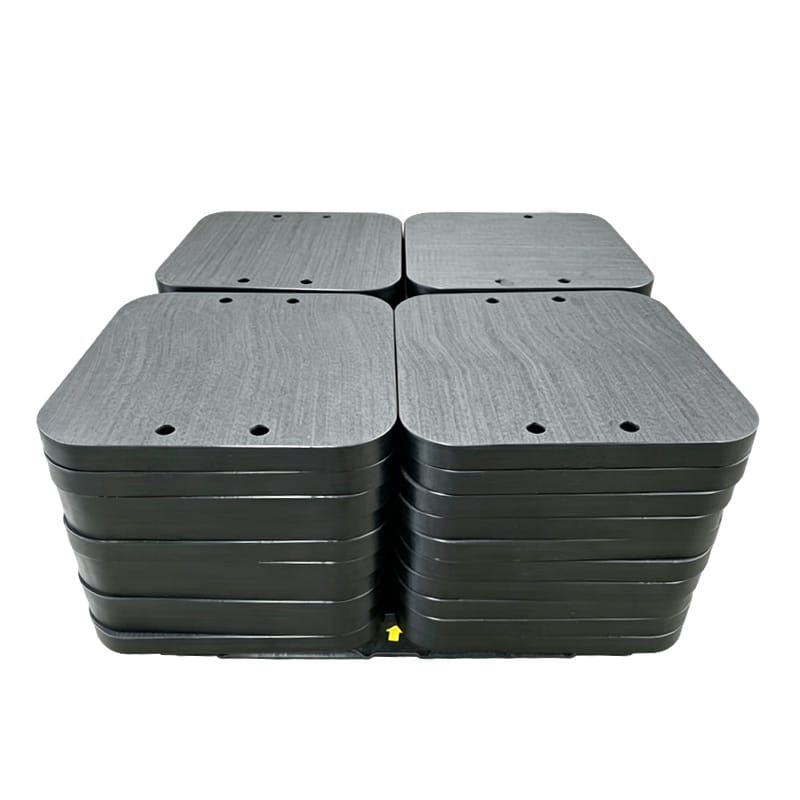
Packaging for UHMWPE sheets should preserve identification, protect edges and support the ordered geometry. Provide handling access without relying on pressure against an exposed functional edge. Ask for packed dimensions and weight when planning freight or warehouse receipt. Inspect transport damage before cutting the stock so an incoming defect is not confused with a later machining issue.
Build a complete quotation package
Request lot identification and agreed change notification before repeat production.
The quotation package for UHMWPE sheets should identify the requested quantity, delivery destination and purchased condition, together with the relevant drawing or layout. Ask suppliers to list exclusions and deviations clearly. Compare like scope: material identity, functional dimensions, inspection, packing and any first-article work should be visible beside the unit price.
Commercial comparison
Compare offers for UHMWPE sheets on equivalent material, usable dimensions, finishing and delivery scope. Separate unit price from cutting, inspection, packing and freight. A supplier that includes machined edges should not be compared directly with an untrimmed stock-sheet offer. Record the assumptions beside the comparison so a later quantity change can be evaluated consistently.
Replacement planning
Specify UHMWPE sheets with a practical replacement strategy when it forms a wear component. Define access, identification, spare stock and the functional limit that ends service. A part that can be made cheaply but cannot be removed without dismantling unrelated equipment may have a high whole-life cost. Review that maintenance consequence before freezing the panel boundaries or hole pattern.
Discuss the reviewed requirement with Paowo
Paowo lists UHMWPE Engineering Plastic Sheets among its current products and describes drawing- and sample-based work through its OEM and ODM custom service. For the application discussed here, send the specific interface and duty information before asking for a final recommendation.
You can also review the site’s related application area and the existing article Why UHMWPE Sheets Warp After Machining and How to Reduce the Risk for adjoining considerations. Keep the scope of this inquiry centered on traceable stock for repeat orders.
For authoritative context, see ASTM D4020 material specification scope. ASTM D4020 addresses identification and characterization of UHMWPE molding and extrusion material; its scope does not supply component design values. Use it as material-specification context, with application-specific evidence for the actual assembly.
Request a review of UHMWPE sheets with your drawings, operating conditions, required outcome and delivery needs. Ask Paowo to identify the offered grade and specification, state unresolved assumptions and separate sample work from production scope. Use the inquiry form after the FAQ to share the requirement and request a quotation.
Frequently Asked Questions
What is the first issue to review for UHMWPE sheets?
Similar color and thickness do not establish the same resin formulation or manufacturing history. Start with the actual duty and the relevant interfaces rather than the product name alone.
What information is needed to specify UHMWPE sheets?
Provide batch identifier, grade declaration, incoming sample dimensions. Include a drawing or layout showing the complete interface and identify critical unknowns before release.
How should a trial of UHMWPE sheets be assessed?
Compare incoming coupons using the same conditioning, measuring locations and fixture. Keep sample identity, representative conditions and the agreed acceptance decision in the trial record.
When should approval of UHMWPE sheets be held?
Unexplained changes in machining response or sliding behavior require lot segregation. Resolve the cause and obtain the responsible technical approval before release or continued use.
What should I send Paowo when requesting UHMWPE sheets?
Request lot identification and agreed change notification before repeat production. Add the quantity, destination, current drawing revision and required documentation so offers can be compared on equivalent scope.